ESG lifts IFC commitments in Singapore to record US$1.17 billion
Record 18 transactions closed in FY2023
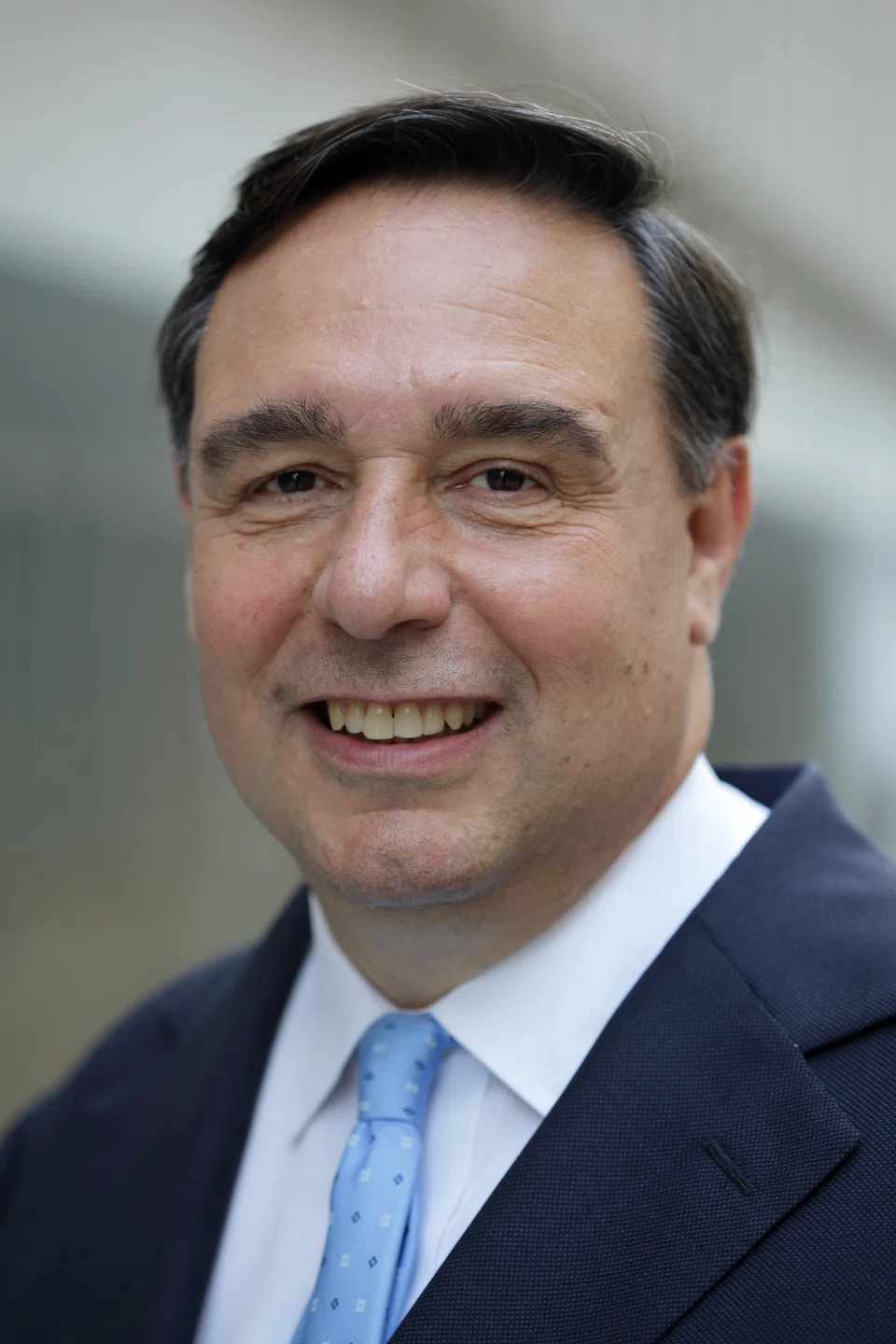
INTERNATIONAL Finance Corp’s (IFC’s) commitments in Singapore surpassed US$1 billion for the first time as businesses in the country pursued more environmental, social and governance (ESG) activities, a key regional executive told The Business Times.
IFC, the World Bank’s private-sector development financing arm, inked US$1.17 billion in loans and direct investments for the year ended Jun 30, said IFC regional vice-president for Asia and the Pacific Riccardo Puliti in an interview. In each of the three previous financial years, IFC’s commitments in Singapore hovered around US$900 million.
While IFC also reported a record year in the wider Asia-Pacific region – where commitments totalled US$11 billion – Singapore’s 29 per cent growth in commitments outpaced the region’s 10 per cent increase.
The Singapore deal came from 18 transactions, of which US$616 million were related to loans and bonds in which IFC participated, US$188 million were equity investments, and US$364 million were “capital mobilisation” activities in which IFC helped to facilitate additional fund-raising.
Puliti said the bumper year was no fluke – it was a result of “more and more cognition” about ESG themes among businesses here.
Those themes overlap with many of the agenda that are top of mind for IFC, including food security, climate change and the energy transition, global supply chain issues, and sustainable infrastructure gaps.
The 18 deals included a US$32.5 million loan to agricultural commodity trading company Agrocorp International to improve food security in Bangladesh amid rising staple crop prices; and an agreement to help insect-based ingredient producer Entobel scale its operations in Vietnam. Both companies are headquartered in Singapore.
IFC also participated as the sole subscriber for CapitaLand Ascott Trust’s 16.5 billion yen (S$157.4 million) sustainability-linked bond (SLB), and pledged support for a US$300 million project to bring Cambodia its first fully multimodal logistics complex. The complex, called the Cambodia SuperPort, is being developed by a joint venture between homegrown logistics conglomerate YCH Group and its Cambodian counterpart WorldBridge Group.
There is also IFC’s US$223 million part in a US$700 million global trade liquidity programme with Standard Chartered. The Singapore-developed facility, which was renewed in April, is expected to support up to US$6.4 billion in trade over three years across Asia, the Middle East, Africa and Latin America.
IFC further made commitments to private equity and venture capital funds managed by firms including Vertex Ventures, which is backed by Singapore government-owned investment firm Temasek; Growtheum Capital Partners, which was started by a former head of Singapore sovereign wealth fund GIC’s direct private equity investment group in South-east Asia; and Quadria Capital, the healthcare-focused firm; and tech-focused investment firm Asia Partners.
Momentum for more
ESG interest is so strong among businesses in Singapore that Puliti believes IFC will set new records in Singapore again in the current fiscal year ending 2024.
Puliti observed that many corporates and financial institutions here are looking “a lot more than they used to” at emerging markets and developing economies as a destination for growth.
DBS, for instance, recently opened a representative office in Dhaka, Bangladesh. Many infrastructure players have also ventured into India, while real estate players are increasingly focused on higher growth markets such as the Philippines and Indonesia, he noted.
“These dynamics are playing a part in our ability to support these companies, because our focus is on creating opportunities in emerging markets and developing economies,” he said.
While IFC works with large companies, Puliti said it is also keen to work with mid-sized companies that show promise of becoming regional and even global players. He noted seeing Asian players increasingly venturing into Africa, Europe, and Latin America. That is where working with IFC would be aligned with their interests, he said.
He elaborated: “We’re a global institution. We have offices in all these emerging markets far, far away from Singapore, and our reach as a development finance institution is unparalleled, so that’s where we can add value for clients.”
He added that IFC is also excited by Singapore players developing innovative solutions to “big issues” such as food security, which Entobel, Agrocorp and Singapore-headquartered agri-commodity trader Robust International are currently tackling. IFC backed Robust’s plans to expand in Nigeria in the previous fiscal year with US$18 million in debt financing.
By doing so, Singapore allows for innovation that is replicable all over Asia and in other parts of the world, he said.
Energy transition is one such big issue. Asked to give a sense of IFC’s interest in such projects in South-east Asia, Puliti said these do appeal to the corporation, but that all parties in the region will have to work out what they would consider a credible project.
“We are not here to impose any kind of views on anybody. The taxonomy of what could be defined as green is something of a joint work by all parties that everybody must agree upon,” he said.
Singapore, the incubator
Meanwhile, IFC has identified Singapore as a good place to grow markets for newer types of financing instruments, he added. The CapitaLand Ascott Trust deal was IFC’s first sustainability-linked transaction in the real estate sector, for instance.
The nature of sustainability-linked transactions is that methodologies and frameworks are “really specific” to each sector, and take time to develop, but there are some “very strong players” here with appetite for such transactions, he stated. “That’s how we managed to deliver those rather large transactions in the region with those players. And we want to do more,” Puliti said.
He added: “Financial structures developed in Singapore are replicable in other parts of the world. Think about it as a learning centre for climate finance. The learnings not only apply to Singapore, but all over Asia and the rest of the world.”
This is one of the reasons that Singapore, which he describes as a “very sophisticated” financial centre, is precious to IFC, Puliti said.