Estonia races towards renewables for greater energy security – not because of the Iran war

Its clean energy push was mandatory after its accession into the EU in 2004 and accelerated after Russia’s invasion of Ukraine in 2022

Summarise
Janice Lim
Published Mon, Apr 13, 2026 · 07:00 AM
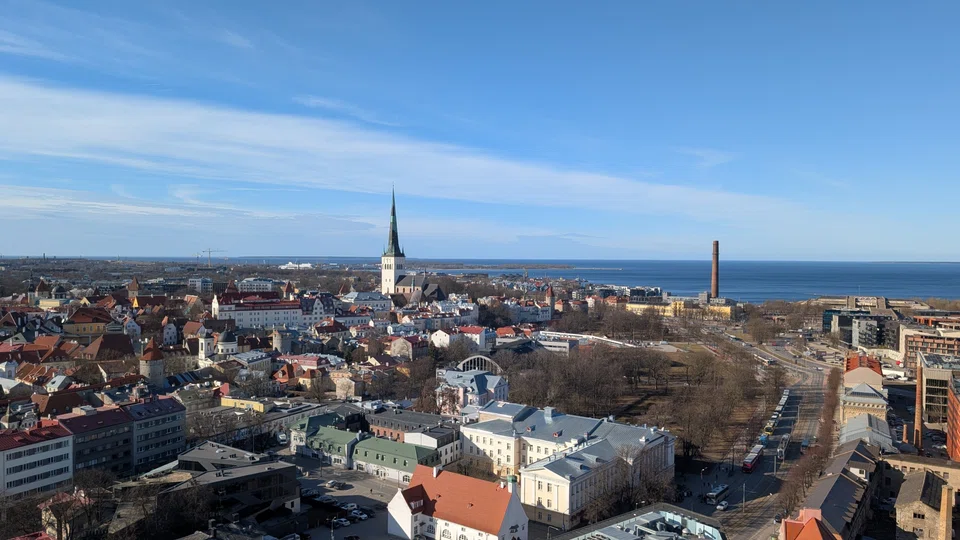
    • Reducing its reliance on Russian gas has been the cornerstone of Estonia’s energy policy ever since its independence in 1991 following the dissolution of the Soviet Union. 
    • Reducing its reliance on Russian gas has been the cornerstone of Estonia’s energy policy ever since its independence in 1991 following the dissolution of the Soviet Union.  PHOTO: JANICE LIM, BT

    [TALLINN, ESTONIA] As governments all over the world grapple with shocks to global energy prices as a result of the Iran war, the importance of alternative energy sources – especially renewables – have come under the spotlight once again. 

    For Estonia, the race towards renewables, as well as other clean energy sources, started even before the outbreak of the current Middle East conflict, which was triggered after the United States and Israel launched attacks on Iran in February this year. 

    While its clean energy push was mandatory after the Baltic country’s accession into the European Union in 2004, it accelerated after Russia’s invasion of Ukraine in 2022. 

    The current Iran war has added urgency to its low-carbon transition as alternative energy sources – especially those that can be produced domestically – are increasingly seen as vital for energy security, said a government official and experts who spoke to The Business Times. 

    “First, wind and solar electricity production is fuel free, so fuel supply risks do not affect electricity supply. Second, dispersed wind, solar and other renewable power plants are less vulnerable to external attacks than large centralised power plants – especially if the latter are located near the Russian border,” said Silver Sillak, director of the Estonian Renewable Energy Association. 

    Clean energy part of energy security

    Renewable energy – which includes solar, wind and biomass – accounted for 63 per cent of total electricity production in 2024, almost doubling from 34 per cent in 2022, indicated data from Elering, the country’s grid operator. 

    Plans to further increase its renewable energy capacity, along with storage, have been laid out in its latest energy sector development plan for 2035 released earlier this year. The government is also considering deploying nuclear energy, and using natural gas as a transition fuel. It is developing biogas plants to ensure constant power supply when renewable sources are insufficient. 

    “It’s keeping eggs in many baskets to make sure that we don’t go in one route and then fail, or possibly fail. We need to keep our options open in many different domains,” said Ivo Jaanisoo, deputy secretary-general for living environment and circular economy at Estonia’s Ministry of Climate, to the Singapore media delegation who were invited to Estonia to study its cleantech ecosystem. 

    Ivo Jaanisoo, deputy secretary-general for living environment and circular economy at Estonia’s Ministry of Climate, speaking to the Singapore media delegation who were invited to Estonia to study its cleantech ecosystem. PHOTO: IVO PANASYUK

    Reducing its reliance on Russian gas has been the cornerstone of Estonia’s energy policy ever since its independence in 1991 following the dissolution of the Soviet Union. Russian gas, which made up about 8 per cent of Estonia’s total energy supply until 2021 according to the International Energy Agency, was virtually cut off after Estonia stopped direct pipeline imports in April 2022 following the Ukraine war. 

    Early last year, Estonia, Latvia and Lithuania disconnected their grid from Russia. From January this year, Estonia implemented a total ban on all Russian liquefied natural gas, including shipments outside the distribution network, severing decades-old Soviet-era ties. 

    Estonia’s gas now comes from a more diversified pool, including through pipelinks to Finland, and global gas suppliers such as the United States and Norway. 

    “Now we’re completely free. We’re independent – but with independence comes also a responsibility to keep the systems running, to keep them as secure as possible, to keep the price low, and then keep moving towards renewables,” said Jaanisoo. 

    But renewables can’t guarantee security 

    The primary hurdle for renewable energy is intermittency – its inability to be a constant source of power supply unless paired with energy storage systems. 

    Weather-dependent renewable energy capacity does not guarantee domestic energy security, said Adjunct Professor Andrei Belyi, who teaches energy law and policy at the University of Eastern Finland.

    “In summer, the energy systems have to deal with surplus; and in winter, during the lowest temperatures, winds (are) idle and sun is inadequate because of short days. Thus, expansion of these energies does not guarantee security of supply at the most critical moments–, when energy demand for electricity, heat and transport grows the most significantly,” he added. 

    This is the reason why Estonia is still relying on its domestic resources of oil shale as a “rational economic choice to ensure self-sufficiency”, said Prof Belyi. 

    While the proportion of oil shale in electricity production has decreased with the ramping up of renewables, it still accounts for 37 per cent of electricity generation in 2024, noted the Estonian Competition Authority, the government agency responsible for protecting fair competition and regulating key utility sectors in Estonia.

    Compared to conventional crude oil, the extraction of oil shale is more energy-intensive and costly, which is why Estonia’s power sector is still one of the most carbon-intensive in the EU despite significant growth in renewable deployment. 

    No easy solution

    There has been a general hesitancy to fully retire oil shale due primarily to the lack of an easy solution to resolve the problem of obtaining dispatchable power that fossil fuels so easily provide, said Jaanisoo.

    Nonetheless, there is a growing consensus that the oil shale industry has to eventually shut.  The latest energy sector development plan has set a target to phase out the use of oil shale to produce electricity by 2035. 

    This is not just because Estonia needs to meet its net-zero carbon emissions target by 2050, as part of the EU. 

    Estonia's Ministry of Climate building PHOTO: IVO PANASYUK

    The oil shale power plants are mostly over 50 years old, and reaching the end of their shelf life. Investments into building new oil shale plants are not being seriously considered as these are not deemed to be economically feasible in the long term due to a high risk of these plants becoming stranded assets, noted Sillak. 

    The energy-intensive extraction methods of oil shale also means that the cost of producing electricity from this fossil fuel is more expensive than renewables. 

    There is also the issue of demographic decline, pointed out Prof Belyi. The north-eastern region where the industry is concentrated is facing an ageing population – the average oil shale miner is 47, and younger generations are not joining the workforce.

    Then there are also national security and geopolitical concerns that the power plants, which are situated near the Russian border, might be targeted one day. 

    “It should be kept in mind that Russia has regularly targeted and destroyed large power plants and substations of this kind in Ukraine,” said Sillak. 

    Phasing out the oil shale industry needs to also be managed delicately as the north-eastern region has a large ethnic Russian population, many of whom are Russian citizens. 

    “This remains an actual security concern for the Estonian political establishment. Some may wonder, would Russia weaponise this demographic situation? In the end, transition to new fuels and phase out of existing oil shale production are not straightforward policy issues,” said Prof Belyi.

    While the government has remained steadfast in expanding renewables capacity, the goalpost has shifted. The initial target for electricity generation to be 100 per cent powered by renewables by 2030 has been dropped.

    The latest energy sector development plan avoided setting a hard target, but noted that 100 per cent renewable electricity coverage could be achieved by 2035. 

    Despite the commitment, Sillak said, the necessary policies for Estonia to achieve its renewable energy goals has been lacking. 

    The local municipalities, which are largely responsible for developing these projects, have been obstructing the construction of more wind farms. 

    “The planning on wind farms in most municipalities has been turned into a playground for power games by populist politicians. The central government should motivate municipalities to increase the political and social acceptability of energy infrastructure and accelerate local planning,” said Sillak. 

    In addition, while wind is a readily available resource in Estonia, the turbines interfere with defence air surveillance systems, which could potentially slow down reaction time, said Professor Paula Kivimaa at the Finnish Environment Institute. 

    “New technical solutions to this have been under search, but it seems that buffer zones are nevertheless required,” she added. 

    Then there is also the lack of financial guarantees in the market for renewable energy projects that could help mitigate financial risk. 

    Estonia’s renewable energy projects have largely been financed by grants from the EU and international development bank loans. While there is investment by private sector players, such as from energy and utility companies, as well as infrastructure funds, government support through feed-in premium subsidies or contracts for differences still play a large role in financing renewables. 

    As the corporate power purchase market is virtually non-existent in Estonia, the government should continue providing both onshore and offshore wind developers with the necessary guarantees in the form of bilateral contracts for differences, said Sillak. 

    “The development of new power capacity depends on an enabling framework that combines contracts for difference, power purchase agreements, and other support instruments within the limits of state aid rules,” he added.