Family businesses must lead the way in sustainability: TPC’s Chavalit Frederick Tsao
The fourth-generation family business leader believes doing well should be mixed with doing good as he pivots the group towards impactful ventures
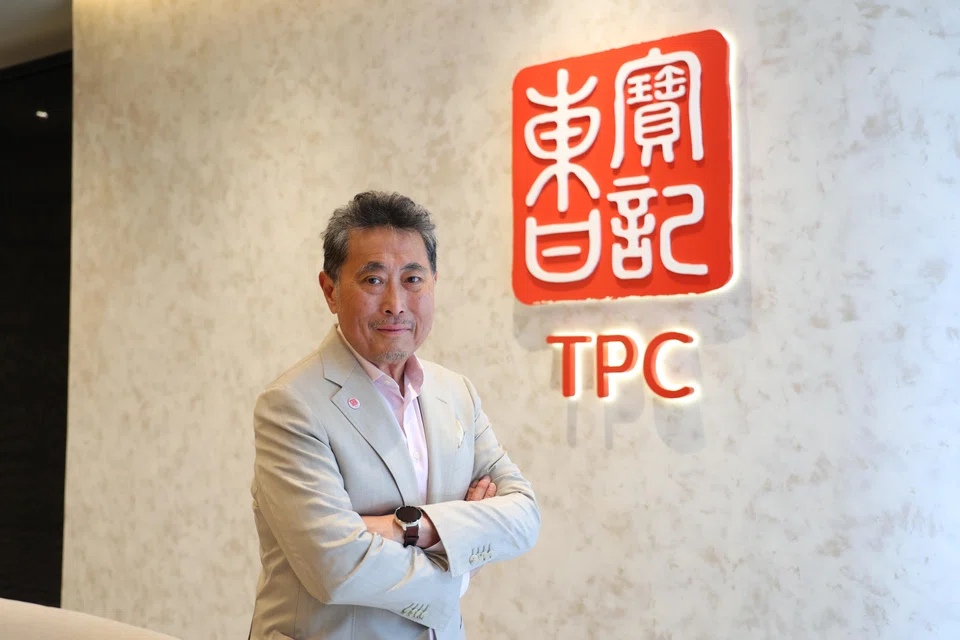
FAMILY businesses should be leading the way in implementing sustainable business practices and creating impact, said Chavalit Frederick Tsao, permanent honorary president of Family Business Network Asia and the fourth-generation leader of his own family’s business, Tsao Pao Chee (TPC).
“I’m calling on family businesses to lead change, because corporations have shareholders that have shareholders... They will move, but very slowly. In a family business, all we need to do is make up our minds,” he said.
Tsao feels strongly about the trajectory of the world and humanity. Climate change is the result of corporate greed, he said, both of which need to be checked. Family businesses can make a big difference to this trajectory because they constitute a significant part of the global economy.
Based on a McKinsey report, family businesses account for more than 70 per cent of global gross domestic product and are responsible for about 60 per cent of global employment. McKinsey found that family-owned businesses generally outperform because they focus on purpose beyond profits, adopt a long-term and conservative stance, and are able to make decisions efficiently.
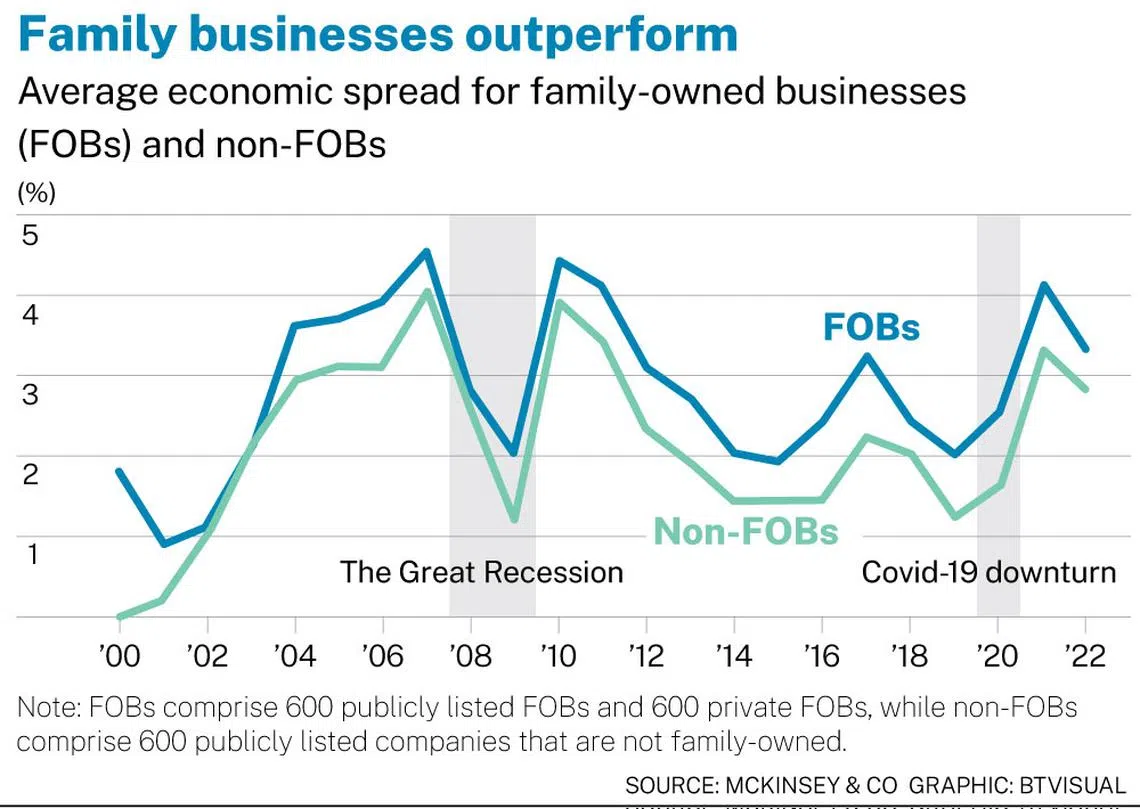
Those findings are borne out in Tsao’s management philosophy. Sustainability to him is more than a philanthropic principle. It is imperative for survival, as new regulations are introduced; and for growth, as consumer demands change.
Citing the possibility of the Bund in Shanghai “disappearing” as a result of rising sea levels brought on by climate change, he said: “What regulations do you think governments will put in place then? Green consumerism is arriving. A new way of living is arriving.”
He has taken his own advice in pivoting his family business. TPC was previously known as IMC Pan Asia Alliance, and is probably best known as a shipping powerhouse. Tsao’s father, Frank Tsao, listed shipping group IMC Holdings in Hong Kong in 1972, and added a secondary listing in Singapore in 1989.
In 2002, IMC Pan Asia Alliance bought out the minority shareholders of IMC Holdings and delisted the company. Although the business was profitable, trading liquidity was low as interest in shipping stocks waned.
Since then, Tsao has been transforming the group away from the public eye. In 2010, he acquired a piece of land in Suzhou, China, and began building an unusual property.
The Sangha Retreat by Octave Institute was officially opened in 2017. It is not commercially marketed as a hospitality property, but is focused on those who want to participate in the community’s holistic well-being experiences – such as its mindful living programme. Businesses also send members of their leadership teams to attend the Quantum Leadership programme run by the Octave Institute.
Adjacent to the resort is a private residential development, also built by TPC. The houses are sold only to those who can prove, through several rounds of interviews, that they will fit into the community Tsao is trying to build.
To prepare for shifts in the shipping industry, the group has launched a venture capital arm called IMC Ventures. Its focus is on startups with a slant towards environmental sustainability and social impact. Another unit, called Heritas Capital, manages private equity, venture capital and fund-of-funds investments into healthcare, education, environment and technology – all with a focus on impact.
IMC Ventures and Heritas Capital have jointly invested US$320 million in impact and well-being.
IMC Pan Asia Alliance rebranded as TPC in April – assuming the family business’ original trade name dating back some 120 years. Alongside the rebranding, TPC also announced a restructuring and shift in focus.
Its two business verticals – IMC Industrial, housing the shipping and other industrial businesses; and Octave, encompassing the well-being businesses – will “reorient towards adding value to co-create the well-being economy”. This means TPC will aim to generate impact across the entire organisation, and not just through its investment and fund management arms.
Tsao said the transformation of IMC into TPC is reflective of the transformation of the global economy. IMC’s shipping operations grew on the back of globalisation, which created demand for massive supply chains that spanned oceans and seas.
Even as the buzzword has shifted from globalisation to sustainability, however, Tsao said many of his peers in the shipping industry are still investing in the same ways. “The reality is, carbon-based shipping is going to contract. Ship engines are going to change. Materials are going to change. Yet, they still order ships that will last for 25 years,” he said.
TPC is focusing its investments in green transport, but is also looking into other new areas of demand. As an example, Tsao noted that the arrival of newer, greener ships will create demand for the scrapping of old ships. “I’m talking to China. You have the shipyards. All we need is to build processing plants in the shipyards. Instead of building ships, we can scrap ships.”
He is also taking the Sangha Retreat to more countries, as he sees rising demand for well-being programmes. The first stop is Japan, where the group has already acquired land. There are plans in the works for Singapore and Malaysia, too.
Tsao urges more family business owners to pivot quickly. “I told them we talk too much. There’s no more time for thought leadership. There’s only time for action leadership.”
Few disagree with his direction, yet not many want to join him in making big moves. “There is a fear of acting first,” he said. “But the young people are responding.”
It is a mistake to think that one cannot mix doing well with doing good, he added. “Use your family business to add value to life,” he said.
“If you add value, you have value. If businesses don’t add value, then they’re just using marketing tactics to mask their true intentions of only making profits.”