

Formula 1 and logistics partner DHL invests in sustainable aviation fuel
The capital has been deployed to buy sustainable aviation fuel for air cargo for the Australian Grand Prix in March this year

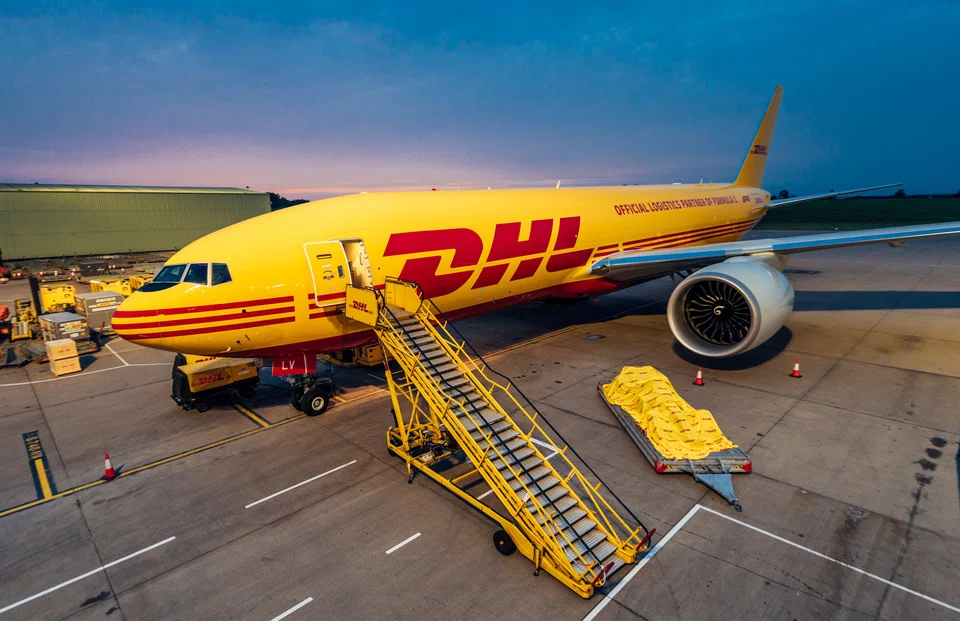
RACING circuit Formula 1 and its logistics partner DHL have made their first investment into purchasing sustainable aviation fuel for its cargo flights for the remainder of the 2024 season.
The capital has been deployed to buy sustainable aviation fuel for air cargo for the Australian Grand Prix in March this year. The use of sustainable aviation fuel has also been scheduled for 21 cargo flights to races outside of Europe after the Singapore Grand Prix, which is taking place between Friday (Sep 20) and Sunday.
This covers about 20 per cent of all their upcoming flights by DHL for the rest of the season, said both parties in separate media statements on Friday. The use of sustainable aviation fuel for Formula 1’s other air cargo partners has not yet been announced.
When asked about the size of the investment during a press conference at the Singapore Grand Prix on the same day, Formula 1’s head of environmental, social and governance (ESG), Ellen Jones, declined to reveal the amount.
“The price of sustainable aviation fuel for everyone is going to be changeable. It’s a market and something that we’ll be tracking each and every year, which will change that level of investment,” she added.
Formula 1 will be purchasing sustainable aviation fuel through a “book and claim” service provided by DHL.
A “book and claim” model is commonly used in the sustainable aviation fuel industry due to difficulties in transporting the fuel to where it is needed, which could increase carbon emissions in the process.
Under this system, Formula 1 would “book” the amount of fuel needed, which then gets added to the supply chain in other planes where sustainable aviation fuel is directly available. This means that the fuel is not physically transported and entered into a DHL air freight.
After the carbon reductions are verified with the International Sustainability and Carbon Certification – a certification body for bio waste – Formula 1 can then “claim” them when calculating its carbon footprint.
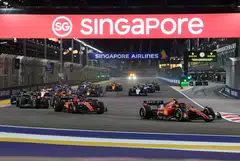
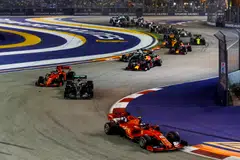

Formula 1 said it is not possible to directly fuel the planes used to move its air cargo with sustainable aviation fuel as the sector and its infrastructure are still expanding.
Tight supply of sustainable aviation fuel is a problem, acknowledged Paul Fowler, the vice-president of global motorsport in DHL’s ocean and air freight business.
He said that not all of the group’s partner carriers have the facility to use sustainable aviation fuel, though he added that they are getting on board and trying to roll out the necessary technologies.
Formula 1 estimates that the use of sustainable aviation would cut carbon emissions for each flight by 80 per cent than compared to when conventional jet fuel is used.
The 21 flights that will be flying with sustainable aviation fuel, in addition to the ones for the Australian Grand Prix, is estimated to have prevented 4,500 tonnes of carbon dioxide equivalent from being emitted.
Formula 1 has set a target of achieving net-zero carbon emissions by 2030.
One other way to reduce its emissions is to “rationalise” its race calendar, to decrease the distance needed for travel and therefore reduce emissions.
Regarding whether this meant that the Singapore Grand Prix would be moved to a different timing, Jones said that such decisions are not straightforward.
“Because you have things like climate, you have elements such as holidays, and once you add those types of pieces together, you will get a different calendar... It’s about, how we look at the calendar as a whole, and how we balance these factors; and then with our calendar, apply the appropriate logistics solution,” she added.
Decoding Asia newsletter: your guide to navigating Asia in a new global order. Sign up here to get Decoding Asia newsletter. Delivered to your inbox. Free.
Copyright SPH Media. All rights reserved.
TRENDING NOW

Grab CEO’s wife Chloe Tong on life with Anthony Tan and finding her purpose
Tech titans including Nvidia’s Huang, OpenAI’s Altman join Trump, Xi at White House state dinner
Ex-Sembcorp Marine CEO Wong Weng Sun acquitted of charges in Brazil corruption case
Singapore launches national semicon brand initiative, inks R&D deals

