Fossil fuel players turn to private markets where transition gets wider definition

Family offices show interest in these traditional industries and have greater tolerance for assets that do not conform to strict ESG standards

Joan Ng
Published Thu, May 30, 2024 · 05:00 AM
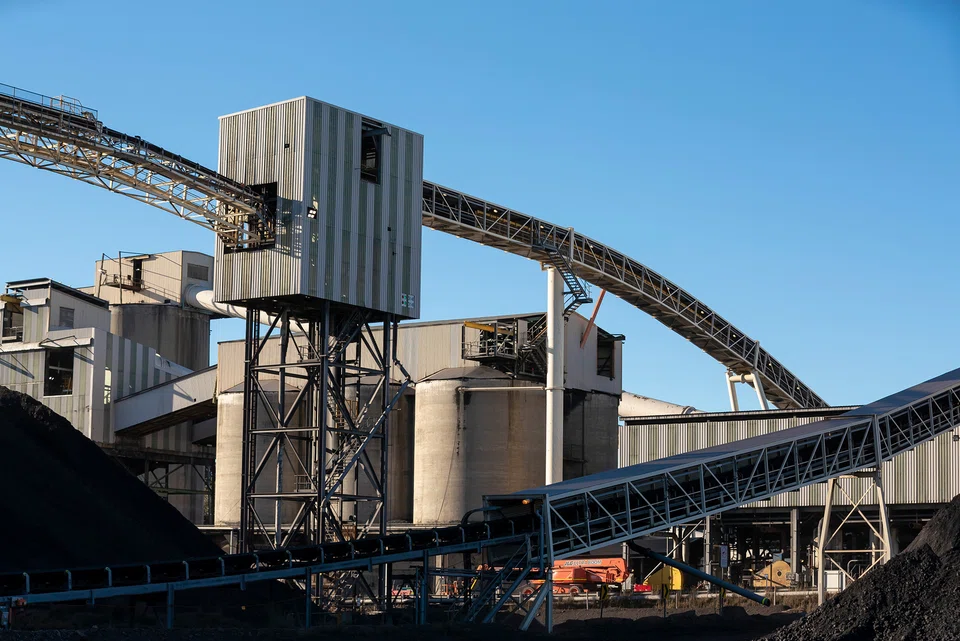
    • The Illawarra metallurgical coal project owned by Australian mining and metals company South32 is in the process of being sold as the company focuses on commodities critical in the transition to a low-carbon future.
    • The Illawarra metallurgical coal project owned by Australian mining and metals company South32 is in the process of being sold as the company focuses on commodities critical in the transition to a low-carbon future. PHOTO: SOUTH32

    PRIVATE markets investors in Asia are stepping in where banks will not tread, offering financing and doing deals in the brown spaces of fossil fuels and extractive industries.

    Willingness to put money on the table is driven partly by family offices that have greater familiarity with these traditional industries and greater tolerance for assets that do not conform to strict environmental, social and corporate governance (ESG) standards.

    Chiam Tao Koon, South-east Asia mergers and acquisitions (M&A) head at law firm Ashurst Singapore, is seeing “healthy interest” from family offices to invest in companies operating in these sectors. This is “especially if these family offices have traditionally made their fortunes in these sectors”.


    Deals abound as public companies feel the pressure to decarbonise their balance sheets and banks decline to provide lending.

    “The decarbonisation journey is providing interesting opportunities for family offices who have more flexible sources of wealth and are perhaps less tied to ESG concerns,” Chiam said.

    Australia-listed coal producer South32, for instance, is selling a metallurgical coal site as part of a strategic move towards commodities “critical in the transition to a low-carbon future”.

    The buyer is 70 per cent owned by Indonesian coal producer Golden Energy and Resources, which was delisted from the Singapore Exchange following an exit offer from its controlling Widjaja family.

    “We see a lot of potential outbound M&A opportunities as such family offices are expanding beyond their traditional home turf,” said Chiam.

    “These family offices are looking to access good-quality assets in markets such as Australia, North America and Europe, where businesses are under considerable pressure to exit carbon-intensive sectors.”

    “The decarbonisation journey is providing interesting opportunities for family offices who have more flexible sources of wealth and are perhaps less tied to ESG concerns,” says Chiam Tao Koon, South-east Asia M&A head at Ashurst Singapore. PHOTO: ASHURST

    The approach of family offices stands out in private markets, which are dominated globally by institutional investors for whom the purchase of a metallurgical coal site would be a hard no.

    This is particularly the case in Europe, where ESG principles are widely integrated into investment decisions.

    Matt Courey, president and chief operating officer at alternative credit specialist AlbaCore Capital Group, said institutional investors in European public and private credit increasingly expect their delegated managers to invest more time and resources on the analysis and reporting of ESG factors in investee companies.

    “The overall trend is for European lenders to increasingly scrutinise and monitor ESG risks in their investable companies,” he said.

    Even in the United States, where ESG commitments are not as universal a requirement, asset manager BlackRock has committed not to make any further direct investments in companies that generate more than 25 per cent of their revenues from thermal coal production.

    Data from alternative assets insights provider Preqin suggests family offices globally have been “a little slow” on ESG adoption. Of the family offices that disclose their ESG information, only 6.2 per cent mention ESG considerations in investing.

    Among Asia-Pacific family offices, meanwhile, half either have no ESG investment policies in place or are unsure if they do. Only 6 per cent exclude companies with negative ESG impacts or that are involved in controversial products or activities.

    This could represent a risk to the portfolios of family offices, but industry participants said Asia’s family offices are not ignoring climate realities. They just have a more “nuanced” approach to decarbonisation commitments.

    They recognise that Asia’s energy transition will take time, and that it “may not be practical to switch immediately to green energy sources in countries where energy demands are constantly rising”, said Ashurst’s Chiam.

    “Moreover, many of these family offices have existing businesses in these sectors. With greater scale, there are opportunities for cost efficiencies that will eventually facilitate the transition economy,” he added.

    Vishal Nanwani, director for portfolio management at multi-family office Golden Equator Wealth (GEW), said clients also have a wider definition of what constitutes “positive impact”.

    “Positive impact is not restricted to any given sector or type of company. Fossil fuels and extractive sectors provide the energy and materials required for communities to grow and support our global economy,” he said.

    “Positive impact is not restricted to any given sector or type of company. Fossil fuels and extractive sectors provide the energy and materials required for communities to grow,” says Vishal Nanwani, director for portfolio management at Golden Equator Wealth. PHOTO: GOLDEN EQUATOR WEALTH

    Of course, clients prefer companies within renewable sectors or where there is a “focus on reducing” the carbon footprint. “Our clients are climate-conscious, which is evident in their capital deployment patterns,” Nanwani said.

    “However, they are willing to consider investments in the fossil fuels and extractive sectors if the companies involved demonstrate a clear and credible plan towards achieving zero carbon impact. They understand the importance of balancing financial returns with environmental responsibility.”

    Nanwani said GEW focuses on supporting such deals with a “comprehensive analysis of the underlying company”, which includes evaluating the company’s financial health, strategic direction, and commitment to sustainability.