

Free online assessment and ESG training: How SMEs can get support on their green journey
With strategic partnerships, upskilling courses and innovative financing, DBS is propelling businesses to excel in the low-carbon economy
Melissa Kong HP
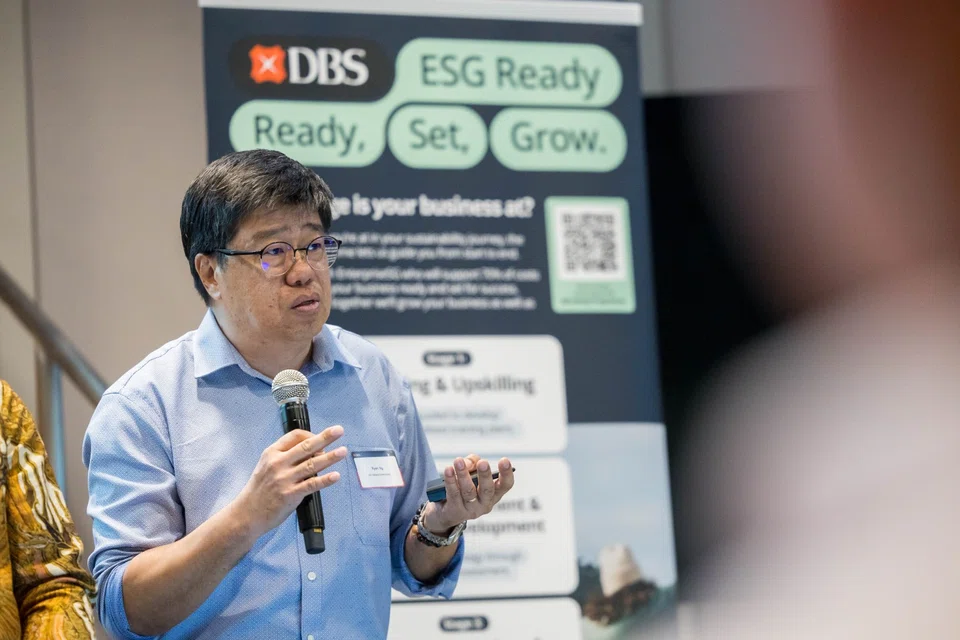
For local firm LDC General Construction, sustainability has become an issue of staying competitive.
In the last few years, the firm has seen government bodies and multinational clients making it a key criteria in tender evaluations.
While these clients and other large corporations may have significantly reduced their own carbon footprint, attention is turning to their Scope 3 emissions. These are indirect emissions produced by their supply chains, typically made up of small and medium-sized enterprises (SMEs) like LDC.
The company’s senior manager Ryan Ng explains: “Participating in our clients’ tenders now entails answering environmental, social and governance (ESG) assessments and conducting on-site audits. As such, we need to embrace sustainability or risk being left out of the business.”
This reflects a significant shift in how businesses approach sustainability – not just in Singapore, but across Asia – extending responsibility for emissions reduction throughout the entire value chain.
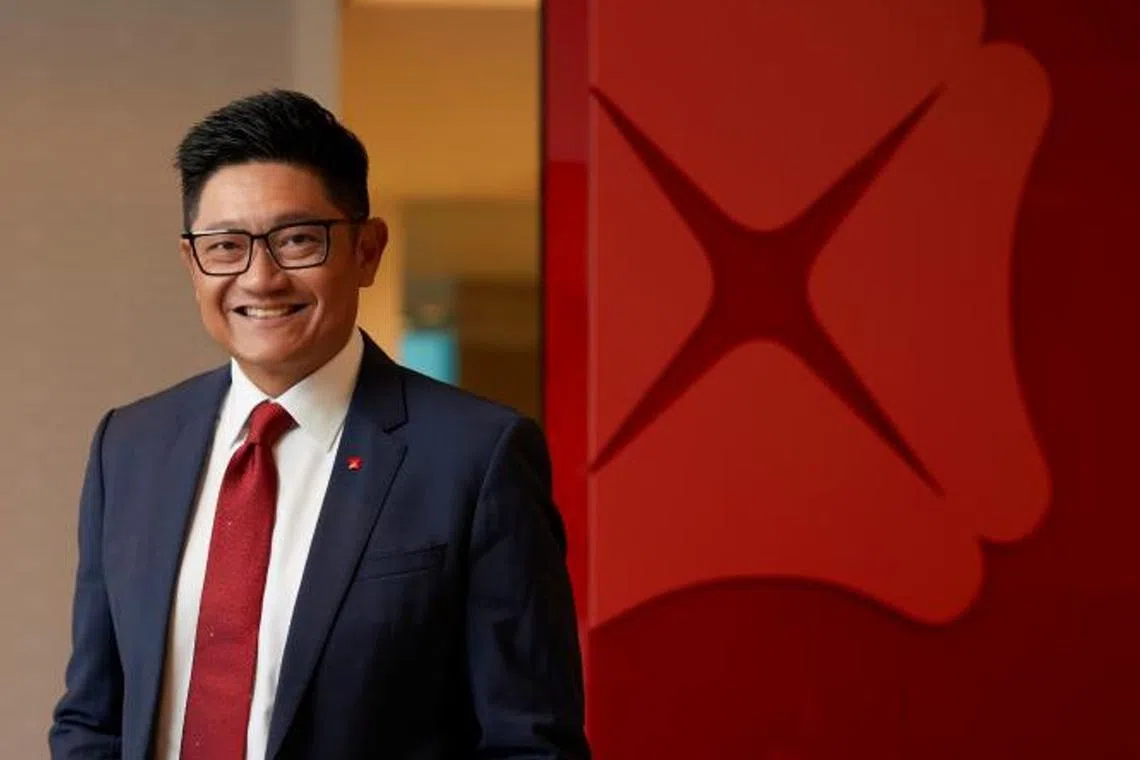
Koh Kar Siong, group head of Corporate and SME Banking at DBS, says companies are increasingly recognising that they cannot decarbonise in isolation. “They need to bring their suppliers along on this journey.”
However, SMEs face a unique set of challenges. According to a study conducted in 2022 by DBS and Bloomberg Media Studios, SMEs in Asia acknowledge the need for more sustainable business models and supply chains but struggle to develop and implement ESG strategies.
Financing and training
While ESG initiatives have largely been geared towards large corporations – with much of the regulatory and consumer focuses on Scope 1 and 2 emissions – there is now an increasing pressure to lower Scope 3 emissions as well. With SMEs forming the backbone of many supply chains across industries, they are starting to feel the heat.
However, decarbonising operations, such as by investing in renewable energy or upgrading technology, often require significant capital outlays. With limited resources and many competing priorities, moving ahead with sustainability activities can be challenging. For small businesses in emerging markets where credit markets may be less developed, access to financing is an added complexity.
Another challenge for SMEs is the disconnect between sustainability and treasury functions, which makes it difficult to align financial goals with ESG objectives. SMEs may also lack in-house expertise to develop and implement comprehensive sustainability strategies, which often leads to difficulties in gathering the data needed to meet ESG reporting requirements.
Against the backdrop of these challenges, as well as the nascency of the ecosystem to support smaller players, DBS has doubled down on its efforts to help SMEs in their sustainability efforts. Last year, it established several strategic partnerships with industry leaders to provide more comprehensive solutions to SMEs, including its ESG Ready Programme. Launched earlier this year, the programme is designed to offer practical guidance and tools to help companies build sustainability into their business models. Resources range from training courses to tools like carbon accounting solutions, as well as financing solutions at preferential rates.
Leveraging on the opportunity to kickstart its own sustainability journey, LDC was one of the first companies to sign up. “The programme covered all the essential elements to help us get started on an easy-to-understand roadmap to sustainability with training, technology solutions, accreditation, grants and subsidies,” says Ng.
“We are still in the early stages but have already gained valuable insights into sustainable practices that can be integrated into our daily operations, with the hope of becoming a recognised, sustainable construction company of choice,” he adds.
DBS’ Koh says: “Building a thriving business is no longer just about being profitable, but being sustainable as well. Companies that do not start making this transition risk losing out.”
Helping large corporates to lead the charge
While large anchor corporates may not be as resource-scarce compared to SMEs and have made good progress against their Scope 1 and 2 emissions, the supply chain decarbonisation agenda has added a layer of complexity to corporate sustainability strategies. Increasingly stringent Scope 3 reporting and disclosure requirements have demanded a higher level of transparency and accuracy in tracking indirect emissions. The big challenge for these large companies lies in keeping up with market demands and regulatory changes, while being able to stay profitable – and therefore being able to stay competitive – while pushing for greener practices across the supply chain. At the same time, they need to align sustainability practices across a diverse supplier base that may span different regions and operational models.
Beyond decarbonisation, climate adaptation and resilience are equally critical. When large corporates are more connected with their supplier base, they can provide the data and support needed to help suppliers minimise disruptions caused by climate impacts, such as flooding or heatwaves. This ensures supply chain resilience across sectors that often run deep into the Asean region. Mitigating climate risks alone is not enough; adapting to them is essential to maintaining uninterrupted operations.
To help address these challenges, DBS also partners with larger companies, incentivising them to take on more responsibility for supporting their suppliers. One such partnership with Sheng Siong aims to engage up to 1,000 SMEs in the supermarket chain’s supply chain over the next two years and help them identify, develop and implement decarbonisation plans.
One of these suppliers is Allswell Trading. Its executive director Gilbert Koh says: “We recognise the growing need to go green as the business landscape changes. To remain competitive, we need to adopt sustainable business practices so that we are ready to meet the demands of a low-carbon economy.”
In the real estate industry, DBS is working with City Developments Limited (CDL) by providing funding for the latter’s SME Supplier Queen Bee Programme. This helps 100 of CDL’s selected SME suppliers embark on their decarbonisation journey by teaching them how to measure, track and reduce their carbon emissions.
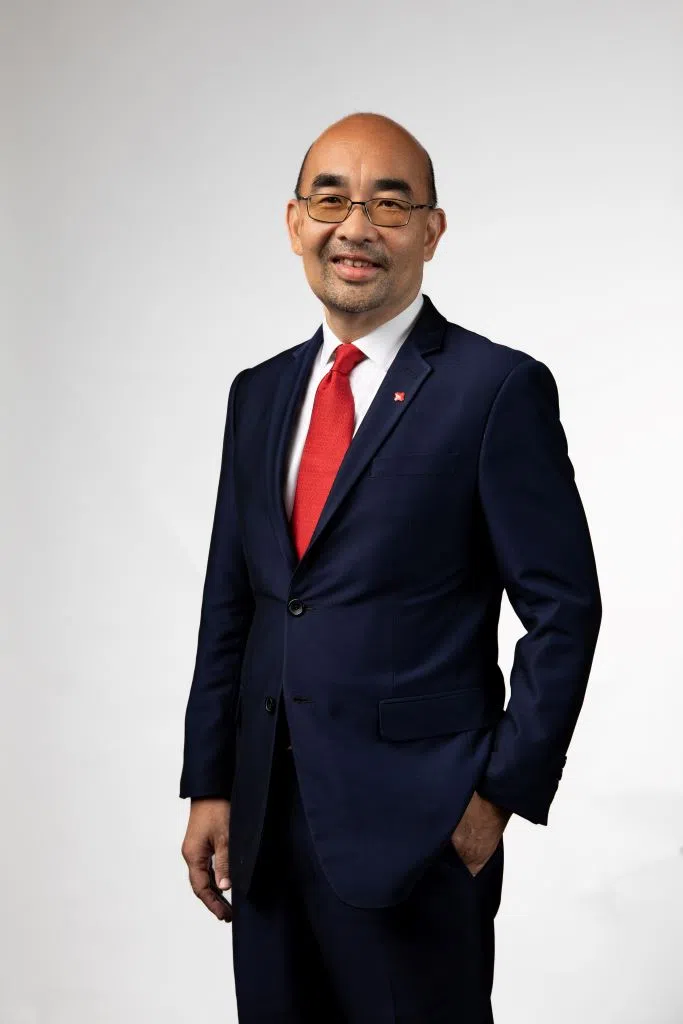
Similarly, the bank’s partnership with fashion retailers under the Future Supplier Initiative is focused on driving decarbonisation in their supply chains. Swedish apparel giant H&M is the first such partner. Lim Wee Seng, DBS’ group head of Sustainability and Energy, Institutional Banking Group, says: “DBS plays a critical role here, acting as a bridge between Western multinational corporations and their Asian SME suppliers, helping them navigate complex sustainability requirements and providing necessary financial support to adopt greener practices.”
As ESG evolves into a business imperative, SMEs like LDC General Construction must adopt sustainable practices to remain competitive, while large corporates need to decarbonise their supply chains to ensure long-term resilience. DBS has grown its capabilities to support companies across the spectrum in their sustainability efforts and help them thrive in a low-carbon economy.
Enabling SMEs to go green
Launched in collaboration with Enterprise Singapore, the DBS ESG Ready Programme is designed to help SMEs navigate their sustainability journeys by providing a comprehensive, easy-to-follow roadmap. The programme offers a combination of training, technology solutions and access to grants and subsidies to help smaller companies integrate sustainable practices into their daily operations. Since its launch, the programme has already garnered interest from over 100 SMEs.
DBS Sustainability Accelerator Tool
In partnership with accounting firm Deloitte, DBS also introduced the Sustainability Accelerator Tool, which is specifically tailored to help Singapore-based SMEs identify decarbonisation opportunities. The tool provides industry-specific guidance, helping businesses pinpoint where they can reduce emissions within their supply chains and operational activities.
By simplifying complex data and sustainability metrics, the tool helps SMEs assess their carbon footprints and identify ways to improve. The tool aims to empower 1,000 SMEs in Singapore over the next 12 months.
Visit the DBS website for more information on the ESG Ready Programme and DBS Sustainability Accelerator Tool.
Decoding Asia newsletter: your guide to navigating Asia in a new global order. Sign up here to get Decoding Asia newsletter. Delivered to your inbox. Free.
Share with us your feedback on BT's products and services
TRENDING NOW

Once staunchly pro-China, Malaysian Chinese businesses are now distancing themselves from Beijing

Looking beyond looming CEO succession, should UOB potentially pursue a transformative merger?

Could stablecoins be the future of money?

Grab CEO’s wife Chloe Tong on life with Anthony Tan and finding her purpose

