

Green debt sales hit record levels in 2025 despite climate backlash
Europe has also rolled back some of its toughest environmental rules amid concerns about growth and competitiveness
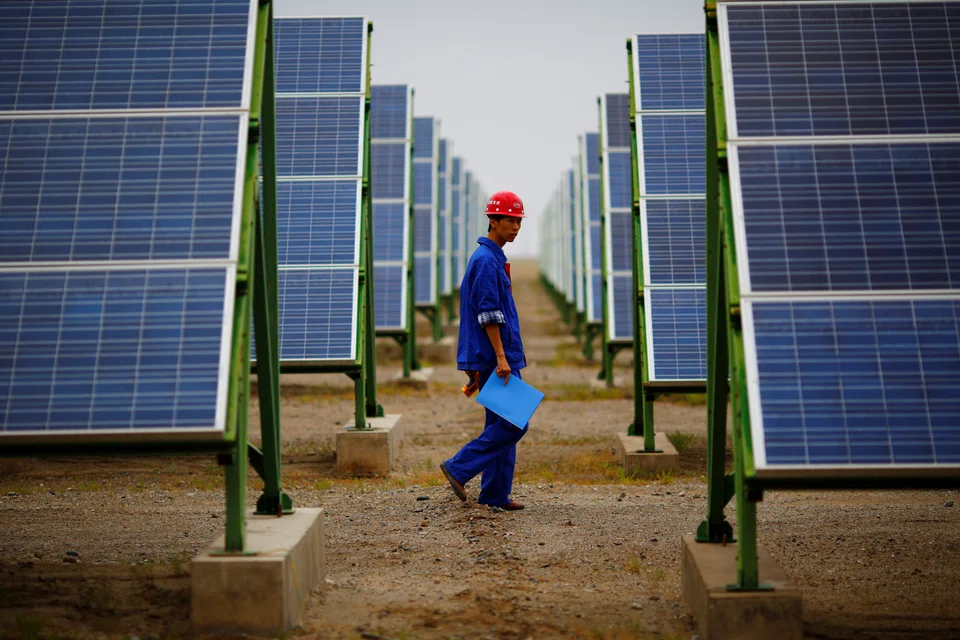
[SINGAPORE] Investors have piled into climate-friendly assets this year despite policy and regulatory rollbacks in the US and Europe, as artificial intelligence (AI) drives a boom in energy infrastructure demand.
Global green bond and loan issuance has reached a record US$947 billion so far this year, according to data compiled by Bloomberg Intelligence. That’s as stock market gauges for renewables are set for their first annual gains since 2020, outperforming the S&P 500 by a wide margin, while shares of power-grid technology companies remain in favour.
The flows are notable in a year when US President Donald Trump backed fossil fuels and dismantled clean-energy subsidies and legislation. Europe has also rolled back some of its toughest environmental rules amid concerns about growth and competitiveness.
Investor optimism
Still, clearer policy signals and an almost 4 per cent expected increase in global electricity demand, driven by AI, cooling and electrification needs, are lifting investor optimism.
“Green investments are increasingly becoming viewed as core infrastructure and industrial plays, not just niche ESG (environmental, social and governance) trades,” said Melissa Cheok, associate director for ESG investment research at Sustainable Fitch. “Capital is likely flowing towards areas with clear revenue visibility, policy backing and structural demand such as grid upgrades and renewables tied to electrification.”
Asia-Pacific companies and government-linked issuers raised US$261 billion from green debt, up about 20 per cent from a year earlier, with China and India backing the rollout of renewables, according to Bloomberg Intelligence. China had a record US$138 billion in green bond issuance, led by its biggest lenders. It also debuted a sovereign offering in London earlier this year.
'%3e%3cpath%20d='M12.1475%2025.5262C13.7713%2025.4295%2014.94%2023.913%2014.94%2021.8832C14.94%2019.5359%2013.474%2018.093%2011.5917%2018.093C11.3745%2018.093%2010.9582%2018.093%2010.8393%2018.1413V25.2086L11.8891%2025.5745C11.8891%2025.5745%2012.207%2025.5262%2012.1475%2025.5262ZM11.4934%2017.6281C13.2567%2017.6281%2014.3843%2016.4292%2014.3843%2014.4501C14.3843%2012.372%2013.275%2011.2973%2011.4339%2011.2973H10.8393V17.6305H11.4934V17.6281ZM6.66078%2025.6482L7.39265%2025.5492C8.02617%2025.4502%208.26403%2025.3053%208.26403%2025.1097V11.6149C8.26403%2011.4193%208.1451%2011.3709%207.23484%2011.249L6.68137%2011.173L6.6219%2010.7588H11.9508C15.7153%2010.7588%2017.0624%2012.0797%2017.0624%2014.1578C17.0624%2015.9666%2015.7748%2017.1909%2013.4969%2017.6305V17.7041C16.111%2017.948%2017.6571%2019.5382%2017.6571%2021.7636C17.6571%2024.3318%2015.8937%2026.0417%2012.1109%2026.0417H6.60132L6.66078%2025.6482Z'%20fill='%232B2B2B'/%3e%3cpath%20d='M20.6287%2025.6505L21.5596%2025.5515C22.1725%2025.4779%2022.4104%2025.3076%2022.4104%2025.112V11.249H21.9346C20.073%2011.3479%2018.982%2013.0095%2018.408%2014.6227L18.1907%2015.5018H17.6555L18.1701%2010.7588H29.3837L29.6421%2015.4787H29.1664L28.9491%2014.6227C28.3728%2012.8645%2027.3047%2011.2743%2025.5002%2011.249H24.9856V25.1856C24.9856%2025.3812%2025.1251%2025.4548%2025.9965%2025.5515L26.7695%2025.6505L26.829%2026.0417H20.5693L20.6287%2025.6505Z'%20fill='%232B2B2B'/%3e%3c/g%3e%3cdefs%3e%3cclipPath%20id='clip0_5242_21648'%3e%3crect%20width='24'%20height='16.8'%20fill='white'%20transform='translate(6%2010)'/%3e%3c/clipPath%3e%3c/defs%3e%3c/svg%3e)
The so-called greenium, the lower borrowing costs on green bonds, is most evident in Asia-Pacific, with some issuers getting more than a 14-basis-point discount for using a green label in November, according to BloombergNEF. Green bonds are often used by companies to raise money for switching to renewable energy or lower-carbon transportation.
BNP Paribas and Credit Agricole are this year’s leading underwriters of green bonds, according to data compiled by Bloomberg. The amount of outstanding green bonds has grown at a 30 per cent compound annual rate over the past five years and issuance now accounts for about 4.3 per cent of the global total, LSE Group researchers said last month.
Easing US interest rates and refinancing needs may boost global green bond sales to as much as US$1.6 trillion next year, said Crystal Geng, environmental, social and governance research lead for Asia at BNP Paribas Asset Management.


Market leader
Green stocks have been a market leader this year. Clean-energy indexes from S&P Dow Jones Indices and WilderShares have surged 45 and 60 per cent, respectively, though both remain below their 2021 peaks.
US solar and battery storage stocks, including SolarEdge Technologies, have been among the top performers, while wind turbine makers have led gains in China and Germany. India has emerged as a hotspot for renewable-energy initial public offerings, with 11 listings raising more than US$1 billion and another six companies seeking more than US$3 billion. Last year, 14 renewable energy companies raised US$2.4 billion through IPOs.
Not all markets are benefiting. US green debt issuance fell 7 per cent to US$163 billion this year and supranational bond sales declined by a similar amount. Fundraising in Germany was steady at roughly US$79 billion.
While India saw record green loan volumes of US$7 billion, strong interest from foreign banks has intensified competition, squeezing financing margins by 5 to 10 per cent on renewable energy and other projects, said Jeanne Soh, head of structured finance for Asia at Sumitomo Mitsui Banking.
Sales of sustainability-linked debt slumped about 50 per cent this year to US$165 billion amid greenwashing concerns, Bloomberg Intelligence data showed. Transition bond issuance more than halved to US$10.9 billion for hard-to-abate sectors.
The trends are likely to reverse over the next two years, said Xuan Sheng Ou Yong, a client portfolio manager for sustainable investing at Robeco in Singapore. Changes to European fund rules will let asset managers define what qualifies as a sustainable investment, opening the door to emissions-cutting investments in higher-polluting sectors, he said.
Overall, global sustainable debt volumes stood at about US$1.6 trillion this year, down more than 8 per cent from 2024, the Bloomberg Intelligence data showed. Separately, more than US$500 billion of social bonds were sold in the US tied to the Government National Mortgage Association, known as Ginnie Mae, which guarantees principal and interest on mortgage-backed securities. BLOOMBERG
Decoding Asia newsletter: your guide to navigating Asia in a new global order. Sign up here to get Decoding Asia newsletter. Delivered to your inbox. Free.
Share with us your feedback on BT's products and services
TRENDING NOW

DBS remains analysts’ pick ahead of Q3 earnings after Singapore banks’ share slump

Singapore identifies 7 firms responsible for haze fires, notices issued urging action: Grace Fu

Good Class Bungalow market activity picks up pace on ‘realistic’ pricing

High Court rules against Julius Baer’s Singapore trust arm in US$50 million family trust dispute

