

Green stocks are big winners as tech boom drives energy demand
Lower interest rates have also improved the outlook for debt-heavy clean-power counters
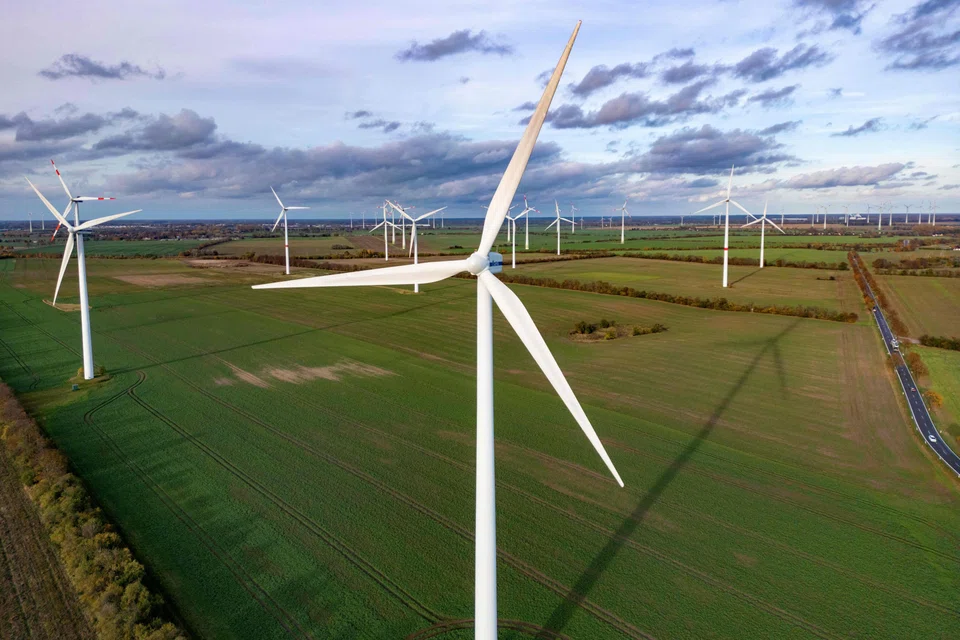
IT WAS supposed to be a glum year for green stocks as US President Donald Trump pushed his Big Oil agenda. Instead, the sector is booming as artificial intelligence (AI) powers massive demand for all kinds of energy.
The S&P Global Clean Energy Transition Index has rallied 44 per cent this year, handily beating a 16 per cent advance in the S&P 500 Index. It’s also outpacing an 11 per cent gain in the S&P Global Oil Index, which was expected to be a big winner on the back of Trump’s “drill, baby, drill” agenda.
That’s an outperformance few had expected going into 2025, when investors fled from stocks such as solar and wind producers on worries that Trump would abandon green policies and boost production of fossil fuels.
While the US has indeed taken steps to overhaul energy policy – including trying to block wind farm projects and dropping out of a global pact to reduce greenhouse gas emissions – other countries such as Germany and China have shored up the sector by committing billions of dollars in spending on grid development and infrastructure for the energy transition.
And it’s more than just demand from AI data centres. Lower interest rates have improved the outlook for debt-heavy green stocks. Valuations are still below average, while many European and Asian countries and even some US states are pushing for the switch to cleaner power.
Evy Hambro, global head of thematics and sector investing at BlackRock, said investor interest in the sector is rising after several years of inertia.
“Sustainable energy has been so overlooked because it’s all exciting to be in the Magnificent Seven,” Hambro said, referring to the group of US technology companies that have been at the forefront of the AI race.
“To me, this is where a huge amount of potential value will come from. We’re seeing dramatically more client engagement, and it’s a high-priority area for us in 2026.”
Clean-energy stocks are among this year’s best performers across regions. US-based maker of fuel cells Bloom Energy has surged 328 per cent, while China’s Sungrow Power Supply – one of the world’s largest inverter and energy storage producers – has rallied 137 per cent. In Europe, Siemens Energy has more than doubled.
SEE ALSO






Those gains are far ahead of the rally in US tech heavyweights, including AI bellwether Nvidia, which is up about 30 per cent.
And oil has declined 14 per cent as Trump’s push for US producers to ramp up drilling has partly fed a global supply glut. The Organization of the Petroleum Exporting Countries now predicts a quarterly surfeit rather than a deficit in global oil markets.
“Renewable energy is having its comeback moment,” said Aneeka Gupta, head of macro research at WisdomTree UK.
The outlook is even better as BloombergNEF predicts electricity demand from AI training and services is set to quadruple within a decade, making data centres one of the fastest-growing electricity users on the planet.
BlackRock’s international chief investment officer for fundamental equities, Helen Jewell, said the demand for energy is getting so high that Trump will likely have to abandon his war on renewable energy.
“I really do think that Trump will recognise the need for additional energy, and he will do it in a way that embraces all forms of energy,” Jewell said. “I’m confident he will do it in 2026 and that will be an additional supercharger for stocks that have already done very well.”
Money flow
The optimism is reflected in rising investment. Renewable energy projects attracted a record US$386 billion during the first six months of 2025, up 10 per cent from the same time last year, according to a report by BloombergNEF.
While US investment fell 36 per cent compared with the second half of 2024, that in the European Union surged over 60 per cent, driven by onshore and offshore wind.
In November, Apollo Global Management agreed to invest US$6.5 billion in a UK offshore wind farm run by Denmark’s Orsted. Portuguese utility EDP is planning to invest up to US$2 billion in renewable energy and battery projects in Asia through 2030.
And last year, Microsoft signed a deal for Brookfield Renewable Partners to provide more than 10.5 gigawatts of energy capacity in the US and Europe starting in 2026. It was touted as the biggest corporate clean-energy purchase agreement ever announced.
Attractive valuations
To be sure, rising concerns that Big Tech companies are overspending on AI are introducing a note of caution in sectors that have benefited from the boom. The S&P Global Clean Energy Transition Index has declined 7.6 per cent since hitting an over two-year peak in November.
But market participants said the longer-term outlook for the sector remains upbeat, as power demand is too high to be met by Big Oil alone.
And the rally this year is far from overdone, with the clean-energy stock gauge remaining about 73 per cent below its 2007 peak. Moreover, the index trades at about 20 times forward earnings, below a five-year average of 23.
“While oil clearly isn’t going away as an energy source, and remains a vital part of the investment landscape, perhaps it’s time investors paid more attention to renewables even as Trump seeks to push back against their use,” said Chris Beauchamp, chief market analyst at investment and trading platform IG. BLOOMBERG
Decoding Asia newsletter: your guide to navigating Asia in a new global order. Sign up here to get Decoding Asia newsletter. Delivered to your inbox. Free.
Share with us your feedback on BT's products and services
TRENDING NOW

Could stablecoins be the future of money?

Vietnam’s northern provinces, not Hanoi or Ho Chi Minh City, are powering near 10% GDP growth

The Assembly Place expands beyond co-living as it targets 10,000 keys by 2030

Once staunchly pro-China, Malaysian Chinese businesses are now distancing themselves from Beijing

