

Helping young riders and persons with disabilities build confidence on two wheels
OCBC’s Learn to Cycle programme guides 20 beneficiaries from SportCares and Minds through foundational cycling skills
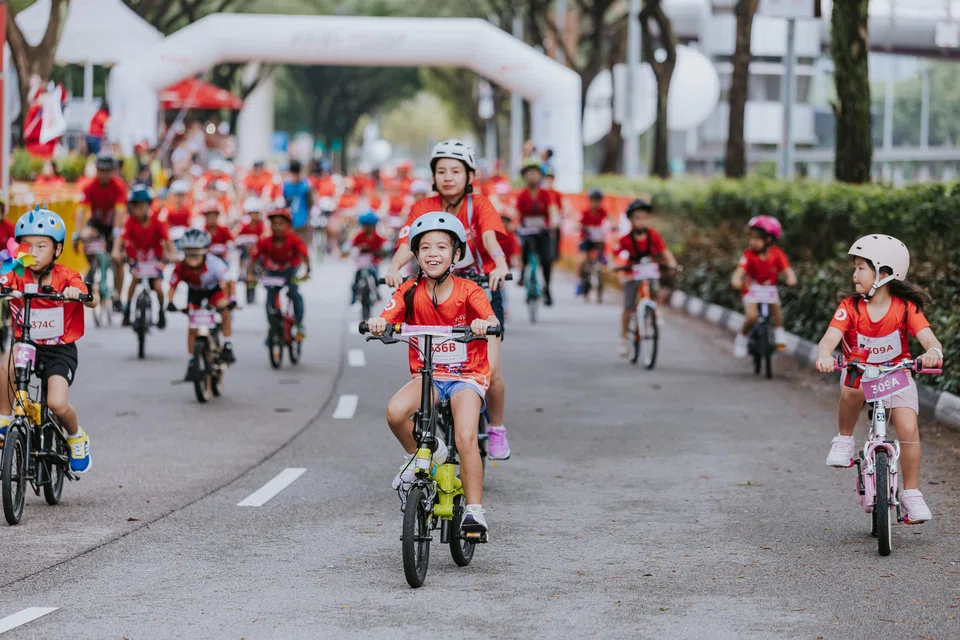
[SINGAPORE] When nine-year-old Syamil cycled into the National Stadium and crossed the finish line of the Mighty Savers Kids Ride alongside hundreds of other riders amid cheers from bystanders, it was a remarkable sight for his mother.
Nur Syafiah Abdul Aziz, 37, said that her son only began learning to ride a two-wheeled bike a few weeks ago.
“(Syamil) has cycled before, but on a four-wheeled bike. He tried a two-wheeled bike, but he fell and got injured,” explained Nur Syafiah. “He’s actually a person who’s willing to try a lot of things, but since then he’s been scared to try again.”
But in the weeks leading up to the event, he managed to cast aside this fear and learn to handle a two-wheeled bike with the help of cycling coaches and OCBC volunteers, earning enough confidence to participate in the race.
Syamil was one of 10 beneficiaries from SportCares, the philanthropic arm of Sport Singapore, who participated in OCBC’s Learn to Cycle programme, which aims to equip underprivileged children and youths with essential cycling skills, as well as road etiquette and safety awareness.
Building confidence on two wheels
The Learn to Cycle programme is the flagship corporate social responsibility initiative of OCBC Cycle, which is Singapore’s largest mass cycling event. In this year’s edition, 7,000 people took part in a series of ride events, including the 40 km Sportive Ride, and the Brompton World Championship, which featured riders in creative costumes.
The bank said that OCBC Cycle is meant to advocate cycling as a meaningful community activity and offers participants the experience of riding on closed roads in scenic city areas. The Learn to Cycle programme aims to extend this opportunity to a wider group while building their confidence and cycling skills.
Initially aimed at children aged 7 to 12, the initiative was expanded in 2025 to include youths up to 16 years old, and cycling workshops covering basic bike maintenance and simple repairs were introduced to engage this broader segment.
Over four sessions, the participants were guided through foundational cycling skills by certified cycling coaches, supported by OCBC staff volunteers. They also took part in a supervised 5 km training ride alongside the volunteers to gain hands-on cycling experience.

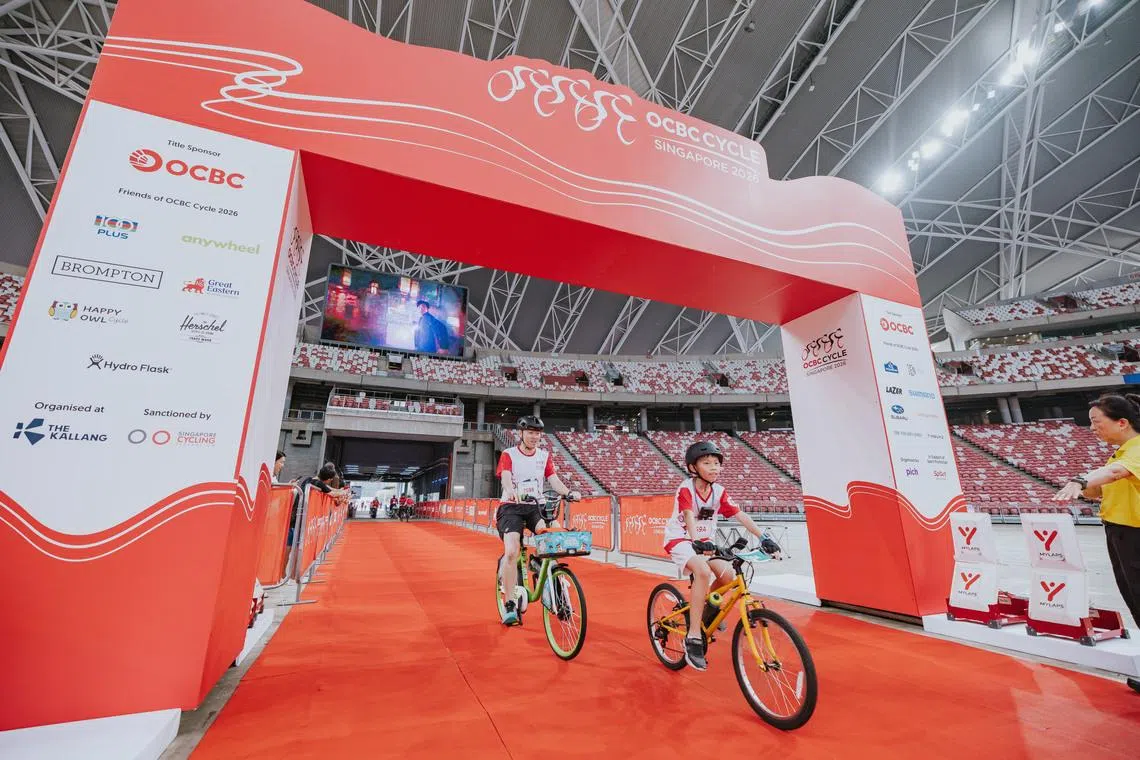
The goal was to become proficient enough to join 500 other young cyclists in the Mighty Savers Kids Ride, which took place along the areas and roads at The Kallang and along Stadium Drive, culminating in a grand finish inside the Singapore National Stadium.
The structured sessions allowed Syamil to overcome his apprehension, said Nur Syafiah. “I encouraged him and gave him support, and (after each lesson) he would come back with a story of what he learned that day – how he managed to ride a two-wheel (bike), how he managed to brake well.”
When asked about how he felt completing the event on a two-wheeled bike, Syamil simply answered: “Happy.”
”I’m proud of him, honestly,” his mother said. “He has a younger sibling. Now he can teach them.”
Making cycling more inclusive
This year, the programme was further extended to include persons with intellectual disabilities (PWIDs), with 10 beneficiaries in their 20s to 50s from social service agency Minds joining the children in learning how to cycle.
OCBC said that while many PWIDs have a keen interest in sports, they are often not given adequate opportunities to try or participate in structured physical activities.
To better support the beneficiaries during the programme, the coach-to-participant ratio was reduced to ensure more personalised attention. Coaches with experience in teaching PWIDs were engaged, and they adopted tailored approaches in educating the riders.
“The cycling coaches were very good,” said Adele Wong, senior manager, strategic communications and engagement (corporate and government partnerships) at Minds.
“They actually did (the lessons) in a way that’s easier for them to understand,” she said, adding that that the coaches broke down the necessary actions into clear steps, which were particularly helpful for PWIDs and prevented them from feeling overwhelmed. “They even started with the basics, like how to mount the bike, which is very helpful.”
OCBC volunteers were also on hand to provide support, including reinforcing coaches’ instructions, assisting with putting on gear, and guiding participants through drills.
During the Mighty Savers Kids Ride, a dedicated flag-off group was organised for PWIDs to create a less overwhelming environment. Each PWID participant was also paired with a volunteer who cycled alongside them throughout the route, providing continuous reassurance.
“(Completing the event) really builds confidence and gives them a sense of achievement,” said Wong. “They can think, ‘I went from not knowing how to cycle to completing the event and earning a medal.’ That mindset can also be applied beyond cycling – that they are able to learn, grow and accomplish something independently.”
Beyond the sport
In the long term, OCBC hopes that the Learn to Cycle programme will inspire a healthy lifestyle by encouraging a lifelong interest in cycling. All participants are given a bicycle and safety gear to take home so they can continue their cycling journey independently.
Both Nur Syafiah and Wong said that beyond the thrill of cycling, the exposure to sports, building of confidence, and sense of community participation are equally invaluable to the beneficiaries.
“I look forward to these kinds of programmes,” said Nur Syafiah. “As a working mom, it’s not easy to get Syamil involved in sports. So it’s a good opportunity since I can be involved, and Syamil also gets to experience (cycling).”
Ng noted that programmes such as Learn to Cycle provide multidimensional benefits for PWID participants. For one, they help them build confidence, develop social interaction skills, and better integrate into the community.
“Secondly, mobility and cognitive skills are also very important, and activities like cycling help to reinforce these skills in a meaningful and engaging way,” she said. “Things like cycling, where you need to use cognitive skills and connect the dots – thinking about when to brake, when to pedal – all this actually helps.”
Wong added: “I hope to have more clients participate, because we want to replicate more of these success stories. It makes them confident and happy, and after this, they can continue to cycle independently. There’s longevity in it, and we really appreciate that.”

Decoding Asia newsletter: your guide to navigating Asia in a new global order. Sign up here to get Decoding Asia newsletter. Delivered to your inbox. Free.
Copyright SPH Media. All rights reserved.
TRENDING NOW

Mooted COE changes will solve category issues, but higher premiums likely: observers

Grab CEO’s wife Chloe Tong on life with Anthony Tan and finding her purpose

Once staunchly pro-China, Malaysian Chinese businesses are now distancing themselves from Beijing

Cliff Tan has 7 million followers and a 4-month waitlist. Why won’t he expand his business?

