High on awareness, low on volume: MAS’ Gillian Tan on blended finance
Blended finance is a capital-raising approach that leans on investors with higher risk appetites to draw in commercial investors that normally shun risky projects such as climate tech research

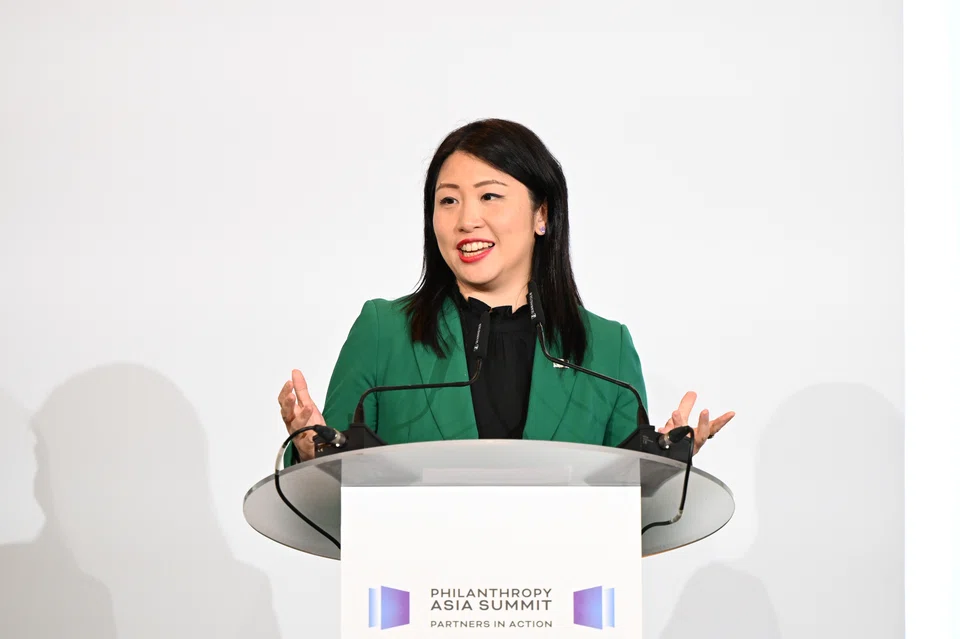
ASIAN philanthropists need to put more “risk-tolerant” money behind the region’s green ambitions, especially in support of blended finance, said the Monetary Authority of Singapore’s (MAS) chief sustainability officer Gillian Tan.
The region has done “fairly well” in creating awareness of blended finance, but financing is still “badly needed” in areas such as the retirement of coal assets, she added.
“If we were to look at quantitative measures of success, such as blended finance volumes, I’m afraid it will be difficult to score us highly,” said Tan, who was speaking at the Philanthropy Asia Summit, a partner event of the sustainability conference Ecosperity, on Wednesday (Apr 17).
Blended finance is a capital-raising approach that leans on investors with higher risk appetites, such as development funds and philanthropists, to draw in commercial investors that normally shun risky projects such as climate tech research.
Even as awareness has grown, the volume of climate-focused blended finance in Asia-Pacific has fallen in the past five years, and “Asean volumes have remained flat”, said Tan.
The distribution of financing is also uneven, with a focus on renewables. “For Asia to make a successful transition, financing is also badly needed in other areas, including the retirement of coal assets, climate tech and the decarbonisation of hard-to-abate industrial sectors,” she noted.
The low volume of blended finance is a global problem. The Organisation for Economic Co-operation and Development estimates that US$4.2 trillion is required annually in developing countries to meet the United Nation’s Sustainable Development Goals.
“The need to channel capital to sustainable infrastructure investments in the region is significant and urgent. Yet, capital is not flowing to where it needs to be,” said Tan.
Low bankability in Asia is a key reason. According to one industry estimate, about 35 per cent of sustainable infrastructure projects are marginally bankable, while 55 per cent are unbankable, explained Tan.
Role of philanthropy
Tan called on philanthropists and concessional capital providers to increase their contributions of risk-tolerant capital. “This plays a powerful de-risking role, and can enable multiples of commercial investments and financing to be crowded in,” she said.
She noted that the philanthropic appetite for climate-related projects has been low: In 2021, less than 2 per cent of philanthropic giving was focused on climate change mitigation.
Another issue Tan raised was the shortage of effective risk mitigation mechanisms and tools. One solution is to scale up legacy risk management mechanisms, as the market is already familiar with these.
Such mechanisms include “currency hedging facilities to address local currency risk; or guarantees that mitigate credit or liquidity issues, so that longer-tenure financing can be extended”, said Tan.
Another solution is to conduct more studies to identify “optimal combinations of capital stacks”, which can enhance returns and mobilise more private capital.
Tan also called for the region to “double down” on the development of innovative risk-financing solutions. An example is the development of insurance that covers the leakage of carbon dioxide from carbon capture, usage and storage (CCUS) facilities.
“(Such efforts) actually support our de-risking work and can enable private capital to flow with confidence into crucial transition sectors, even when these are nascent and viewed as riskier,” added Tan.
Need for more partners
Recognising the importance of blended finance, Singapore last year launched Fast-P – short for Financing Asia’s Transition Partnership. The blended finance initiative aims to invest up to US$5 billion to support Asia’s green transition.
Tan said that she is heartened by the interest Fast-P has received, but noted: “Let me be clear: We need more partners, and we need to extend the scope of the areas to be financed.”
New areas being explored include the decarbonisation of hard-to-abate sectors and emerging technologies, such as hydrogen power and CCUS, said Tan, adding that there are active discussions with potential partners, such as multilateral development banks and philanthropists.
Pointing out that Asia accounts for about half of greenhouse gas emissions, she said: “We need to do better, and we need to do more and at a faster pace here in Asia”.