

How green should a green loan be? DBS, OCBC’s loan to Hong Leong tests limits of sustainable finance
The loan for the Tengah project highlights complexities in sustainable finance, where adherence to established frameworks may not mean alignment with broader ecological or social expectations

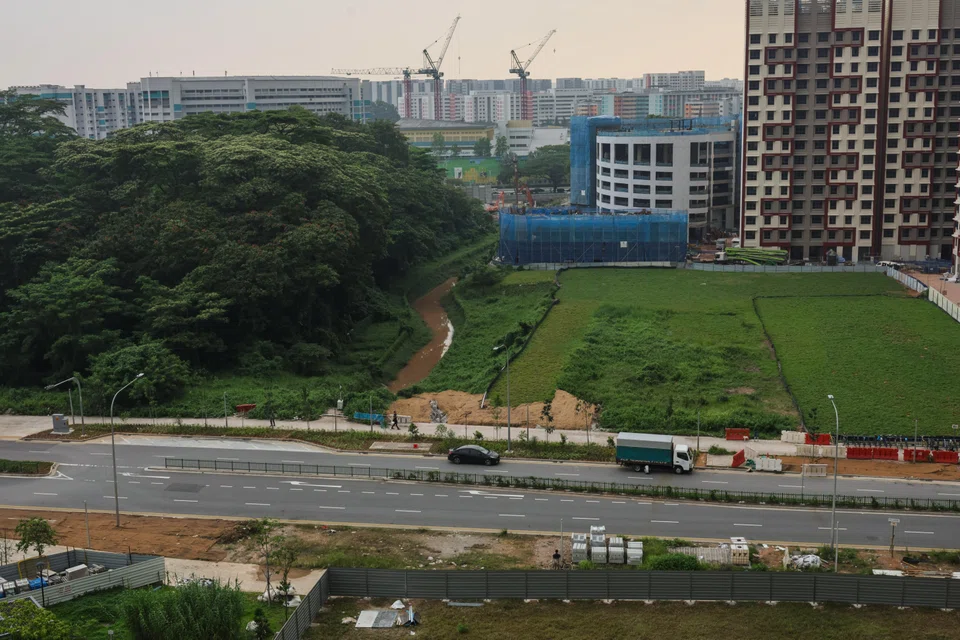
[SINGAPORE] South-east Asia’s two largest banks, DBS and OCBC, along with property developer Hong Leong, were recently called out over a green loan for the development of a mixed-use residential project at Tengah.
A post on online publishing platform Substack said that a BT reader had sent an e-mail criticising the S$692 million loan’s “green” label as a “clear case” of greenwashing, as its construction would involve the clearing of secondary forest in Tengah, home to abundant native flora and fauna.
In response to queries from The Business Times, DBS – the anchor lender and sole green adviser of the deal – and Hong Leong have said that the land parcel does not include any primary forests. An environmental impact study found that the site consists predominantly of scrubland, herbaceous vegetation and abandoned land-forest.
Both entities, as well as OCBC, have also said that the transaction satisfied the criteria laid out in several industry standards involving green financing for real estate, as well as regulatory requirements under the government land sales (GLS) programme.
This episode highlights complexities in sustainable finance, where adherence to established frameworks may not always result in alignment with broader ecological or social expectations.
“Two things can be true at once: A building can meet strong energy or green building criteria, as required on GLS sites under the Building and Construction Authority’s (BCA) 2021 green building certification scheme, and still cause some degree of nature loss if it requires land-clearance,” said Liang Hao, associate professor of finance at the Singapore Management University.
Alignment with industry and regulatory standards
The site at Tengah Gardens Avenue was put up for sale under the GLS programme, which means the decision to convert the land for development was made under national housing and urban planning frameworks.
As a GLS site, the land parcel is subject to regulatory compliance and sustainability targets required by the programme, said a spokesperson from Hong Leong, which is leading the consortium developing the site.
Developers will therefore have to meet higher standards under BCA’s green mark certification scheme for green buildings, including energy efficiency and sustainability,
The spokesperson also said that this is in accordance with Singapore’s green building master plan, which is part of the country’s wider national plan to advance its agenda on sustainable development, known as the Singapore Green Plan 2030.
“Hong Leong Holdings takes a proactive approach to mitigate the environmental impact of our residential projects by integrating regulatory compliance and biodiversity considerations into its development planning processes,” said the spokesperson.
In addition, the mixed-use development is said to be aligned with the vision of establishing Tengah – which has been earmarked for residential development – as Singapore’s first forest town.
When the green loan transaction was first announced, the media release stated that the mixed-used development would be “nature-aligned”, featuring biodiversity-friendly design, native landscaping and smart construction technologies to enhance ecological integration, reduce environmental impact and support sustainable urban living.
According to a DBS spokesperson, the environmental impact studies also resulted in extensive environmental management and monitoring programme recommendations.
“These ensure the responsible and sustainable development of projects within the area,” added the spokesperson.
Beyond regulatory and compliance requirements, both DBS and OCBC said that the transaction meets the criteria outlined in the Green Loan Principles, an internationally recognised standard that sets parameters on how proceeds from green loans should be used.
It is also in line with the requirements set out in the Singapore-Asia taxonomy – the city-state’s national classification system that sets criteria and thresholds on the type of economic activities that are eligible for sustainable and transition financing.
“Notwithstanding this, mitigation measures will be taken to minimise developmental impact including the establishment of an eco-corridor to maintain biodiversity connectivity and adopting phased vegetation clearance to allow species to adapt progressively,” said a DBS spokesperson.
Jeong Yoonmee, head of the sustainability office at OCBC’s global wholesale banking, said: “We recognise the need to balance providing essential residential space with preserving nature, and are committed to supporting the development of liveable and environmentally responsible communities.”
How green is green?
Even though the transaction was in line with international standards and domestic regulations, the criticisms of its “green” labelling suggest the need for both lenders and Hong Leong to be more transparent about the overall impact of the residential development, observers told BT.
This could include publishing the environmental impact assessment or baselines, stating clearly that the site is mainly scrub and abandoned land, as well as quantifying residual impacts and planned restoration or the purchase of carbon offsets, said SMU’s Prof Liang.
Structuring this loan as a key-performance-indicator-linked debt instrument – such as a sustainability-linked loan (SLL) – could also have been an alternative to minimise the risk of greenwashing criticisms.
“Where material habitat conversion is unavoidable and nature outcomes are uncertain, an SLL over a green label could be preferred to avoid perceptions of greenwashing, and communicate why,” said Liang.
With such a structure, lenders could then consider embedding nature-related targets, such as avoiding a net loss in biodiversity.
Professor Johan Sulaeman, director of the Sustainable and Green Finance Institute at the National University of Singapore, said that disclosing ecological impacts and linking financing to measurable outcomes in biodiversity through an SLL would give sustainable financing tools greater credibility and enhance public confidence.
“This approach reinforces the role of sustainable finance as a constructive instrument for environmental progress, while recognising the practical realities of urban development,” he added.
Observers also noted that there is room for green financing frameworks to be improved by incorporating ecological costs and biodiversity safeguards.
Taking into account the ecological costs of land preparation, on top of the long-term performance of assets and buildings, could bridge the gap between industry and regulatory standards and public expectations of what “green” should mean, said Prof Sulaeman.
However, current sustainable financing frameworks are primarily focused on climate mitigation. Biodiversity safeguards are still largely based on broad “do no significant harm” principles, and are less stringent than energy metrics for the real estate sector, said Prof Liang.
He recommends lenders and borrowers apply the mitigation hierarchy – avoidance, minimisation, restoration and then offsets – in their transactions.
“Until taxonomies fully integrate nature criteria for buildings, a credible approach is to treat such financings as green only if there is a measurable biodiversity plan with baseline, targets, offsets that are independently verified… When evaluating the impact of a project, one should consider all kinds of impacts on various stakeholders – including jobs, community welfare, economic growth, manufactured goods -– as a whole to assess its overall impact,” he added.
Ultimately, even though the Tengah site does not contain primary forests, Prof Sulaeman said that the ecological value of scrubland and secondary vegetation should not be dismissed, particularly in a dense urban environment such as Singapore.
TRENDING NOW

Grab CEO’s wife Chloe Tong on life with Anthony Tan and finding her purpose
Hwa Seng Builder, two China companies win S$1.2 billion Tuas Road Viaduct phase two contracts

Deal between tycoon friends sparks scrutiny of Philippine power sector

Canada is upping oil flows to Asia, but South-east Asia’s refineries aren’t ready to handle them yet

