Indonesia’s near-term coal reliance could grow with Prabowo’s nickel focus

Investors will be watching the new administration’s policies on mitigating emissions

Sharanya Pillai
Published Mon, May 20, 2024 · 05:00 AM
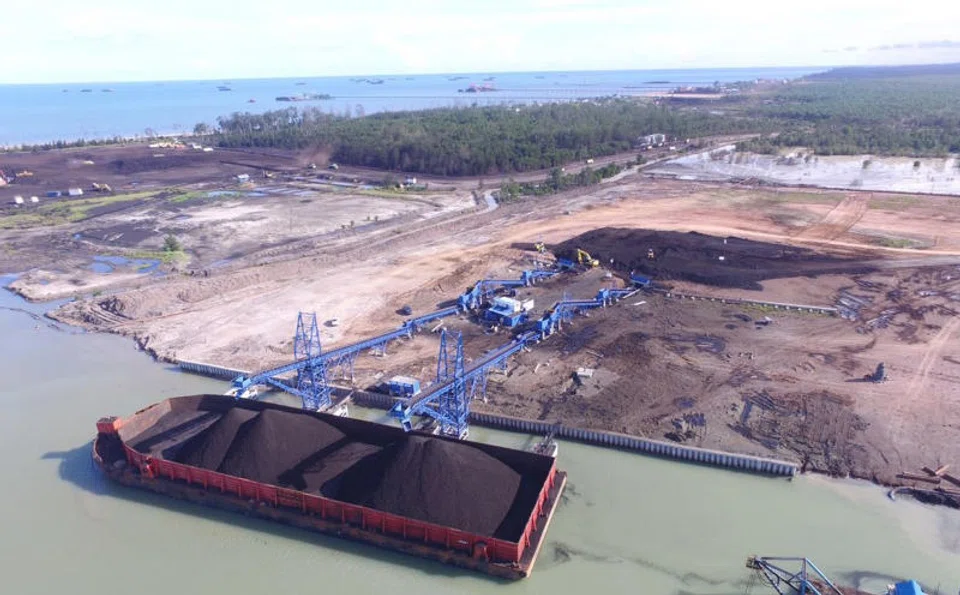
    • A coal mine in Kalimantan, Indonesia. The country's coal reliance is partly driven by a need for energy self-sufficiency.
    • A coal mine in Kalimantan, Indonesia. The country's coal reliance is partly driven by a need for energy self-sufficiency. PHOTO: GEO ENERGY

    INDONESIA’S need for coal could rise in the years ahead, with incoming president Prabowo Subianto’s focus on economic growth and nickel processing.

    This comes even as the country seeks to wean itself off the fossil fuel, with a US$20 billion plan to finance the transition under the Just Energy Transition Partnership (JETP) mechanism.

    Investors will be watching the new administration’s rhetoric and policies on mitigating emissions impact and pursuing its established green ambitions, industry players told The Business Times.


    Indonesia is expected to raise its coal production over the next few years, hitting 970.1 million tonnes by 2030, said a recent report by Sustainable Fitch.

    One reason for the expected increase is the pro-growth agenda of Prabowo and vice-president-elect Gibran Rakabuming Raka. They have announced a gross domestic product growth target of 8 per cent in the next five years.

    “Prabowo’s and Gibran’s pursuit of expansion and economic reform is likely to drive the demand for coal even higher in the short to medium term, as Indonesia is a highly carbon-intensive economy and one of the world’s largest exporters of fossil fuels,” said the report’s author, Melissa Cheok.

    Another factor is the need for energy self-sufficiency, which was also one of Prabowo’s election promises, said Marissa Lee, associate director at policy advisory Global Counsel.

    “(With) increased geopolitical volatility, where energy importers are more vulnerable to supply shocks, the case for coal as a baseload power source can be easily defended,” she said.

    A third driver of coal reliance in Indonesia would be Prabowo’s focus on developing the nickel processing industry, in line with his predecessor.

    Current president Joko Widodo in 2020 banned exports of Indonesia’s vast nickel ore reserves, encouraging companies to process the metal onshore instead. He hopes to cement Indonesia in the global supply chain for electric vehicle (EV) batteries, for which nickel is a key raw material.

    Indonesia produced 1.4 million tonnes of nickel in 2023 and is expected to produce almost 2.4 million tonnes by 2030, according to research company BMI.

    The nickel processing boom has, however, led to a rise in so-called “captive” coal plants – off-grid plants that serve specific industrial facilities.

    In a JETP strategy document dated November 2023, the Indonesian government explained the need for captive coal plants. Nickel miners and processors require “highly reliable, 24-hour power at a high volume”, it said, and tapping renewable energy is difficult.

    “(These) industrial operations are often located in remote or ecologically sensitive areas that are not within (the) on-grid system. Providing viable renewable options for industrial power will be challenging,” said the government.

    Indonesia in 2022 stipulated that new captive coal plants must be retired by 2050. In the near term, however, more coal capacity is likely to come online, said Fabby Tumiwa, executive director of the Institute for Essential Services Reform (IESR), an Indonesian think tank.

    Some nickel players are considering clean power sources such as hydro and geothermal energy. They nevertheless plan to build coal power plants first, as they expect shorter timelines to bring coal power online, said Ali Izadi-Najafabadi, Asia-Pacific head at research organisation BloombergNEF.

    What does all this mean for environmentally focused investors who are betting on Indonesia’s green ambitions? In spite of nickel-related demands, Prabowo is largely expected to keep to Indonesia’s commitment to wean off the fossil fuel under the JETP.

    Beyond the JETP, Indonesia has also committed to achieving net zero by 2060 or sooner. It has also signed off on the Asean Strategy for Carbon Neutrality, which includes efforts such as promoting a regional circular economy.

    “With these commitments in place, we can expect Indonesia will want to meet its international obligations,” said Simon Tay, chairman of the Singapore Institute of International Affairs.

    Still, the country could face a challenge convincing investors that it is committed to its coal transition. Indonesia needs substantial funds for the early retirement of its coal facilities, many of which are barely halfway through their useful life.

    “The average age of a coal plant in Indonesia is around 12 to 13 years,” said Tumiwa of the IESR. “The economic value of this asset still has a long way to go.”

    Tiza Mafira, director of the Climate Policy Initiative think tank, said discussion is needed on how to “decarbonise those plants that are going to come online... and assure investors that Indonesia is actually consistent and committed”.

    “Otherwise it is actually providing conflicting signals to investors; nobody really knows whether we’re green or not,” she said.

    Lee of Global Counsel noted that reducing Indonesia’s reliance on coal is also politically challenging.

    The Widodo government had rolled out much-anticipated renewable energy reforms in 2022, including a new pricing system for renewables and incentives, such as financing facilities and easier licensing in forested areas. However, these may not go far enough to help renewable energy compete with coal.

    “Due to entrenched coal subsidies, there is little incentive for state utilities firm PLN to consider purchasing electricity at rates exceeding the established cost of coal-generated electricity, set at just over 6 US cents per kilowatt-hour for Java and slightly higher outside the main island,” said Lee.

    For hints of the country’s renewable energy direction, BloombergNEF’s Izadi-Najafabadi is keeping an eye on Prabowo’s Cabinet picks – particularly for the positions of minister for energy and mineral resources and minister for state-owned enterprises. Both wield some control over state power supplier PLN.

    Indonesia’s energy policies could also be swayed by the demands of global investors.

    Said Lee of Global Counsel: “As EV consumers and investors grow more aware about the environmental and social impact of nickel processing, battery manufacturers will come under greater pressure to decarbonise their supply chains. This could drive investment in renewable energy as a replacement for coal in Indonesia.”