

Investment opportunities across a changing food system
Challenges of the 21st century are propelling the global food system towards an inflection point
 Add BT as a preferred source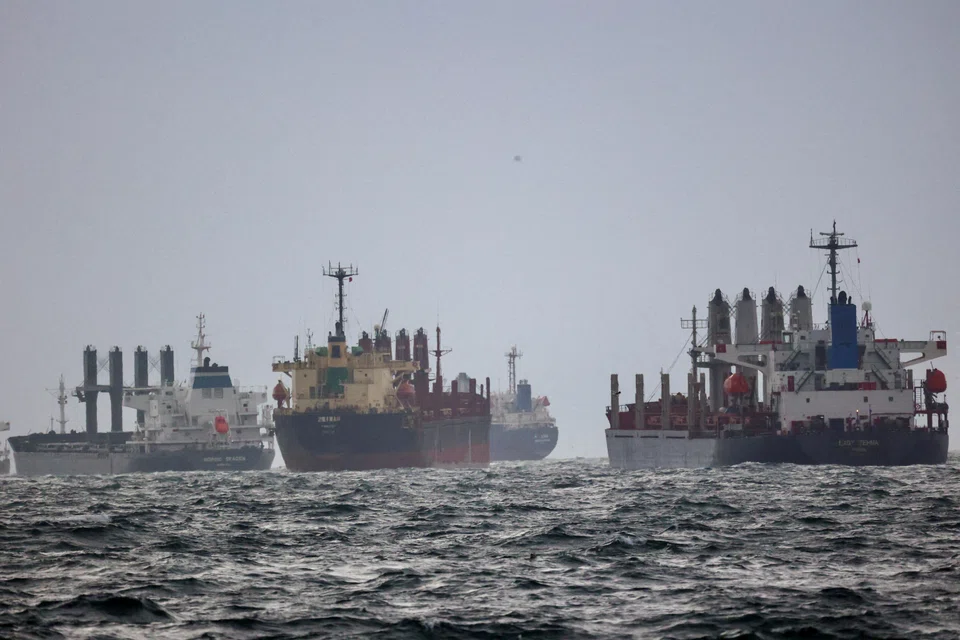
FROM farm to fork, our global food system is vast. It produces and distributes 20 trillion calories daily. It is also complex, highly inefficient, and increasingly unfit for purpose. It is becoming increasingly apparent our food system needs to be more productive and sustainable to meet the challenges of the 21st century.
The good news is the entire food value chain is responding, with innovation and technology leading the way, and is in the early stages of a major transformation.
For investors, there are two compelling reasons why this transformation needs to be on their radar. First, food can have major economic and political implications. Second, the drive for a more productive and sustainable food system leads to opportunities for investors to earn returns as well as to have measurable impact.
Geopolitical and macroeconomic vulnerabilities
Food is a vital good, and any disruption in its distribution can create immense economic and political turbulence. Given the reliance of the food system on international trade, interruptions in food supply chains can quickly lead to food price inflation, which hits consumers differently. If left unchecked by governments and central banks, food inflation can lead to civil unrest, particularly in countries where food expense makes up a large share of household spending.
The Russia-Ukraine war was a stark reminder of the global dependence on a few regions for critical crops and resources. Together both countries account for nearly 30 per cent of global wheat exports, and disruptions to their regular shipments sent wheat prices soaring. The conflict also impacted distribution of corn and fertiliser, causing their prices to surge as well. Going forward, investors need to recognise that disruptions to food supply and distribution – whether they are due to extreme weather events or geopolitical tensions – will likely be more frequent and widespread.
These issues are of particular concern for countries such as Singapore that rely heavily on food imports. Given that disruption to the food system will increase going forward, managing supply chains and finding innovative technology to boost production is top of mind for policymakers and investors alike. At the same time, the convergence of diets around meat, dairy, wheat and fats will only intensify global shocks from disruptions to key regions of production.
Navigate Asia in
a new global order
Get the insights delivered to your inbox.
Parallels to the energy sector’s journey
Today’s food system, in some ways, resembles the energy sector from a decade ago. It provides an existential good with inherent environmental, social and governance (ESG) tensions and opportunities in its production system – but not much detailed data to make informed and nuanced trade-offs. Applying an ESG lens to the food system can be exceptionally challenging. Nevertheless, food is becoming more prominent, with investors given the food system’s interconnections with climate and biodiversity. For investors with commitments to decarbonisation and sustainability, there is a growing recognition that the broad food system needs to play a vital role in achieving both objectives.
For investors in South-east Asia with commitments to decarbonisation and sustainability, cold storage and transportation may offer both attractive returns and impact. For example, a large percentage of food loss in the region is related to inadequate cold storage and transportation across the food supply chain. For ESG-minded investors, cold logistics offers the opportunity to make an impact by directly reducing food loss.
At the same time, the region’s growing middle class is demanding higher-quality and fresher food options that are dependent on a consistent cold chain. This has led to higher rents for cold storage property and is driving a booming cold storage market that is expected to be at 20 per cent annually over the next decade in places such as China, Vietnam and India. Regional logistics providers, such as Nichirei, also benefit from the increasing convergence of diets that is accelerating across Asia.



Course of action
So, what should ESG investors do?
ESG investors need to realise that there are no perfect solutions when it comes to the food system. Given the criticality of meeting global food demand, excluding some segments of the food system based solely on carbon emissions is an ineffective strategy. Rather, an emphasis on active research that focuses on the actions of the broader industry as well as individual companies to address their most material ESG issues can be more effective.
Investors should have an approach that acknowledges current needs and limitations while working to shorten the transition to better, more sustainable options. For example, identifying the most forward-thinking fertiliser manufacturers that are taking relevant measures to reduce their carbon footprint today, while also investing in startups working on more sustainable alternatives such as biologicals.
One way of discerning between leading and lagging fertiliser incumbents is to really examine their corporate strategy – learning exactly how their research dollars are spent, assessing how realistic their carbon emissions targets are, the state of their progress, and whether achieving these goals relies on current or future technology.
Investors also need to seek greater disclosure on a regular basis from the companies they invest in. Access to quality information and data is the basis for making informed trade-offs and identifying the most innovative incumbents. Greater transparency in data, however, is not costless and may be especially burdensome for small companies and farmers. Collective advocacy by investors for greater disclosure has led to better data in other sectors and industries. The FAIRR Initiative, for example, is an investor network that has been effective in providing data on a range of ESG risks associated with food production, and offers tools and indices on the animal protein industry. Participating in initiatives such as this would be a productive step.
From a sustainability perspective, the food system has evolved tremendously since the technological advances of the Green Revolution in the 1960s. Nevertheless, our food system, which represents 40 per cent of global employment, remains fragile, and the challenges it faces are significant. Our future food system will need to undergo significant changes to meet these challenges, and whether seeking attractive investment opportunities in public and private markets or mitigating hidden risks, it is imperative international investors understand the rapid transformation that is underway in our global food system.
The writer is the head of thematic research at asset management firm PGIM
Decoding Asia newsletter: your guide to navigating Asia in a new global order. Sign up here to get Decoding Asia newsletter. Delivered to your inbox. Free.
Copyright SPH Media. All rights reserved.
TRENDING NOW

Malaysia’s 8th richest man Jeffrey Cheah wants Sunway business to last 10 generations

Middle East-linked energy supply shocks put Asean Power Grid back in focus

Inside Indonesia’s trial of Gojek co-founder: How a Google laptop deal became a multitrillion-rupiah case

Richard Eu on how core values, customers keep Singapore’s TCM chain Eu Yan Sang relevant

