

Japan’s love of plastic tested by supply constraints
The country ranks second in the world for per-capita plastic packaging waste, behind only the US
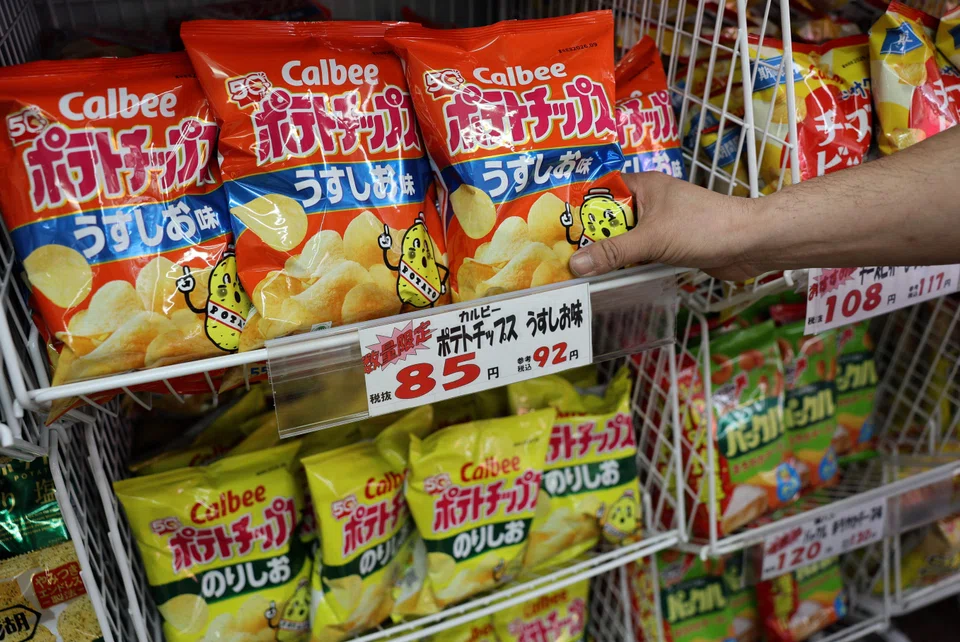
FIRST-TIME visitors to Tokyo convenience stores are often struck by the staggering array of choices on offer: shelves overflowing with sushi, pork cutlet sandwiches and matcha sweets. Perhaps even more surprising than the impressive variety is the realization that virtually every item — even a single banana — comes individually wrapped in plastic.
Driven by an obsession with hygiene and convenience, this phenomenon is even more glaring at supermarkets, where each piece of fruit is swaddled in plastic foam, and herbs come enclosed in polystyrene trays and wrapped in a layer of cellophane.
Takeaway meals come in plastic trays with clear plastic lids and include small plastic packets of soy sauce, plastic-wrapped wet wipes and plastic-wrapped chopsticks. Crackers are often protected by three layers of plastic: sealed in a clear pouch, nestled in a tray and secured in an outer bag.
Supply chain disruptions triggered by the Iran war, however, have forced a rethink.
Japan is particularly reliant on the Middle East for imports of naphtha, a petroleum byproduct used to make synthetic items such as food containers and plastic film packaging. This vulnerability came into sharp focus in May when snack giant Calbee switched out its colorful potato chip bags for black-and-white packaging to save on petroleum-based ink.
Since then other manufacturers and retailers have overhauled their packaging to use less plastic to cope with rising costs.
'%3e%3cpath%20d='M12.1475%2025.5262C13.7713%2025.4295%2014.94%2023.913%2014.94%2021.8832C14.94%2019.5359%2013.474%2018.093%2011.5917%2018.093C11.3745%2018.093%2010.9582%2018.093%2010.8393%2018.1413V25.2086L11.8891%2025.5745C11.8891%2025.5745%2012.207%2025.5262%2012.1475%2025.5262ZM11.4934%2017.6281C13.2567%2017.6281%2014.3843%2016.4292%2014.3843%2014.4501C14.3843%2012.372%2013.275%2011.2973%2011.4339%2011.2973H10.8393V17.6305H11.4934V17.6281ZM6.66078%2025.6482L7.39265%2025.5492C8.02617%2025.4502%208.26403%2025.3053%208.26403%2025.1097V11.6149C8.26403%2011.4193%208.1451%2011.3709%207.23484%2011.249L6.68137%2011.173L6.6219%2010.7588H11.9508C15.7153%2010.7588%2017.0624%2012.0797%2017.0624%2014.1578C17.0624%2015.9666%2015.7748%2017.1909%2013.4969%2017.6305V17.7041C16.111%2017.948%2017.6571%2019.5382%2017.6571%2021.7636C17.6571%2024.3318%2015.8937%2026.0417%2012.1109%2026.0417H6.60132L6.66078%2025.6482Z'%20fill='%232B2B2B'/%3e%3cpath%20d='M20.6287%2025.6505L21.5596%2025.5515C22.1725%2025.4779%2022.4104%2025.3076%2022.4104%2025.112V11.249H21.9346C20.073%2011.3479%2018.982%2013.0095%2018.408%2014.6227L18.1907%2015.5018H17.6555L18.1701%2010.7588H29.3837L29.6421%2015.4787H29.1664L28.9491%2014.6227C28.3728%2012.8645%2027.3047%2011.2743%2025.5002%2011.249H24.9856V25.1856C24.9856%2025.3812%2025.1251%2025.4548%2025.9965%2025.5515L26.7695%2025.6505L26.829%2026.0417H20.5693L20.6287%2025.6505Z'%20fill='%232B2B2B'/%3e%3c/g%3e%3cdefs%3e%3cclipPath%20id='clip0_5242_21648'%3e%3crect%20width='24'%20height='16.8'%20fill='white'%20transform='translate(6%2010)'/%3e%3c/clipPath%3e%3c/defs%3e%3c/svg%3e)
Convenience-store operator Lawson is rolling out paper lids for takeaway coffee cups. Some to-go salads and pastas are now served in paper bowls. Rival FamilyMart recently said it was starting to offer shopping bags made with more biomass materials like sugarcane, while major supermarket chain Ito-Yokado in May announced it would start selling its takeaway tempura in paper packets.
Radish Boya, one of Japan’s leading food delivery services and part of the listed online grocery group Oisix Inc., has begun wrapping produce in paper.
On a recent Tuesday morning inside the chilled warehouse of the company’s logistics center in Takashimadaira, a northern Tokyo suburb, employees in hairnets, caps and face masks work in pairs, carefully wrapping bananas in sheets of paper and securing them with tape.

Nearby, another team preps onions with the same meticulous care before placing them in cardboard boxes for shipment. Now only select produce such as halved daikon radishes are bagged in plastic.
“It may sound odd, but this crunch has actually been an opportunity,” says Shingo Teshima, a spokesman for Radish Boya, which is known for selling organic produce. “I hope it’ll be a catalyst to shift consumer behaviour. We’d like to see sustainable packaging continue.”
Reversing Japan’s penchant for single-use plastic, though, will be no small task. The country ranks second in the world for per-capita plastic packaging waste, behind only the US, according to the United Nations.
Japan produced about 7.7 million metric tons of plastic waste in 2023, roughly 63 kg er person, almost half of which came from packaging and single-use containers. “With companies forced to reevaluate their packaging materials, now is the time to fundamentally reassess the use of disposable plastics,” says Prentice Koo, head of the Global Plastics Treaty Project at Greenpeace East Asia.
Environmental groups often criticise Japan’s slow progress on reducing plastic, with officials resisting mandatory caps on single-use plastic.
The country’s gradual approach also applies to its green transition as a whole: Although it has pledged to reach net-zero emissions by 2050, the government extended the lifespan of its thermal power plants rather than setting aggressive phaseout targets for fossil fuels.
As the Iran war derailed supply chains, companies unable to ditch plastic paid the price. Dumpling maker Gyoza no Mansyu had to suspend sales of its refrigerated gyoza dumplings in May because of a shortage of petroleum-derived packaging materials.
FP Corp, Japan’s top maker of supermarket food trays and takeaway bento containers, raised its prices 20 per cent in June, because of a spike in the price of materials such as polystyrene. Even after the reopening of shipping lanes, supply chains are expected to remain strained for months, leaving plastic prices elevated.
Japan’s obsession with packaging stems from food-safety scares in the 1950s and ’60s, which prompted consumer groups to demand strict rules. People developed an aversion to open produce bins, with consumers preferring sealed packaging as a guarantee that their food hasn’t been touched by countless strangers.
During the economic boom of the ’70s and ’80s, such demands merged with the “zero defect” standards of Japan’s leading manufacturers including Toyota Motor and Sony Group.
Blemished oranges and bruised peaches were seen as failures in quality control. The increase of single-person households has also driven sales of grab-and-go meals, which rely on plastic containers for easy transport.
When Radish Boya first attempted to switch from plastic to paper or loose packaging a few years ago for environmental reasons, customer feedback was so negative that it abandoned the initiative after a few weeks, Teshima says.
Some customers were concerned that the lack of plastic packaging would affect freshness of the produce, while others complained that loose produce was more awkward to handle. “Customers said the eco-friendly packaging was less convenient when transferring produce to refrigerators,” Teshima says.
Hideshige Takada, a professor of environmental studies at Rikkyo University, says cultural expectations will be difficult to change. But the government could do more to incentivize behavioral shifts, he says. “Plastic’s been cheap, so of course people use it. We need subsidies and government support for sustainable materials instead.”
Government initiatives to curb plastic use have yielded some success. In 2020, Japan introduced a compulsory plastic bag charge to discourage single-use shopping bags. This resulted in a roughly 70 per cent reduction in use by 2023.
The government is pushing for more plastic recycling, with an aim to more than double the use of recycled plastics, to 1 million tons, by 2030 from 2023.
But while the country boasts a plastic recycling rate of over 80 per cent, more than half of that is “thermal recycling” — which means burning plastic to generate electricity, adding to carbon dioxide emissions. At the same time, many Japanese retailers, especially in the food industry, avoid using recycled plastic because of stringent rules around food safety.
About 60 per cent of recyclable plastic ends up being exported, according to the Japan-based Plastic Waste Management Institute. The vast majority of that is shipped to processing hubs in Southeast Asia, including Malaysia and Vietnam.
In the long run, Japanese consumers may have little choice but to begin using plastic alternatives. A global shift away from fossil fuels could mean oil refineries eventually scale down operations, decreasing the global supply of naphtha.
A trade ministry advisory panel last year warned that Japan could face a plastic shortage as soon as 2030 unless the country scales up recycling and reins in usage.
Radish Boya says it’s hoping to stick to its recent changes, even after shipping returns to normal in the Middle East. Consumers, faced with recent price hikes, may now be more accepting of alternatives, Teshima says. “This time around, we hope the pricing pressure will help to change the mindset of customers.” BLOOMBERG
Decoding Asia newsletter: your guide to navigating Asia in a new global order. Sign up here to get Decoding Asia newsletter. Delivered to your inbox. Free.
Share with us your feedback on BT's products and services
TRENDING NOW

Once staunchly pro-China, Malaysian Chinese businesses are now distancing themselves from Beijing

Looking beyond looming CEO succession, should UOB potentially pursue a transformative merger?

Could stablecoins be the future of money?

Grab CEO’s wife Chloe Tong on life with Anthony Tan and finding her purpose

