

Common standards needed to boost trade in renewable energy certificates
Such certs help companies sign offtake deals with green power producers in Asean: EMA official
 Add BT as a preferred source
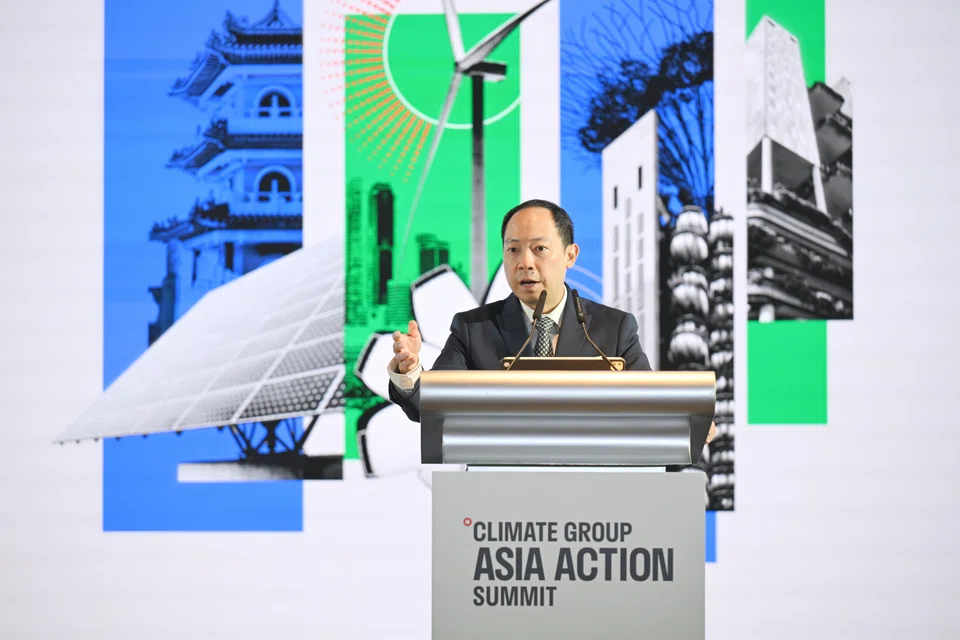
[SINGAPORE] The lack of standards around the cross-border trade of renewable energy certificates (RECs) is a key barrier preventing companies from signing offtake agreements with low-carbon electricity producers around South-east Asia, said Low Xin Wei, assistant chief executive for the markets and systems division at the Energy Market Authority.
This means that there is a lack of additional revenue for these electricity importers, with which the Singapore government is looking to ink electricity import contracts to meet its net-zero targets.
He said that major international standards, such as the Greenhouse Gas Protocol, do not explicitly recognise the cross-border trade of RECs as a valid form of renewable energy procurement.
The only exceptions are in the European Union and North America, where markets have been harmonised, said Low at a climate conference on Thursday (May 8).
RECs are tradeable assets that are issued when 1 megawatt-hour of electricity is generated and delivered to the electricity grid from a renewable energy resource.
Companies can purchase these certificates to reduce their Scope 2 emissions, which are emissions arising from their use of electricity generated from power stations.
Given that Singapore has limited renewable energy resources, the amount of RECs that can be generated locally is constrained. There would only be a small pool of such certificates for companies to buy to offset their Scope 2 emissions.
The Ministry of Trade and Industry previously announced that plans to establish a cross-border trading framework were under way.
Low also said that there is a need to continue with concrete, small steps to make the Asean power grid a reality, starting with bilateral projects.
SEE ALSO


“Low-hanging fruits would be those which make use of existing interconnectors.”
This includes the Lao PDR-Thailand-Malaysia-Singapore Power Integration Project – a cross-border electricity trade that imports hydropower from Laos to Singapore – as well as the Energy Exchange Malaysia, a platform to facilitate cross-border electricity sales focused on renewable energy.
Decoding Asia newsletter: your guide to navigating Asia in a new global order. Sign up here to get Decoding Asia newsletter. Delivered to your inbox. Free.
Copyright SPH Media. All rights reserved.
TRENDING NOW

Asia-Pacific aviation: is up really the only way?
Russia’s ‘pivot to Asia’ takes a turn as it prioritises ties with isolated regimes over bigger economies

Why disciplined stewardship matters when managing wealth in uncertain markets
More than 15,000 sign up for national accounting body’s AI programme in two months

