

Less than 50% of companies looking to invest in climate risk management: survey
Lack of knowledge, budget constraints could be among reasons that are holding firms back

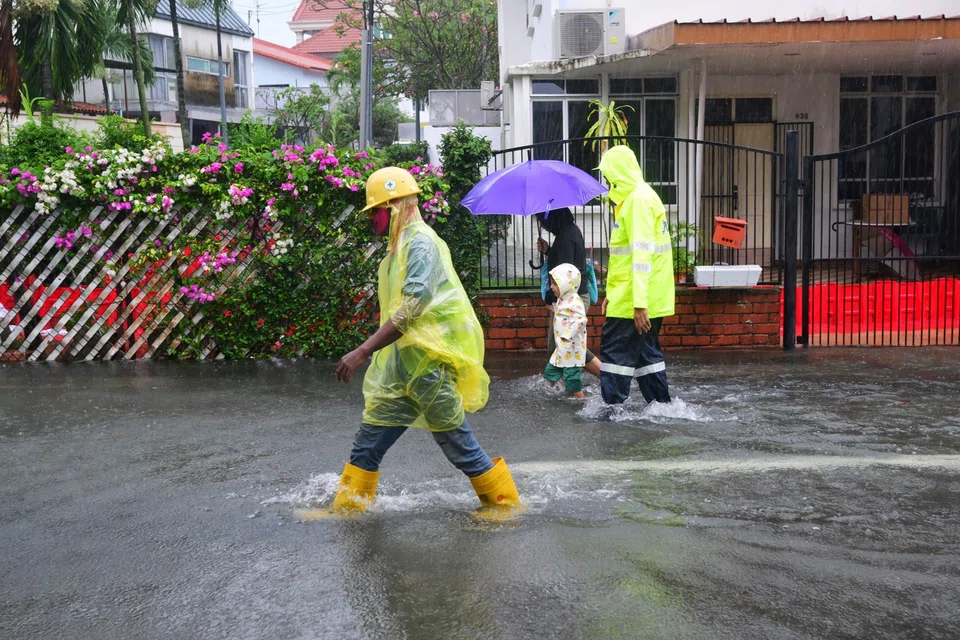
[SINGAPORE] About 42 per cent of companies in Singapore said that they plan to allocate resources to manage climate risks, according to the results of a survey by energy equipment provider Schneider Electric.
Among them, 25 per cent of companies are looking to invest in mitigation solutions, which involve reducing greenhouse gas emissions. Meanwhile, 17 per cent of them intend to invest in adaptation solutions, which refer to technologies that improve resilience against the current and future impacts of climate change.
Released on Friday (Jan 30), the survey, which is supported by the Singapore Exchange (SGX), polled 543 business leaders in the Republic between July and August last year.
They were involved in sustainability initiatives within their companies, with about 76 per cent representing listed companies on SGX, while the rest were from non-listed firms.
The report noted that the remaining 58 per cent of the survey respondents said that there are no plans to make investments in either mitigation or adaptation solutions. It added that there appears to be a “weak appetite for investing in climate risk solutions”.
Some companies are still in the early stages of understanding their climate exposure, lack the internal expertise to assess the return on such investments, or remain uncertain about regulatory expectations and industry benchmarks.
Budget constraints or competing organisational priorities may also be other factors causing investments in climate solutions to be deprioritised.
Among the 25 per cent that plan to allocate capital to mitigation, the top areas of interest were renewable energy (30 per cent) and green infrastructure (20 per cent), with electric vehicles and charging stations emerging as the most popular choice.
Of the 17 per cent looking to invest in adaptation, 21 per cent were interested in climate-resilient infrastructure, while 17 per cent were keen on water-related projects such as flood-risk systems.
SEE ALSO






The survey also found that almost a similar proportion of companies have already invested in these climate solutions.
About 25 per cent said they have financed mitigation solutions, the most popular being renewable energy (38 per cent), especially in solar energy.
The report noted that companies would prefer to pay for renewable energy to lower their carbon footprint, rather than invest to improve their energy efficiency and lower their total energy consumption, even though that is the more effective solution.
A smaller number of companies (18 per cent) said they have invested in climate adaptation, of which flood-control capabilities, climate-resilient infrastructure and artificial intelligence (AI) were the most popular.
The report added that the low levels of investment in climate risk solutions stand in contrast to what many companies say. About half of the firms surveyed have stated that they are proactively seeking out new business opportunities in the climate space.
Out of this group, 19 per cent cited the implementation of renewable energy as an area of opportunity, making it among the most popular choice.
More than 60 per cent of all respondents said that their companies have identified new business opportunities and are developing new business segments as a response to climate change.
Also, 55 per cent said that their companies are pursuing partnerships or exploring merger and acquisition opportunities with climate-focused businesses to build their expertise and plug gaps in skills.
Sustainability reporting
While the survey indicated that more than 90 per cent of respondents have started work on adopting the climate-reporting standards put forth by the International Sustainability Standards Board (ISSB), the majority of companies (at least 67 per cent) are meeting only 25 per cent of the reporting obligations.
The most cited challenges in meeting these requirements were the lack of internal skills (55 per cent), followed by high costs (52 per cent), data gaps (43 per cent) and external skills gap (42 per cent).
SGX Regulation and the Accounting and Corporate Regulatory Authority announced in August last year that they were extending the timelines for most climate-reporting requirements.
All listed companies were supposed to make climate-related disclosures aligned with ISSB standards for the financial years starting from January 2025.
But it has been delayed by five years to FY2030 for small and mid-sized listed companies, which are defined as those that are not constituents of the Straits Times Index (STI) and has a market capitalisation of below S$1 billion.
Non-STI constituents with a market capitalisation of S$1 billion and above will have to comply from FY2028, while reporting requirements for STI constituents remain unchanged.
However, survey respondents noted that there are benefits in making ISSB-aligned disclosures despite concerns about added costs and regulatory burden.
More than 50 per cent said that they expect more investor engagement, while 49 per cent said that it would provide a more consistent global baseline for sustainability measurement. Stronger brand reputation was another upside cited by 48 per cent of respondents.
The report added that ISSB-aligned reporting should not be viewed by companies as a compliance burden, but as an investment in long-term value creation and stronger market positioning.
It suggested that companies can make early investments in AI and digital technologies so that data collection is more efficient. This would also pay off in the long run, as gathering data manually and analysing it is the most resource-intensive aspect of sustainability reporting.
Decoding Asia newsletter: your guide to navigating Asia in a new global order. Sign up here to get Decoding Asia newsletter. Delivered to your inbox. Free.
Copyright SPH Media. All rights reserved.
TRENDING NOW

Once staunchly pro-China, Malaysian Chinese businesses are now distancing themselves from Beijing

Looking beyond looming CEO succession, should UOB potentially pursue a transformative merger?

Could stablecoins be the future of money?

Grab CEO’s wife Chloe Tong on life with Anthony Tan and finding her purpose

