

More efficient, lower costs: Why electric motors will help your business flourish and be future-ready
Industrial systems and solutions specialist TMEIC offers alternatives to ageing turbine systems, helping companies digitalise operations, reduce downtime, and even earn carbon credits to offset taxable emissions
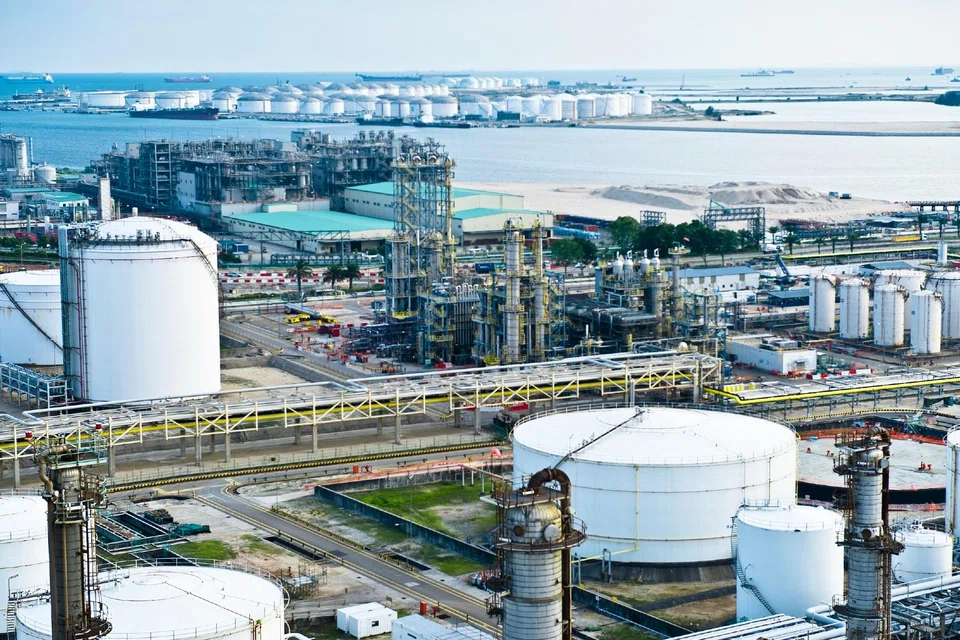
ACROSS Asia’s industrial plants, ageing turbines are making it more challenging to keep production running smoothly while transitioning to lower-carbon operations.
These massive facilities, some built decades ago, can be costly to maintain as they lose efficiency over time. Repairs are also difficult as spare parts become scarce. Compounding the challenge, older machinery releases large amounts of greenhouse gas emissions, contributing to pollution and climate change.
This is where TMEIC, a manufacturer known for its innovative products, seeks to make a difference.
Founded in 2003 through the integration of the industrial businesses of well-known Japanese manufacturers Toshiba and Mitsubishi Electric, TMEIC, which is headquartered in Tokyo, has 12 manufacturing bases in 18 countries.
Its large-capacity, high-speed motors work by converting electrical energy into mechanical energy (motion), offering a solution that is both more cost-effective and better aligned with companies’ sustainability goals, while maintaining operational performance.
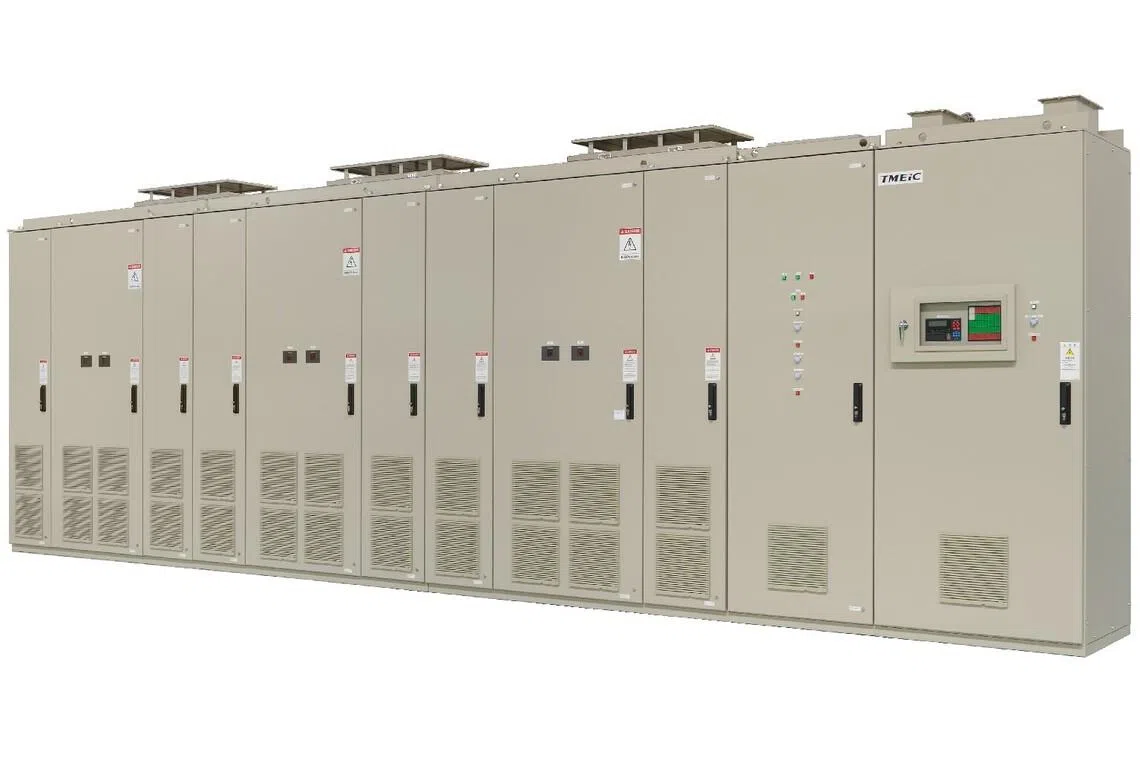
These motors, such as those that are directly coupled (gearless) or fed from medium-voltage variable frequency drives, are able to optimise the performance of compressors, prime mover systems, and other machinery safely and reliably, while keeping operating costs down.
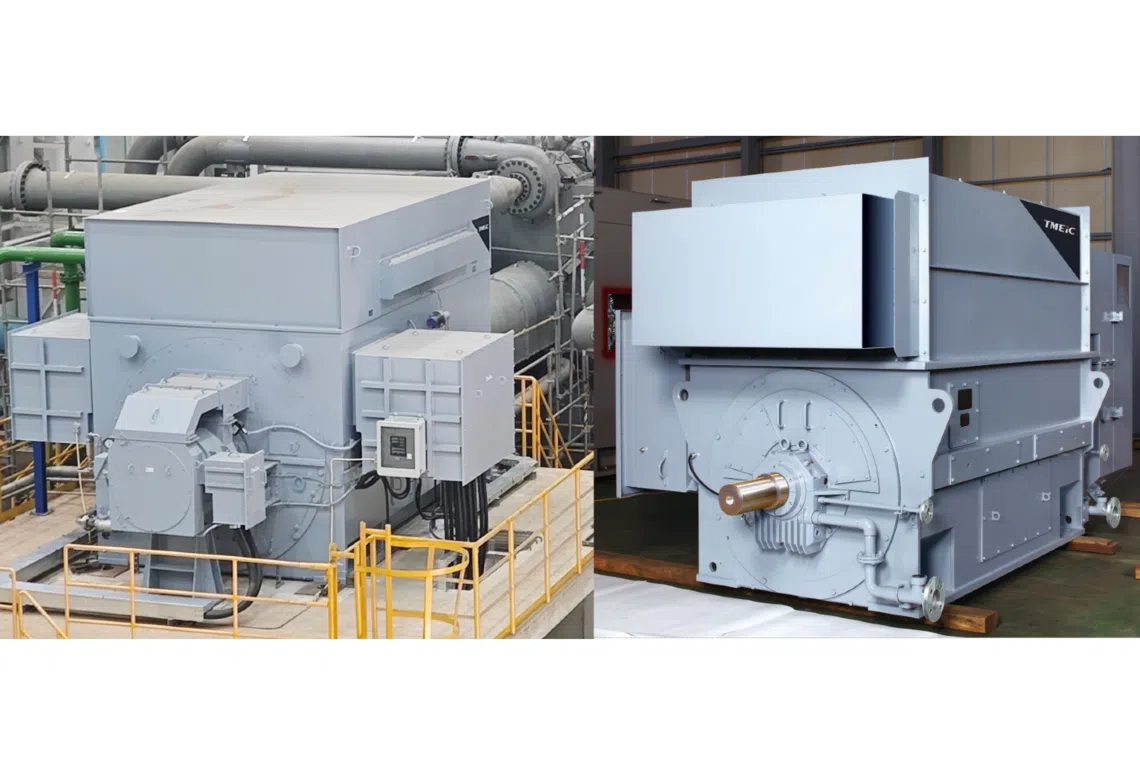
TMEIC offers a wide range of motors, including large-capacity units rated at up to 100MW, and has developed a 6-pole large synchronous motor that achieves a world-class efficiency of 99.0 per cent. The company specialises in hazardous area motors, designed with special safety features to prevent accidental ignition, hence protecting workers and equipment. This also ensures operational continuity during the manufacturing, processing, transportation, and storage of combustible gases and materials.
The motors can be deployed in a wide range of applications, from pumps and fans to conveyors and compressors in industries such as oil and gas, chemical and petrochemical, material handling, mining and marine.
TMEIC’s rotating machinery and power electronics products have also seen increasing usage in power generation and renewable energy systems such as photovoltaic power and wind turbine generation, as well as energy storage and power supply systems.
In addition to supplying equipment, TMEIC also provides clients with AI-based monitoring systems for predictive maintenance as well as dedicated service teams who assist in testing, commissioning and maintenance.
Saravanan Sathasivam, general manager of TMEIC Asia Pte. Ltd., commented: “With the technology and technical foundation from our predecessors, we are constantly developing and realising numerous innovations to our products and solutions. The reliability and quality of our products are very highly appreciated by customers as established by our proven track record.”
Why switch to electric motors?
Although converting from a conventional turbine to an electric motor may involve initial costs, there are many significant benefits, including higher efficiencies, lower operational costs and less environmental impact.
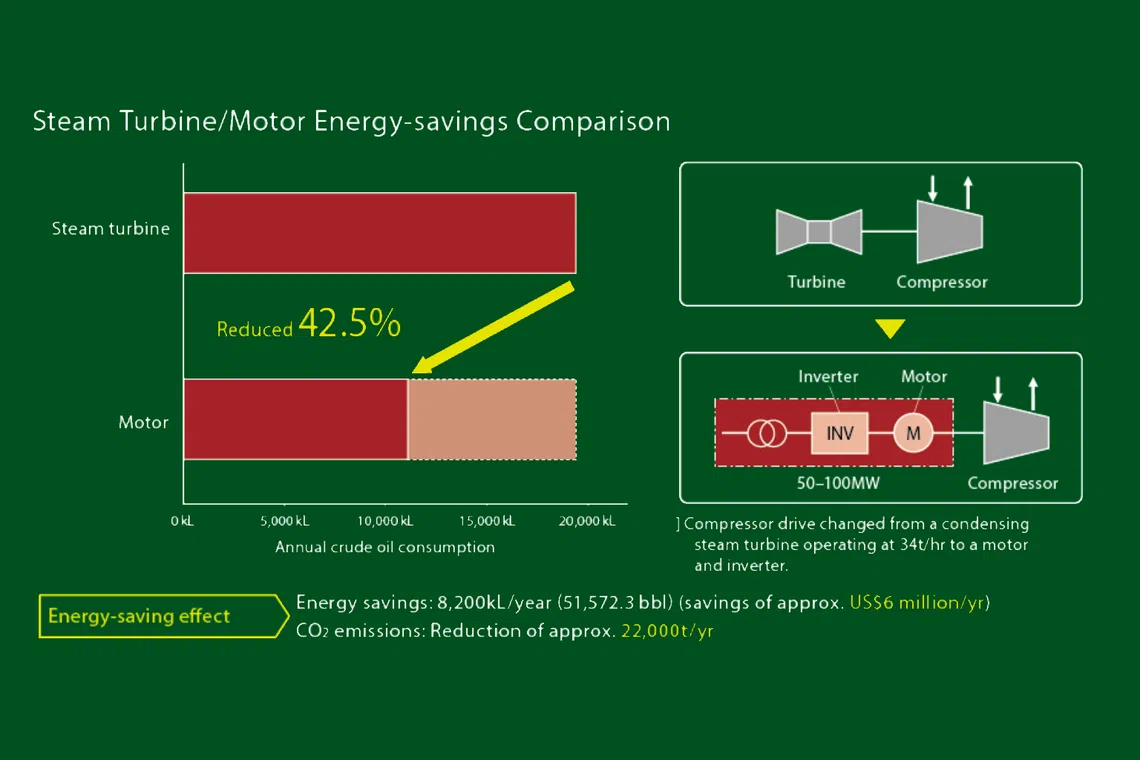
Electric motors typically offer high efficiencies of more than 95 per cent, as compared with older, open-cycle gas turbines, which can reach only 25 to 30 per cent. This translates to much less fuel consumption. With fewer moving parts, electric motors also require less frequent and less specialised maintenance, reducing maintenance costs by up to 90 per cent. This means that companies can use their machines for longer hours with less downtime.
Electric drives – systems that control how an electric motor runs – also generate far fewer carbon emissions, which allows companies to meet the stricter environmental regulations being implemented in countries like Singapore.
There are other added benefits, such as greater flexibility in operations. Specifically, electric motors can be operated to produce a broad range of torque and speed, giving operators greater control over processes and allowing them to respond more quickly to changes in power demands. They are typically also quieter, cause less vibration, and require less cooling – all of which contributes to cost savings, especially in energy-intensive industries.
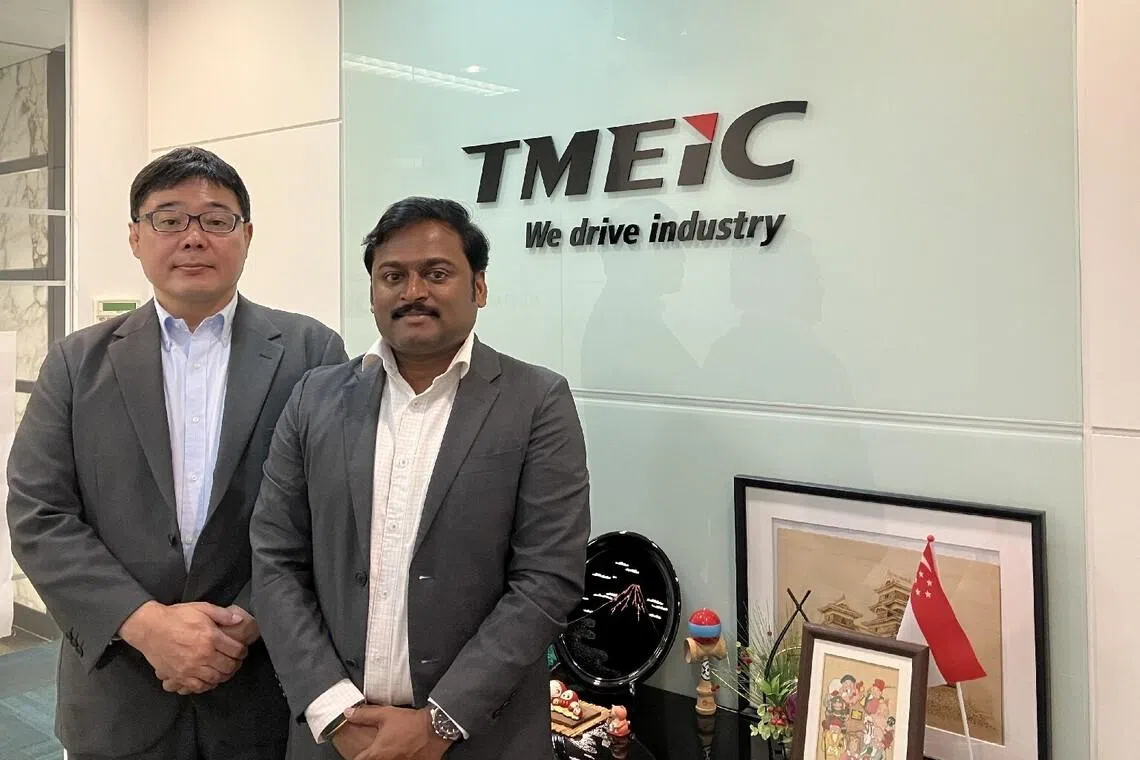
Yet, many companies are still reluctant to migrate from legacy systems as their decades-old systems are still stable and also expensive to replace. Takuya Kagawa, managing director of TMEIC Asia, points out the many advantages of switching over to electric motors. “New systems allow companies to set up ‘smart’ facilities and ‘smart’ plants that are digitally compatible and will help them drive their digital transformation faster,” he says.
TMEIC’s power electronics business entails renewable energy solutions, particularly in the development of PV inverters, wind turbine converters, and high current rectifiers for electrolyser application in hydrogen production. Its products, such as high-capacity inverters, are designed to maximize energy output from renewable sources while minimising environmental impact.
Apart from their higher efficiency and energy saving potential, TMEIC’s power electronics solutions enable companies to work towards providing renewable energy solutions. “Whether it’s solar power or hydrogen, they will have the technology that is prepared for the switch in the power source for their equipment,” Kagawa notes.
TMEIC aims to help businesses make their operations cleaner and more energy-efficient amid moves by countries across the region to reduce carbon emissions. Singapore, for example, implemented South-east Asia’s first carbon pricing scheme in 2019 as part of its net-zero target, with the carbon tax set to rise to $45 per tonne of carbon dioxide equivalent (tCO2e) in 2026.
Such policy changes will make TMEIC’s high-efficiency, low-consumption motors a worthwhile investment, as the carbon credits earned can be used to offset taxable emissions. TMEIC estimates that companies that replace inefficient steam and gas turbines with its motorised drives will be able to recover their capital investment within two years.
“Companies need new solutions and the infrastructure technology to develop, and TMEIC’s technology can help them level up,” says Kagawa. “Singapore has a role in connecting South-east Asia as well as the entire world, and we want to support this.”
Currently, many users of TMEIC’s motors are in the oil and gas sector, where they have managed to improve efficiency and lower operational costs in refineries, petrochemical, and fertilizer plants in South-east Asia.
According to TMEIC, customers who have made the switch from traditional steam and gas turbines have been able to reduce their carbon emissions by 20,000 tCO2e a year, save on operating costs, and reduce the downtime needed for repairs and maintenance.
Targeting new industries
Given the potential benefits that its electric motors can bring to users, TMEIC is eyeing new sectors and industries such as the marine and port sectors, data centres, semiconductors, and renewable energy businesses.
“By 2030, all diesel generators and engines will have to be converted to electrical propulsion, including on tugboats,” notes Saravanan. “We can provide the complete system with motors, drives, and battery storage to help modernise tugboats as well as the equipment at ports, along with supplying all the different parts of the ecosystem.”
Kagawa also emphasises the role that TMEIC can play in contributing to the region’s goals to go green and to develop their technologies at the same time. “Energy and digital are both very important issues, and we want to focus on them,” he says. “We want to come up with new solutions for developing the infrastructure and technology, so that companies and the region can be more developed. This is where TMEIC can contribute and help companies and countries grow.”
Learn how you can grow your business with TMEIC.
Visit the company’s LinkedIn page to find out more.

Decoding Asia newsletter: your guide to navigating Asia in a new global order. Sign up here to get Decoding Asia newsletter. Delivered to your inbox. Free.
Share with us your feedback on BT's products and services
TRENDING NOW

Britain’s mansion tax shows the difficulty of targeting wealth

Once staunchly pro-China, Malaysian Chinese businesses are now distancing themselves from Beijing

The only common thing in S-E Asia is that we all eat rice: Cisco’s Asean president
Singapore data centre operator DayOne opts for US IPO at likely US$20 billion valuation

