Neste sees potential for renewable diesel in Singapore’s maritime industry
The company recently made its first delivery of such fuel to a marine sector player in the Republic

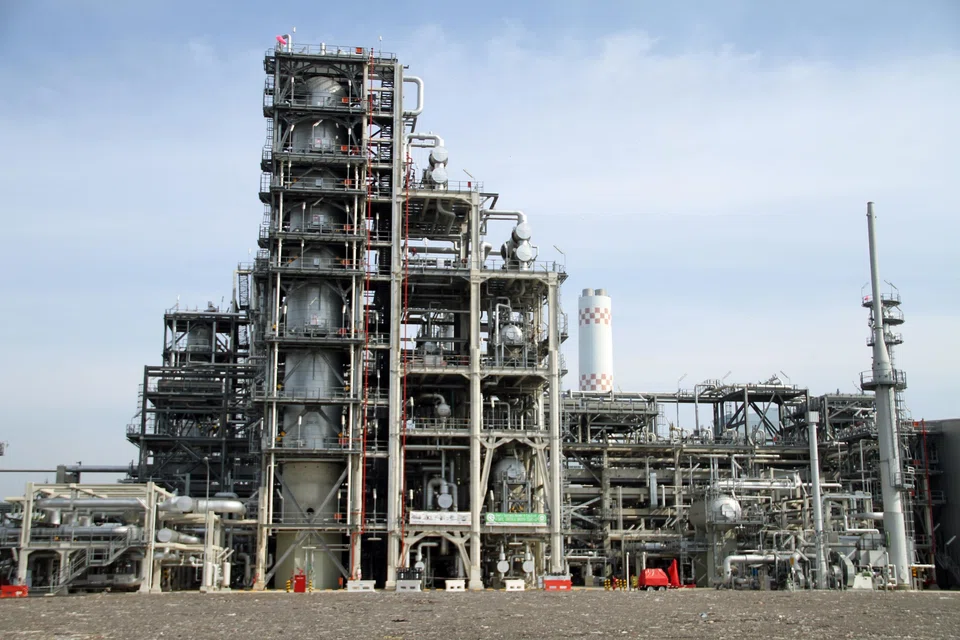

FINNISH sustainable fuel producer Neste sees potential to power Singapore’s maritime industry with renewable diesel, as the industry races to cut carbon emissions.
“Any engine that is using diesel is potentially a suitable candidate… I think the opportunities (and) the upsides are fairly compelling,” said Lee Ee Pin, Neste’s head of commercial in Asia-Pacific for renewable products.
Singapore is the hub for Neste’s renewable production and commercial activities in Apac.
Lee declined to share specifics on ongoing discussions but said that the company is keen to explore use cases such as cruise ships, yachts and passenger ferries.
Renewable diesel can also be used with bulk and container vessels, of which a growing number now use “dual-fuel” engines that can accommodate both diesel and green fuels.
“Let’s just say that we are looking at all the opportunities,” said Lee.
In January, the company made its first delivery of its Neste MY Renewable Diesel product to an undisclosed marine sector company in Singapore, in collaboration with industry partners KPI OceanConnect and Global Energy.
Neste’s efforts come as the maritime industry is working on cutting carbon emissions. The International Maritime Organization aims to achieve a 20 per cent reduction in emissions from 2008 levels by 2030, and subsequently attain net-zero emissions by or around 2050.
Singapore is also looking to decarbonise the sector. From 2030, the city-state will require all new harbour craft to be fully electric, capable of using pure biodiesel or compatible with net-zero fuels.
Net-zero fuels – such as ammonia, methanol and hydrogen – are still at their “infancy stage in terms of scalability and the cost of transporting”, Lee noted.
In contrast, renewable diesel is a “drop-in” solution, meaning that it can be used with conventional diesel engines without any modification or new delivery infrastructure.
Compared to fossil diesel, renewable diesel can reduce emissions by up to 75 per cent over the life cycle of the fuel. The reduction can even go up to 95 per cent, depending on the region-specific legislation behind the calculation.
Benefits over Fame
Renewable diesel is distinct from conventional biodiesel made from vegetable oil, also known as fatty acid methyl ester (Fame) biodiesel. This is due to differences in the refining process and chemical composition.
Unlike Fame biodiesel, the molecules in renewable diesel do not contain oxygen, resulting in less affinity to water and lower microbial growth.
“Therefore, you have less probability of sludge at the bottom, which is a lot of the problems with vessels right now,” said Lee, noting that such vessels may have to change out the fuel as frequently as every six months.
Fame biodiesel is typically blended with fossil diesel in low proportions such as 5 per cent, as higher blends can create engine issues. In contrast, renewable diesel can be used in higher proportions, or even without any fossil diesel blended in. It is also more stable, noted Lee.
“You can use our (renewable diesel) for 24 months, and you can actually recertify and keep using it, because we have a longer storage capability – simply because... our molecules are very similar to fossil diesel,” she said.
Renewable diesel is currently produced from waste materials such as used cooking oil, waste animal fat from the food industry and residues from vegetable oil processing. Other raw materials include waste fish fat from fish processing, and technical corn oil, a residue from the production of ethanol.
Asked from where Neste procures its raw materials, Lee would only say that they are sourced from “many suppliers and many different countries”, and that the company aims to keep its feedstock pool “as robust as possible”.
Renewable diesel could possibly be produced at scale from municipal solid waste in the near future, Lee noted. Another possibility – albeit unlikely to happen in the next decade – is production from algae.
Price premium
Despite the benefits, renewable diesel itself comes with a significant price premium – it is about two to three times more expensive than fossil diesel, Lee estimated.
Asked if maritime players would be willing to pay the premium, she acknowledged that the company is “not sure”, and that government support “will come in handy to stimulate the use of renewable diesel”.
“That’s where we would see the government coming in to play a role. With government incentives to support both the suppliers and the shipping industry, that’s where you can start to increase the awareness… and then gradually you can wean off the incentives,” she said.
“Any engine that is using diesel is potentially a suitable candidate… I think the opportunities (and) the upsides are fairly compelling. ”
Lee Ee Pin, Neste’s head of commercial in Asia-Pacific for renewable products
Lee also noted that Asia-Pacific is still in a “catch-up phase” compared to Europe. “It’s what we call a voluntary market, so everyone pays full fare, gross price, without any incentives whatsoever,” she said.
Adoption of renewable diesel in this region is still nascent, but growing. Neste currently supplies renewable diesel to luxury yachts in Australia, alongside companies in the mining and construction industries.
Separately, the Civil Aviation Authority of Singapore has announced trials to use renewable diesel for heavy and specialised airside vehicles at Changi Airport.
While Neste is putting its energy into transport use cases, there are also growing possibilities in data centres. Last year, the company provided renewable diesel for the back-up power generators of ST Telemedia Global Data Centres.
Asked if Neste has partnered any other data centre operators in Singapore, Lee said: “You will hear about it.”