

O&G industry’s clean-energy M&A takes back seat to shareholder rewards: Deloitte
Sector’s record US$32 billion in clean-energy deals still a fraction of amount paid out in dividends and buybacks
 Add BT as a preferred source
Wong Pei Ting
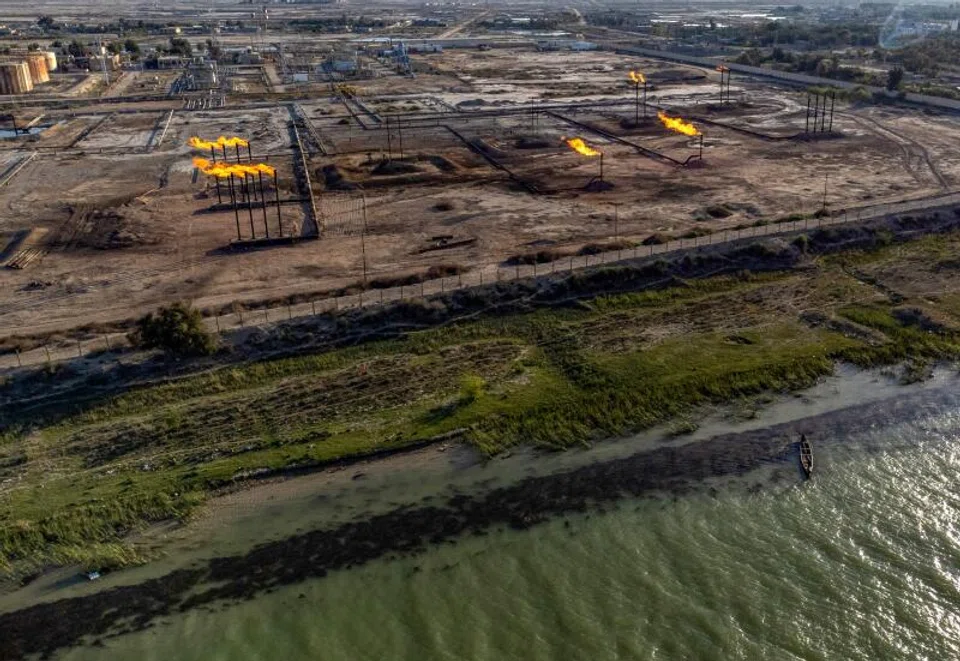
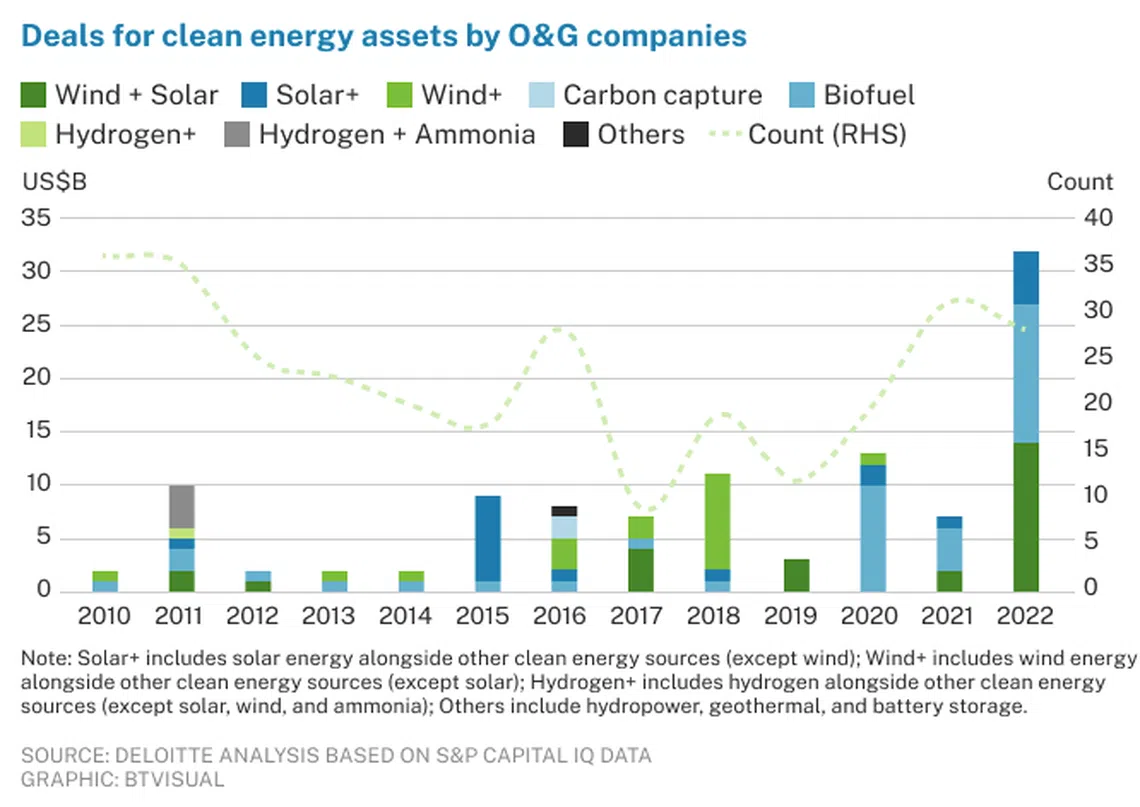
OIL and gas (O&G) companies around the world allocated a record US$32 billion towards mergers and acquisitions (M&A) related to clean energy in 2022, six times the amount a year earlier, according to an analysis by Deloitte.
That growth came despite overall hydrocarbon M&A shrinking 35 per cent in 2022 to US$176 billion. Clean energy’s share of overall hydrocarbon M&A activity rose to 15 per cent, having never exceeded 6 per cent before 2022.
But that growth comes with a caveat: oil companies are spending even more on rewarding shareholders, with US$500 billion returned through dividends and stock buybacks in 2022. Dividends and buybacks were only about US$350 billion in each of 2020 and 2021. The shift suggests that the O&G industry’s cash priority has changed from investing for growth to returning excess cash to shareholders, Deloitte said.
The lull in hydrocarbon M&A happened despite record-high energy prices and low valuations. Oil prices had previously been a “deal enabler”, playing a key role in influencing half of all O&G deals, Deloitte said. But the correlation between oil price and deals is now negligible, and the decoupling implies that the M&A playbook is changing.
At the same time, Deloitte discovered a growing sensitivity towards the environmental, social and governance (ESG) profiles of their M&A targets.
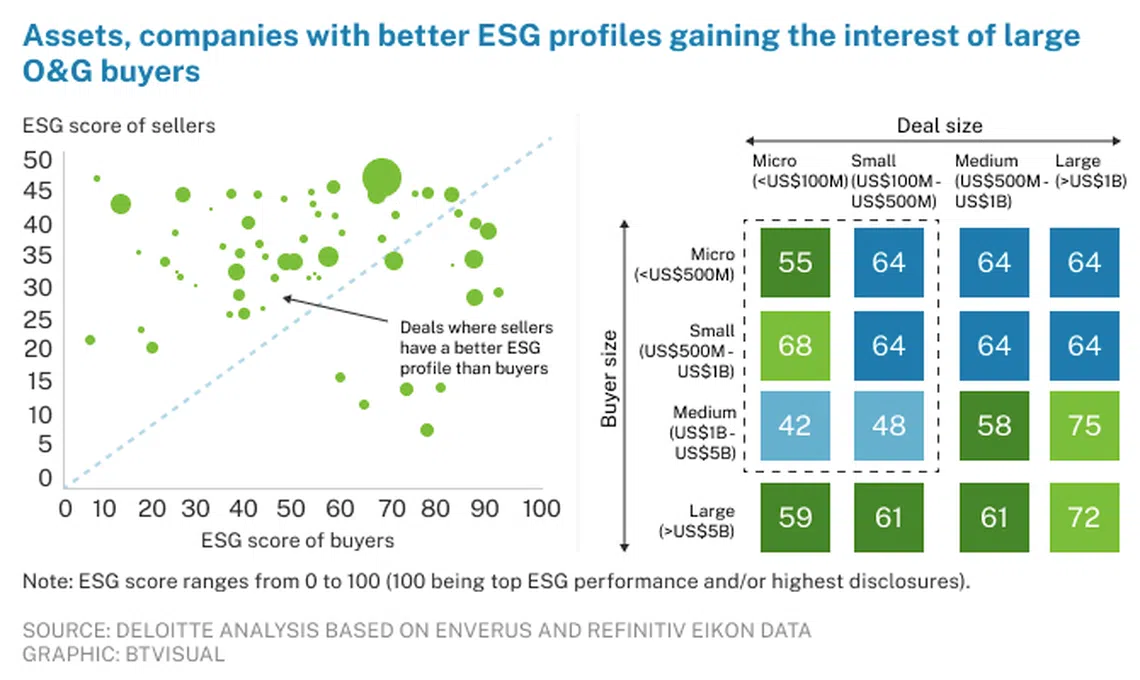
The correlation between ESG scores of buyers and sellers in hydrocarbon deals over the past five years suggests that seven in 10 involved a buyer buying an asset or seller with a better ESG score, Deloitte said.
Among the buyers, large-sized companies, especially large independents and supermajors, showed a clearer bias towards ESG-friendly assets. Deloitte raised the possibility that tighter and more ESG disclosures could revive O&G M&A activity.
Rewriting the M&A playground
Deloitte said the old drivers of M&A activity – such as investing and acquiring for growth and increasing market share – seem to have been replaced by sustainability-related factors. Those factors are energy security, operational excellence, energy transition, partnerships and strategic alliances, and governance and compliance.
Energy security deals are driven by companies eager to secure their supply chains amid rapidly changing trade relationships between countries. About 50 per cent of global oil and 30 per cent of natural gas production gets traded. Natural gas infrastructure now makes up 82 per cent of M&A deals by fuels in the global midstream in 2022, up from around 30 and 40 per cent in 2020 and 2021, respectively.
SEE ALSO



With regard to energy transition, Deloitte predicts the low-carbon share of global upstream capital expenditure will reach up to 30 per cent by 2030, from the current 5 per cent. For now, biofuels, along with combined solar and wind assets, account for nearly 80 per cent of the O&G companies’ clean-energy deals, with solar energy contributing to the rest, its research showed.
Among these, the combination of solar and wind assets remain favoured, accounting for 44 per cent of all clean-energy M&A since 2010. But biofuel-related assets are gaining investor interest of late, with US$26 billion worth of deals since 2020.
All in all, the industry struck some 500 clean-energy deals worth nearly US$171 billion between 2010 and 2022, with acquisitions outpacing divestitures by US$43 billion, as the industry increased its clean-energy presence, it added.
Partnerships – seen as a way for O&G players to build their capabilities in low-carbon businesses – could, meanwhile, lay a strong foundation for M&A in the future, Deloitte said.
Already, about one-third of their joint ventures (JVs) and strategic alliances are in the clean-energy space. Most of these JVs are in hydrogen and related fuels, including ammonia, nitrogen, and sustainable aviation fuel, it noted.
The spread of clean-energy JVs has also broadened from the few energy sources – such as wind or solar – to a growing mix of sources, fuels, and carbon-capture programmes, Deloitte added.
Decoding Asia newsletter: your guide to navigating Asia in a new global order. Sign up here to get Decoding Asia newsletter. Delivered to your inbox. Free.
Copyright SPH Media. All rights reserved.
TRENDING NOW

Tiger Brokers, Moomoo, Longbridge Singapore units ‘financially independent’ amid China crackdown: MAS
Yeo’s, Tiger Beer and now Gardenia – flight of food manufacturing from Singapore might be just as planned

Johor property old hand KSL readies family handover amid market boom
As India and China surge ahead with nuclear energy, all eyes on Asean’s next move

