Philippine transition credits to cost between S$50 and S$80 in line with Singapore’s carbon tax
This is not the cheapest price range, but replacing coal with solar energy and battery storage is expensive

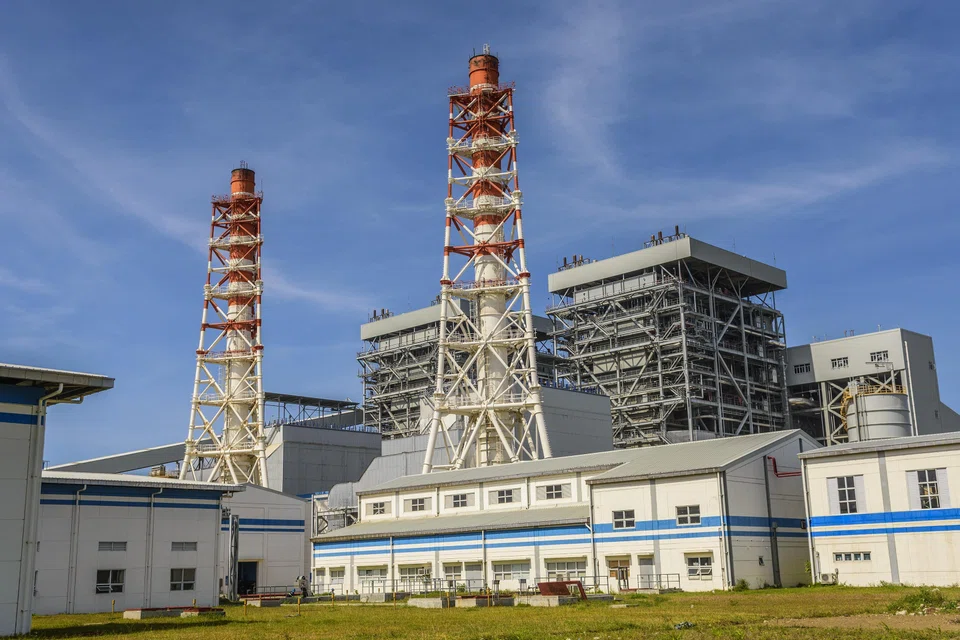
[SINGAPORE] Transition credits being piloted at a Philippine coal plant slated for early retirement are expected to cost between S$50 and S$80 apiece, placing them within the range of Singapore’s targeted carbon tax level by 2030.
The indicative price range was disclosed on Monday (May 18) by Eric Francia, president and chief executive officer of Acen Corporation, the energy company that previously owned the coal plant.
He was speaking at a panel discussion at Ecosperity Week, Temasek’s flagship sustainability conference.
While Francia acknowledged that the price range is not the cheapest – credits from nature-based solutions can go below US$10 each – he said that replacing coal with solar energy and battery storage is an expensive undertaking in the Philippines.
“There’s always a tension... (for) carbon price to be as low as possible, and we’re very supportive of that,” he said. “We want this to scale, and therefore be accessible to all carbon buyers. But the reality is the clean energy replacement that we will be putting here is not necessarily the cheapest.”
The price range also satisfies the additionality requirement, meaning that the coal plant’s early retirement would likely not have taken place without the financial incentive generated from the sale of the credits.
Transition credits are a new type of carbon credits generated when coal-fired power plants are shut earlier than their intended retirement date and replaced with renewable energy.
First proposed several years ago as a way to compensate coal plant owners for revenue lost from early closures, the nascent instrument is now being piloted at the South Luzon Thermal Energy Corporation coal plant.
The coal plant’s retirement date was initially brought forward to 2040 from 2055 through an energy transition mechanism. But there are plans to shut it even earlier, in 2030, through transition credits.

The aim is for transition credits to improve the economic viability and scalability of coal plant early-retirement projects, which have long struggled to take off.
The Singapore government previously indicated that it is prepared to act as an offtaker of such credits to help meet its national climate targets, provided the credits satisfy the country’s environmental integrity standards.
This would allow Singapore-based companies to become potential buyers of transition credits, as the government permits carbon tax-liable businesses to offset up to 5 per cent of their taxable emissions using eligible carbon credits.
However, if transition credit prices rise above Singapore’s official guidance for its carbon tax – projected to reach between S$50 and S$80 per tonne by 2030 – demand for the credits could weaken.
The current lack of offtakers for transition credits was cited by several panellists as a key challenge facing the market.
Nat Keohane, president of the Centre for Climate and Energy Solutions, which organised a corporate buyers’ alliance known as Kinetic Coalition, said that it expects some demand from companies it has been engaging with.
Having sovereign buyers such as Singapore and Japan would also help unlock compliance-driven demand.
“We need off-takers. All of this will be for naught if we don’t have the off-takers for these carbon credits, which is critical to accelerate that coal retirement,” said Francia.
Decoding Asia newsletter: your guide to navigating Asia in a new global order. Sign up here to get Decoding Asia newsletter. Delivered to your inbox. Free.
Copyright SPH Media. All rights reserved.