PwC global chairman Bob Moritz says no pressure to split the firm

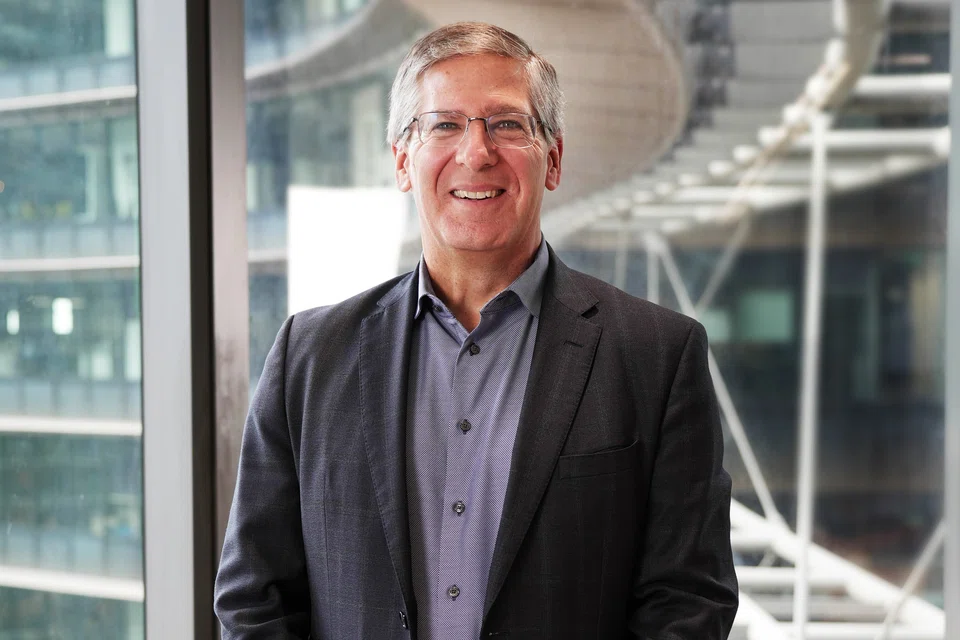
BOB Moritz, global chairman of professional services firm PricewaterhouseCoopers (PwC), is big on listening.
As he tells it, the strategic direction of the firm relies on “thousands” of conversations with clients and stakeholders around the world. Those conversations have lately led to several conclusions. One is that organisations must aim to build trust and deliver sustained outcomes. Another is that PwC does not need to split its assurance and consultancy operations.
The year 2022 may, in time, be looked upon as a milestone for the audit and accounting industry. PwC’s rival EY announced moves to split its auditing and assurance services from its consulting services, creating two separate businesses, in what the firm has said is part of its strategy to thrive in a changing world.
EY’s move has prompted speculation over whether its Big Four rivals – the other two being Deloitte and KPMG – would think of following suit.
“Conversations have certainly been triggered in the industry,” Moritz said. “At PwC, we will continue to listen very closely to the views of our clients and stakeholders and, as any responsible organisation, we are ready to respond to any change in the landscape if required.
“But we currently don’t feel any pressure that would cause us to consider changing our strategy and our commitment to the multidisciplinary model. In many ways, this is essential for providing our people the opportunity to grow in depth and in breadth across various disciplines.”
Moritz believes the ability to provide both assurance and consultancy work allows PwC to attract the talent it needs: people who can approach problems from multiple viewpoints and provide the most effective solution.
“The Covid-19 pandemic has undoubtedly transformed how we work, and in the race for talent in a globally competitive labour market, people are fundamental to the success of any organisation.”
Trust and sustainability
Based on conversations with clients, Moritz believes companies are under significant pressure to build trust as environmental, social and corporate governance (ESG) scrutiny grows. This need is “akin in scale and significance to the transformational demands created by technological change”, he noted.


“The dramatic increase in the relevance of ESG concerns has forced business to make a rapid move up the ESG learning curve, often driven by stakeholders taking a forensic look at the ESG factors that matter to them,” he told The Business Times.
PwC sees two interconnected needs its clients would be facing in the coming years.
“The first is to build trust with the full set of stakeholders, who are demanding more today than ever before. The second is to deliver sustained outcomes that will last beyond next quarter’s earnings call.
“From the lingering effects of the pandemic and tech disruption, to Russia’s invasion of Ukraine, inflation, geopolitical risk, supply chain uncertainty and climate change, it is this constellation of big-picture issues that is driving the C-suite agenda right now.”
PwC believes that being able to offer the right technological capabilities, as well as the right combination of them – whether it be artificial intelligence (AI), cybersecurity, cloud and other capabilities – will make a crucial difference in helping its clients stay on top of such issues.
“To succeed, every ESG transformation has to also be a digital transformation. Like digital transformations, ESG transformation is holistic: it impacts every aspect of what the organisation does,” Moritz added.
At the same time, organisations must realise that such transformation has to be laser-focused on the particular elements of ESG that are most material to them and their stakeholders.
“Helping clients identify and deliver on their critical path requires a special mix of skills. That is why our ESG strategy is built around our ability to combine deep specialists in specific areas of ESG – from climate to circularity, from biodiversity to human capital – with the broader capabilities needed to design, deliver and report on change at scale.
“Real impact comes by combining transformation, strategy, deals, tax, technology and industry expertise with deep ESG specialists into a single community of solvers.”
Battle for talent
For PwC to build such a pool of specialists, it needs to have top-notch human resource practices.
In addition to offering flexible working practices for its staff, PwC is investing heavily in its own digital transformation and employee experience.
“Attracting talent with diverse skills and capabilities is crucial to our ability to support our clients, which is another reason why (our) multidisciplinary model is so important,” Moritz explained.
This war for talent is also just as real in the Singapore market, and for the Singapore firm – albeit, with some of its own unique dimensions.
“At close to full employment – 99.5 per cent – Singapore’s tight labour market further intensifies the competition to attract talent into the professional services sector. To a certain degree, this narrows the supply of new talent needed to sustain growth and lead the profession in the future.
“It is therefore vital that firms prioritise upskilling, flexible working, and rethink their people strategy to better empower their workforce to be future-ready,” Moritz said.
He also pointed out that businesses in Singapore, including professional services – being situated in the middle of South-east Asia, a diverse region with varied regulatory requirements, legal systems and business practices – can find it challenging at times to provide seamless services across the region.
Moritz added: “Singapore has also been doing well in encouraging innovation and entrepreneurship to drive growth, so there’s an increasing need to help businesses bring this to scale quickly enough. All these call for the professional services sector to reassess and disrupt their own delivery model – such as through developing new digital, transformation, risk and compliance management solutions – to help businesses achieve their desired growth and expansion outcomes.”
Decoding Asia newsletter: your guide to navigating Asia in a new global order. Sign up here to get Decoding Asia newsletter. Delivered to your inbox. Free.
Copyright SPH Media. All rights reserved.