Real estate valuers must start accounting for embodied carbon: Schroders

Michelle Quah

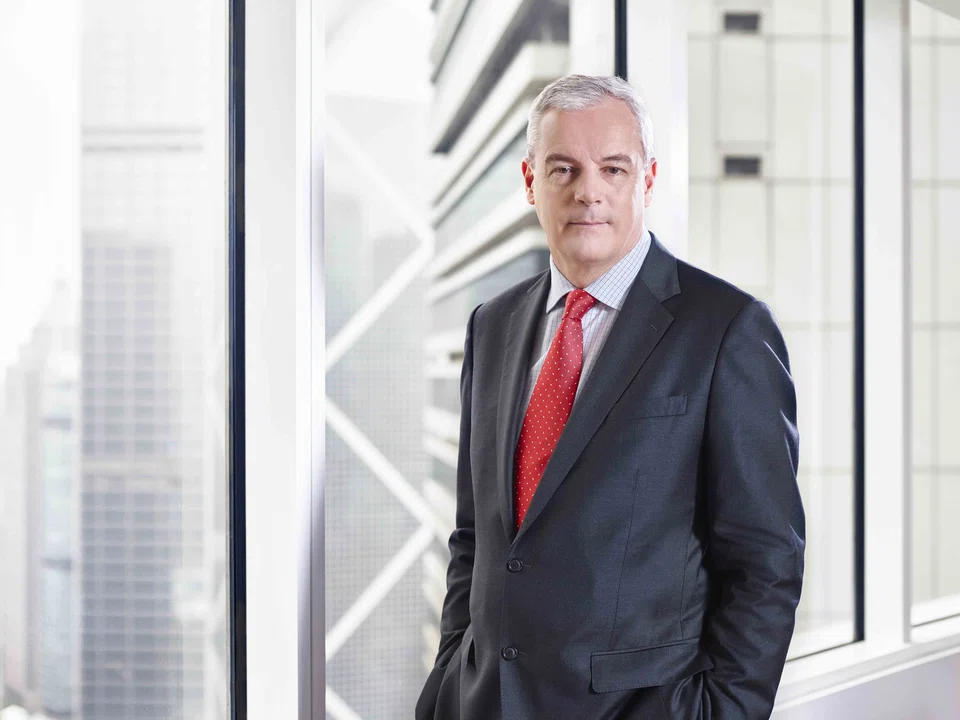
REAL estate valuers need to start accounting for the embodied carbon footprint of their properties so that the rest of the industry pays heed to their environmental impact, said Schroders global head of real estate Sophie van Oosterom.
Speaking to The Business Times (BT) in Singapore, van Oosterom shared that Schroders includes the cost of carbon emissions – both operational and embodied – in its underwriting. Accounting for embodied carbon, which includes the life-cycle emissions embedded in the materials and processes used in construction, is atypical in the real estate industry and in real estate investment trusts (Reits).
That is “because the valuers are not doing so”, van Oosterom said. “And the Reits, along with the rest of the industry, have to go with third-party valuations.”
“We’ve been driving this discussion with the valuers worldwide, telling them that they have to take this into account,” she said. “Their argument is that they will, at the time they see this being transacted upon. But as long as people are not taking this into account in their buying and selling, it is difficult for valuers to take that into account.”
But van Oosterom believes the situation is changing, as more people buy buildings and assets with a view to improving their value over the longer term, rather than to make a short-term gain.
“If you run every building as if it’s a business, by thinking through the impact you’re making on the environment, that integrates a sustainability element into the efficiency of the building,” she said.
“Driving positive impact is ultimately a driver for long-term sustainable income and long-term performance for our clients,” she added. “Being engaged with the environment, making places liveable for people, investing in the strategies that will improve the planet’s biodiversity, et cetera, (will) produce the best total returns in strategies as a whole.”
In the meantime, Schroders’ inclusion of carbon emissions in its underwriting drives its capital expenditure and/or development decisions, and could also affect its views of a particular investment, van Oosterom said. Such information is also passed on to clients to aid their decisions.
“We take into account the investments that need to be made to transition our assets to net zero, and, ultimately, account for the cost of the impacts that our buildings have on the environment in our net cash flows today.
“So, rather than just saying we need to make the investments, we train our asset managers to say that if you have a certain amount of carbon dioxide emissions today, that has a cost to the environment, and it could also have a regulatory cost (in terms of) a carbon tax, and you should take into account the value of that pollution in your operating income.”
The information is shared with clients to give them an understanding of the impact their portfolio(s) would have, if the requirement for these assets to become net-zero was effective immediately.
Looking ahead, Schroders is looking for opportunities in the global upheavals of the day.
“In a lot of cases, when people see something as a challenge, they (discount) it, and it will probably have bigger valuation implications than necessarily, if you can see through the upside,” she said.
For example, global recessionary fears could lead to a deterioration in medium-term outlooks, but there is potential upside if such pessimism abates and the Chinese economy outperforms expectations. Deteriorating economic growth could hurt occupier demand and rents, but one could make use of the situation where well-balanced demand-supply fundamentals remain, and rents are supported by rising construction costs.
Finding opportunities in seeming challenges is also an applicable investment approach for those focused on the real-estate market in Asia. Andrew Moore, head of real estate Asia at Schroders, told BT that the Grade B office market and retail spaces in the region are expected to continue facing headwinds.
The Grade B office market – so termed because its offerings are cheaper than Grade A ones, as they possess relatively fewer attributes – has been affected by more and more people choosing to work from home.
“(But), while that’s out of favour at the moment, it also leads to opportunity,” Moore said. “It’s not necessarily an immediately actionable opportunity – it will depend on market pricing and some correction to levels that become sustainable, from which you can then build the valuation back up by adding the value. And, remembering that real estate is a long-term investment, it’s really a question of thinking what that Grade B market could look like in a five- to 10-year time horizon.”
As for retail space, Moore said that, while it has been hurt by the Covid-19 pandemic and the ongoing competition from online shopping, there is still a good use for these assets – many of which are in good locations.
“They might find a level that’s irrationally below where they might be, because the trend has been towards investing in other sectors and alternatives – so, it’s certainly worth keeping an eye on these more traditional sectors,” he said.
But for the time being, he added, tailwinds are still very much behind multi-family properties – broadly defined as residential properties that contain more than one housing unit, such as condominiums – which have seen much demand of late.
In the case of Singapore, demand is far in excess of supply, Moore noted. “Clearly, there’s huge demand – look at what’s happened in the last 12 to 18 months, in terms of residential rental prices. And, how do you satisfy it in a place where there’s very limited supply of potential raw materials for the developers?
“For sure there would be big demand from investors to be in the multi-family sector in Singapore, if they could only get their hands on suitable assets.”