

The retreat from sustainable investing? A myth, says Al Gore
Investment trends are, in fact, accelerating in the opposite direction

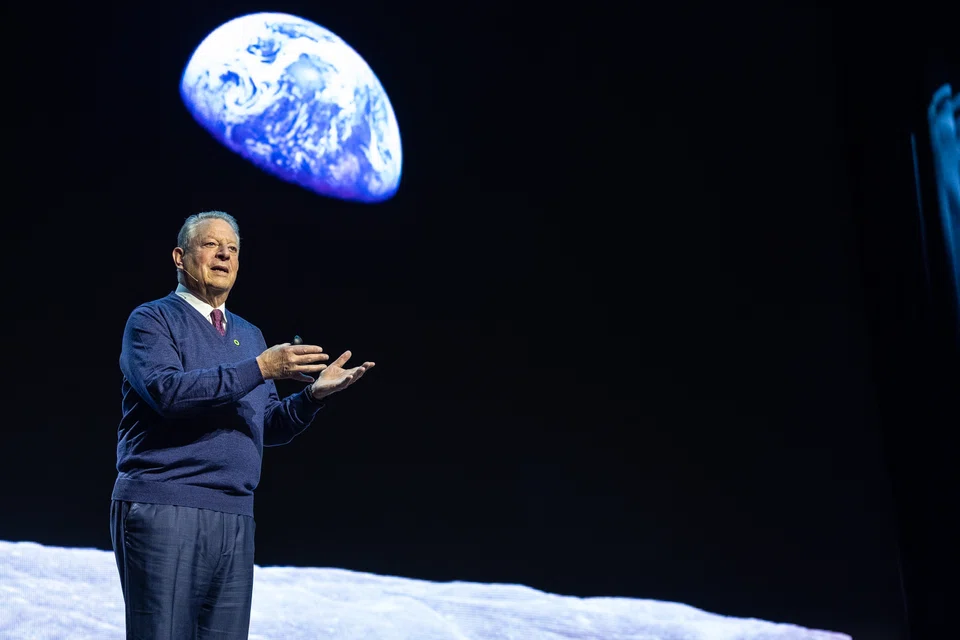
[SINGAPORE] Claims that there is a retreat from sustainable investing is a myth, said former US vice-president and climate advocate Al Gore.
Investment trends are, in fact, accelerating in the opposite direction, especially after the Iran War exposed the vulnerabilities of the fossil fuel-based energy system, and the urgent need to pivot to renewable sources for greater energy security and resiliency.
“This has been a warning shot to all nations who are dependent on fossil fuels – they’re not reliable. The price fluctuates so wildly, and not to mention the climate consequences, which... are so so severe,” said Gore, in an exclusive interview with The Business Times.
“This is an economic issue that has caused many countries to redouble their investments in green technologies, in renewable energy, in batteries, in electric vehicles, in efficiency improvements, and the war in Iran has been a turning point where the shift of investment is concerned,” he added.
Citing data from the International Energy Agency, he noted that global investments in clean energy has outpaced fossil fuels over the last 10 years.
While around 55 per cent of the world’s energy investments went into fossil fuels in 2015, that has flipped, with clean energy now accounting for 65 per cent of investment.
Data from the International Renewable Energy Agency showed that renewables made up around 86 per cent of new power generation capacity in 2025.
The proportion was even higher in the United States at 92 per cent, despite US President Donald Trump rolling back climate and clean energy policies.
Gore said: “The market is speaking and the market is saying that sustainability factors are not just a nice-to-have element; it’s essential to having a sensible approach to what the energy future and the environmental future and the economic future of the world is likely to be driven by.”
SEE ALSO




Echoing remarks by index provider MSCI’s chief executive officer Henry Fernandez, who recently said that investors ignoring climate risk “only have themselves to blame”.
Gore said: “Those who have fooled themselves into believing that environmental and sustainability issues don’t matter to their portfolios are really fooling themselves and and their clients.”
Capital not going where it’s needed
A growing portion of private capital is being allocated towards low-carbon transition, but one major challenge is that much of it is not flowing to where it is needed most.
Emerging markets such as South-east Asia are among the most vulnerable to the impact of climate change, yet face a significant financing gap in accelerating their low-carbon transition.
Clean energy projects in the region typically face a higher cost of capital due to factors including perceptions that the risks outweigh the potential returns, foreign exchange volatility, political risk and a shortage of bankable projects.
Gore said: “The consequence of that is that much of this surge towards the energy sources and the economy of the future is being financed largely in the rich countries, in the developed countries, and the developing countries have been denied access by the capital allocation system.”
While these barriers are understandable from an investor’s perspective, more needs to be done to address them.
“The multilateral development banks and other institutions have to redress the inequity that leads to unequal access to capital for the developing countries, where 100 per cent of the increased emissions are going to originate,” he added.
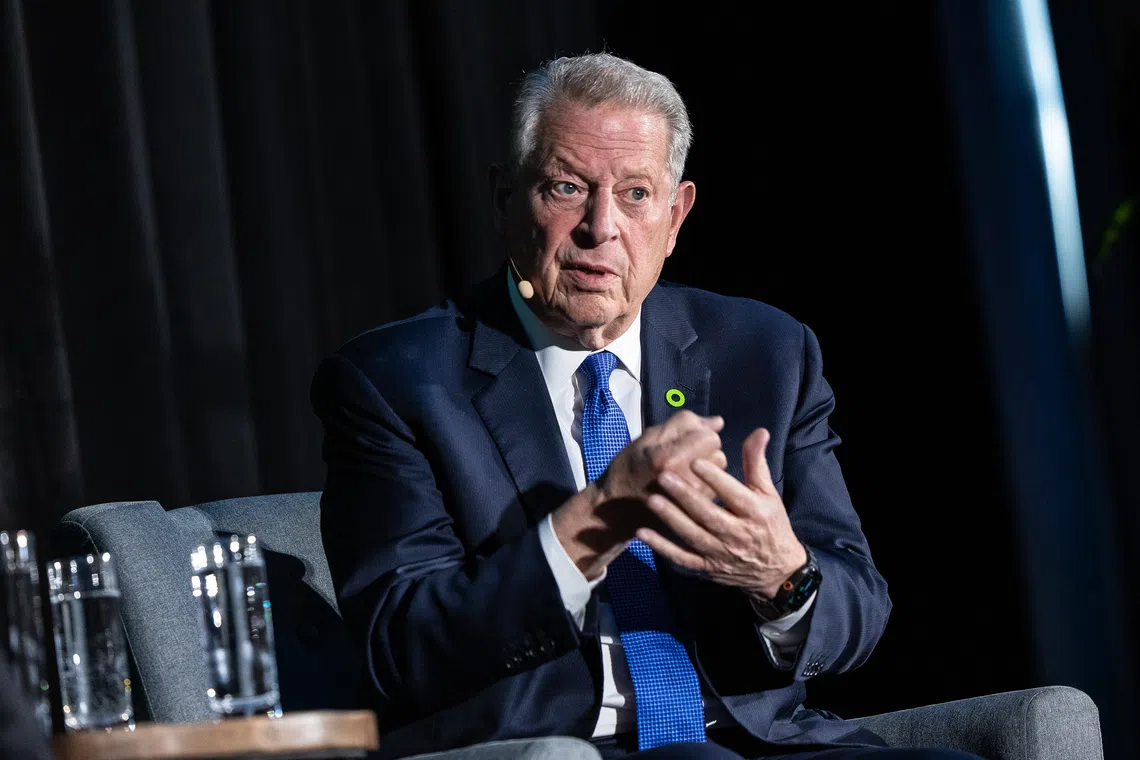
Gore is coming to Singapore in September to host a two-day climate leadership training for participants from across South-east Asia. It is part of a training programme by The Climate Reality Project, a non-profit climate organisation he founded in 2006.
He hopes to empower participants at the session with a two-part message: That the climate crisis is far more serious than most governments around the world have recognised, and that there are solutions.
“The severity of this needs to be fully taken into account in weighing what is realistic and what is not realistic as we make choices about our future,” he said. “Is it realistic, for example, to continue using the sky as an open sewer when the consequences are all around us already?”
Gore served as US vice-president under former president Bill Clinton from 1993 to 2001. He left elected office after narrowly losing the 2000 presidential election to George W Bush.
Since then, he has become one of the world’s most prominent climate advocates, perhaps best known for producing the documentary An Inconvenient Truth.
Besides founding The Climate Reality Project, Gore co-founded Generation Investment Management, a sustainability-focused investment firm where he serves as chairman.
Decoding Asia newsletter: your guide to navigating Asia in a new global order. Sign up here to get Decoding Asia newsletter. Delivered to your inbox. Free.
Copyright SPH Media. All rights reserved.
TRENDING NOW

Once staunchly pro-China, Malaysian Chinese businesses are now distancing themselves from Beijing

Looking beyond looming CEO succession, should UOB potentially pursue a transformative merger?

Could stablecoins be the future of money?

Grab CEO’s wife Chloe Tong on life with Anthony Tan and finding her purpose

