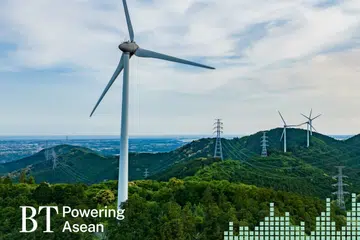
With right incentives, Asia’s energy transition needs could be met by private markets
But investor interest is selective, and strongest in parts of the energy supply chain with lower risk profiles

THE billions pouring into private markets could be the answer to Asia’s energy transition needs as more investors seek the steady returns offered by renewable energy.
Better incentives or policies may be needed on some fronts, though, as market players said Asia’s emerging markets are tough hunting grounds.
“(Just about) every new fund we see raised at the moment is an energy transition fund. The wave of capital and the need is immense,” said Mark Stulic, partner at private markets specialist StepStone Group.
StepStone’s global investment coverage shows over 180 private market funds raising and deploying capital for the likes of wind, solar, battery storage, hydro, carbon capture, bio-fuels and hydrogen solutions; with activity supported by both government building and investor demand.
“The total capital within dedicated renewable, transition and sustainability strategies is more than US$200 billion, measured against a global estimated capital need of over US$4 trillion,” said another StepStone partner, Todd Lapenna.
“There is significant activity across all populated continents in response to growing power demand as well as transition from conventional thermal energy to green solutions.”
By 2050, the International Renewable Energy Agency estimates spending on renewable energy generation alone could hit US$1.4 billion per year.
That figure does not account for growing energy security concerns, said Minal Patel, partner and head of private markets at renewable infrastructure investment manager Schroders Greencoat. “The Russia-Ukraine conflict has really made people think.”
Private capital, meanwhile, has picked up on the increasing attractiveness of energy transition as an investment theme.
“Most of our investors are not investing in renewables for impact reasons. They are doing it because it makes sense,” Patel said.
Returns, already stable, are now improving, said Brent Burnett, head of infrastructure and real assets at private markets investment solutions provider Hamilton Lane.
”The stabilisation of supply chains over the last few years and improving technologies have resulted in lower levelised cost of energies, making unsubsidised renewables deployment increasingly attractive,” he said.
Most of the money is being raised for and deployed in the more mature markets of Western Europe and North America, though.
Asia-Pacific, excluding China, is in the “infancy” stage of development, so deal volume is relatively small, Burnett said, although the region is expected to be a “key growth market”.
In addition to the difficulties inherent to any nascent market, Burnett said each Apac economy is “heterogeneous, with its own set of practices, laws and regulations that are still being refined”.
“The ability to find reliable counterparties with the right partners that can effectively navigate an evolving regulatory backdrop becomes critical in ensuring a stable recurring cashflow with downside protection,” he added.
This was the case at Schroders Greencoat, which has waited to secure the right partners for its own expansion into what it sees as the next frontier.
Patel said the investment manager is “quite close to building out an investment presence in Asia”.
It has been asked by one of its largest joint-venture partners, Danish wind farm builder Orsted, “to come and work with them in Asia”, she said.
“Because (Asia is) not as advanced, the returns are that little bit higher. You can get (returns) very close to what you see in Europe.”
The heterogeneity within Asia means the investment universe tends to be split to cater to different risk appetites.
“We have seen a bifurcation of mandates between developed Asia (that is, Japan and Australia) and emerging Asia (that is, South-east Asia),” said Bao Vu, investment director at investment manager FundBridge Capital.
“Investors tend to think of projects by the jurisdiction; some will be investing in developed markets only, or some may be okay with exposure to emerging markets.”
The good news for investors, said StepStone’s Stulic, is that governments are “trying to promote investment and open up their markets to foreign investment”.
Patel of Schroders Greencoat said many governments see renewable energy infrastructure as a source of job creation.
Investor interest is selective, though, and strongest in parts of the energy supply chain with lower risk profiles – which means governments may need to offer sweeteners for certain projects, or reduce red tape for others.
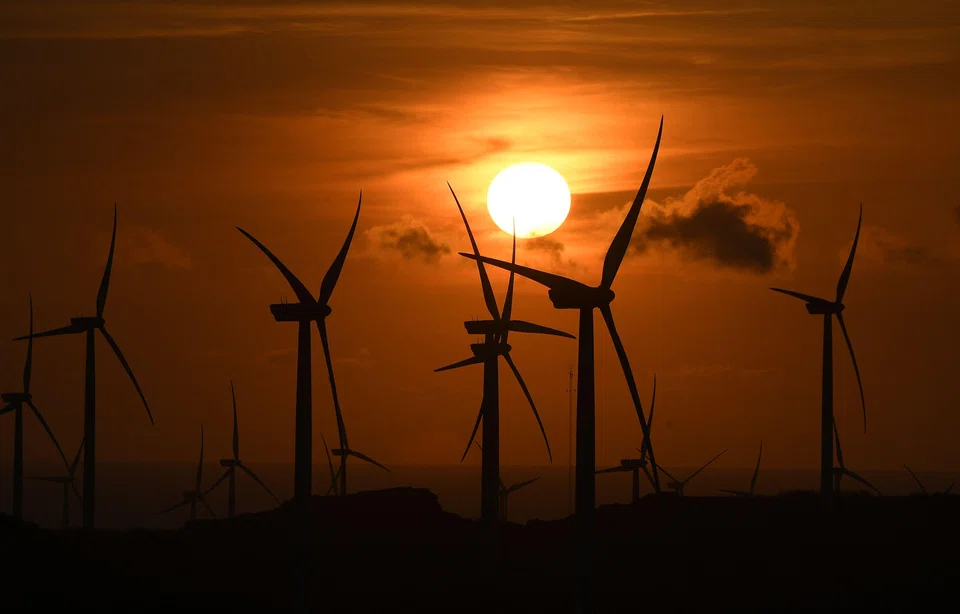
Burnett said Hamilton Lane is focused on investing in proven technology as well as storage systems and midstream infrastructure that support the integration of renewables.
Much of the capital raised for renewable energy investment has gone into generation assets, but transitioning to renewable energy creates challenges for a power grid.
Ensuring a stable base load, for instance, requires storage assets. Because renewable generation sources are often located away from load centres, more transmission lines are needed.
“Distribution and transmission are the current bottlenecks that will require significant future investment,” he said.
These assets are frequently owned by public utilities, however, or require long-haul distribution lines that need multi-jurisdictional approval and right-of-way access – so the investment opportunities are “more limited”.
The investment history for renewables in Apac is also short. Burnett expects more interest to form “once the region demonstrates a longer history of generating returns in fully realised renewable infrastructure projects”.
StepStone’s Lapenna said fund managers typically aim to negotiate contracts that support stable revenue streams, but may face challenges locking in costs, given supply chain issues.
Said Lapenna: “We expect policy support in combination with corporate carbon initiatives and implementation of technology to continue to provide a significant and growing number of investable assets and platforms.”
TRENDING NOW
Grab CEO’s wife Chloe Tong on life with Anthony Tan and finding her purpose
Green fuels, autonomous ships: How Singapore is future-proofing its shipping industry
Singapore-based Ryde accused of pump-and-dump fraud in class action lawsuit
Jackspeed buys 2 Jalan Kilang Barat for S$39 million to house new car dealership