

The rise of carbon-capture technology in South-east Asia

Goh Ruoxue
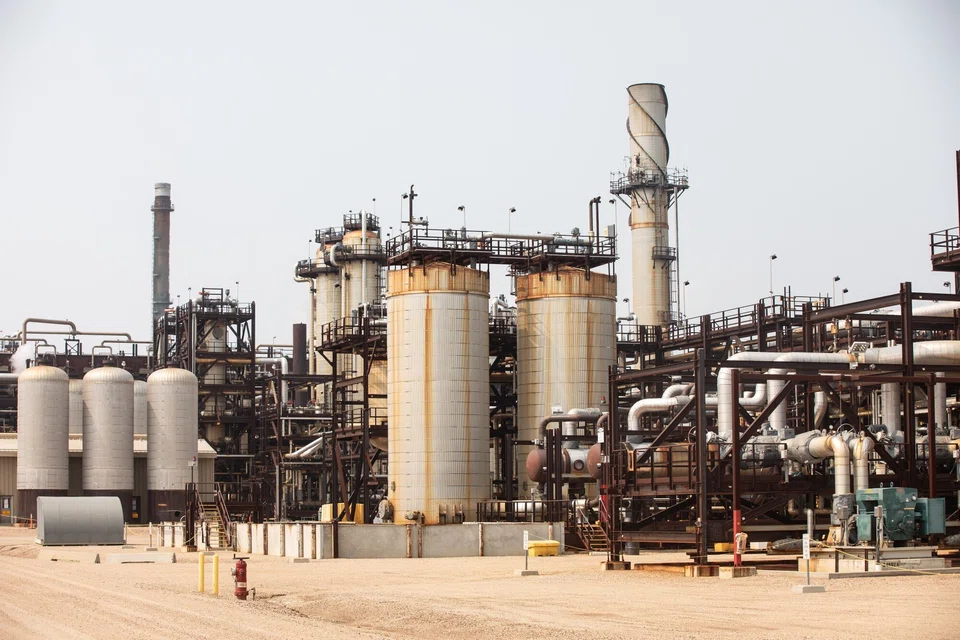
CARBON-capture technology has been gathering steam in South-east Asia in recent years. Observers are split, however, on whether this trend can be a long-term climate solution or if it is merely a smokescreen for continued oil and gas (O&G) production.
Carbon capture and storage (CCS), as it is called, encompasses a suite of processes and technologies that capture carbon dioxide (CO2) from polluting sources for long-term storage.
There is a broader concept called carbon capture, utilisation and storage (CCUS), which includes the additional component of utilising emissions for various purposes.
Globally, there are 37 such facilities in operation, 20 more under construction, and 200 in the development stage, according to the latest figures from international think tank Global CCS Institute.
Growing interest
In South-east Asia, there are nine facilities in various developmental stages. Five are in Indonesia, two are in Malaysia, and there is one each in Thailand and Timor-Leste.
“There has been growing interest in CCUS, particularly in the past two to three years. This has been promoted by Japanese industrial and US O&G companies,” said Grant Hauber, a strategic energy finance analyst for Asia at the Institute for Energy Economics and Financial Analysis (IEEFA).
In September, the Japan government and Malaysia’s state-run oil firm Petronas inked a deal to discuss how to export carbon dioxide emitted in Japan to storage sites in Malaysia, with the aim of doing so by as early as 2028.
Similar talks could eventually take place with other nations in Asia, said Norihiko Saeki, director of the Ministry of Economy, Trade and Industry CCUS policy office in Japan.
Stephanie Chiang, a CCUS research analyst at energy research and consultancy group Wood Mackenzie, noted that there have been multiple developments in CCUS within South-east Asia this year, especially in Malaysia and Indonesia, on the policy and regulatory front.
She said: “National oil companies such as Petronas, Indonesia’s Pertamina, and Thailand’s PTTEP are partnering the oil and gas majors and large Japanese and Korean conglomerates… to study the feasibility of domestic and transboundary CCUS projects.”
Government support
Local governments have also been including CCUS strategies in their long-term climate-change goals.
Chiang noted that Malaysia announced tax incentives for CCS in its 2023 Budget, with a target to develop three CCUS hubs by 2030 and three carbon-capture hubs by 2050.
In March this year, Indonesia enacted regulations on the implementation of such technologies in O&G exploration and production activities.
Dinita Setyawati, a senior South-east Asia electricity policy analyst at energy think tank Ember, said that other countries in the region have shown their interest by joining the Asia CCUS Network discussion.
In 2021, this platform was established with agencies from Asean countries, Australia, Japan and the United States to promote regional collaboration.
With its launch, CCUS technologies started to gain traction in South-east Asia, noted Setyawati. She believes more negotiations and plans involving cross-border CCUS projects could follow.
Climate solution?
Since its inception, carbon-capture technology has been touted as a vital climate solution by governments and industries.
The International Energy Agency (IEA) believes that meeting net-zero goals requires a rapid scale-up of CCUS globally. “CCUS technologies provide significant decarbonisation potential and their widespread deployment is an integral part of a lower-cost and more attainable net-zero future,” said the Paris-based agency in December last year.
Said Chiang: “Wood Mackenzie sees CCUS as a critical decarbonisation technology, especially in South-east Asia where many countries will continue to rely on fossil fuels for energy or feedstock.”
She added that some countries, such as Singapore, lack sufficient domestic capacity to store CO2, which “presents an opportunity for countries with excess geological storage potential, such as Malaysia and Indonesia, to support the region’s decarbonisation efforts and generate revenue from it”.
… or a smokescreen?
Some observers have panned the expensive technology as not living up to its potential.
While CCUS has been talked up for decades, the deployment rate remains slow and its impact is limited. IEA data shows that annual CCUS investment accounted for less than 0.5 per cent of global investment in clean energy and efficiency technologies. The current level of annual CO2 capture represents only 0.1 per cent of the total annual energy-sector emissions.
Other experts believe such technology serves as a smokescreen for enhanced O&G recovery. Simply put, the process involves injecting captured CO2 into depleted O&G reservoirs to squeeze out more oil.
This is the most common use of captured CO2. Of the 30-over CCUS projects in the world today, 90 per cent are used for enhanced O&G recovery, said IEEFA’s Hauber. Six of the nine projects in South-east Asia involve oil refining and natural gas processing.
“In South-east Asia, there’s no beating around the bush. It is not for decarbonisation,” he said.
“Nearly all of the activities are associated with existing O&G fields looking to enhance production by re-injecting CO2,” he added. “It’s not really a viable means of decarbonising their economies or meeting their commitments under the Paris Protocol.”
Greenwashing scheme
Some consider CCUS technology a form of greenwashing.
Hauber pointed out that with regard to O&G production, CCS tackles only Scope 1 – direct greenhouse gas emissions from sources owned or controlled by organisations, and Scope 2 emissions – indirect emissions associated with the consumption of purchased electricity, heat, or steam.
Meanwhile, Scope 3 emissions – indirect emissions that occur in upstream and downstream activities such as when O&G products are burned – cannot be addressed with CCS.
Yet they account for 85 per cent to 90 per cent of CO2 emissions that come from O&G use, said Hauber.
“It’s addressing a small fraction of CO2 that’s emitted from using those two types of fossil fuels and I think people forget about that. The O&G industry has been very clear in leaving that detail out of the conversation,” he said.
Setyawati put forth that the narrative should instead centre on renewables as the current climate solution.
She said: “In the long-run, CCUS may play a role in decarbonising hard-to-abate sectors, but the economic viability of the technology needs to be drastically improved before this can happen.”
“Immediate- and mid-term decarbonisation efforts in South-east Asia will benefit more from quick and cheap solutions such as wind and solar, coupled with increasingly advancing battery-storage technology,” she added.
The role of CCUS technology in South-east Asia’s path to net-zero emissions remains uncertain for now, said observers.
Chiang said that while Asia’s CCUS policy and regulations still lag behind that of its North American and European peers, “there has been promising progress in the past year and we expect more developments to come”.
Setyawati said that focusing on implementing CCUS, over technologically proven as well as cleaner solar and wind power, risks undermining effectiveness in the urgent quest for climate change solutions.






