Rival corporate governance body to SID is launched
GDInstitute is founded by Mak Yuen Teen, with former EDB chair Philip Yeo serving as honorary adviser

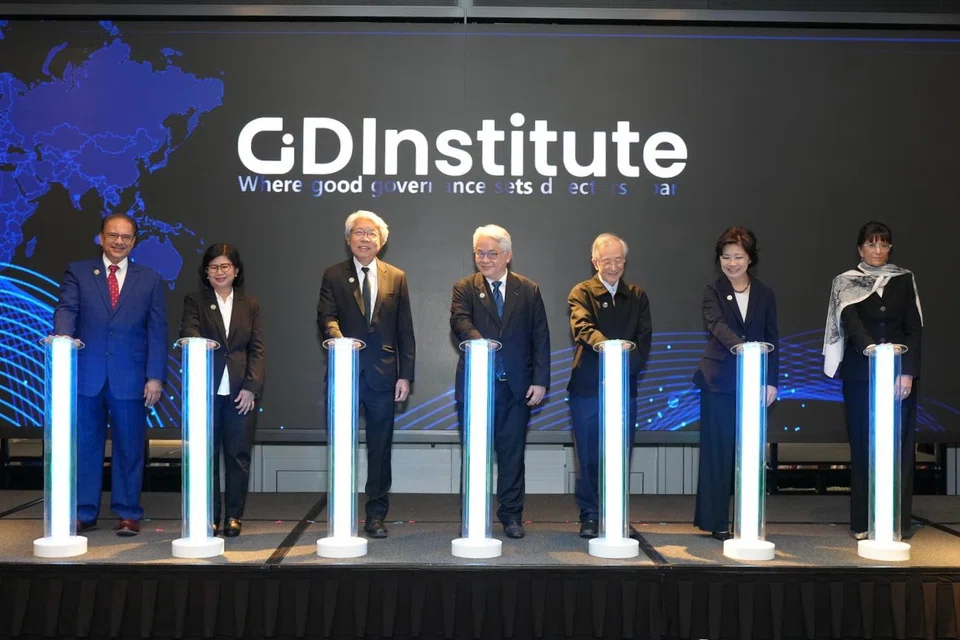
[SINGAPORE] A new corporate governance body rivalling the Singapore Institute of Directors (SID) was launched on Monday (Jan 26).
Known as GDInstitute (GDI), the new entity was founded by corporate governance advocate Mak Yuen Teen, who is an accounting professor at the National University of Singapore Business School.
Philip Yeo, former chairman of Singapore’s Economic Development Board, will serve as GDI’s honorary adviser, and provide strategic guidance. It was previously reported by The Business Times that Yeo had been roped in, though his role had not been decided then.
The new body aims to advance board excellence in Singapore and South-east Asia, and contribute informed views on governance practice and standards, said GDI in a statement.
The organisation was established to strengthen board capability in an increasingly complex governance landscape, and aims to bring together directors and governance professionals to develop sound judgement, accountability and strengthen fiduciary responsibility.
GDI will be guided by a board of directors, with Prof Mak as chair.
Its board members include:
- Dr Zafar Momin, a board member of Petronas Chemicals and adjunct professor at NUS Business School;
- Mary Yeo, independent board director at palm oil company First Resources;
- Shireen Muhiudeen, deputy chairman of the Asian International Arbitration Centre and former chairperson of Malaysia’s bourse operator Bursa Malaysia; and
- Dr Etty Retno Wulandari, former deputy commissioner at Indonesia’s Financial Services Authority.
GDI said in its statement: “As board expectations continue to evolve across markets, GDI recognises that effective governance depends not on compliance alone, but on the quality of judgment exercised at the board level.”
GDI intends to conduct programmes designed to strengthen professional judgment and effective oversight, rather than train directors and governance professionals to simply comply with existing governance standards.
SEE ALSO





“By engaging participants in applied learning, grounded in real boardroom challenges and regional experience, GDI helps develop the judgment, discernment and professional responsibility required for effective board oversight and long-term organisational resilience,” said the new body.
GDI also aims to foster dialogue and cross-market perspectives that support board oversight and accountable board leadership, as well as long-term value creation in South-east Asia through these programmes. Speaking to the media at the launch, Prof Mak said the professional development programmes GDI would go beyond training directors to meet minimum compliance requirements, to training them on accountability.
Engaging more institutional investors and working with them to help companies succeed is also another area the organisation wants to work on.
Asked what role GDI would play even as regulators look into revamping Singapore’s equities market and moving it towards a disclosure-based regime, Prof Mak replied that GDI would engage in advocacy work by taking position statements on corporate governance issues.
These include the number of directorships or the mechanism behind a nomination process – some of which are areas not addressed in the corporate governance code.
The organisation may also make statements whenever a corporate scandal breaks out, and laud companies with good corporate governance practices.
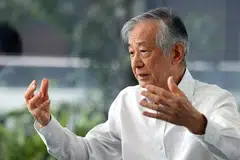
The responsibilities of a listed company’s board director are primarily to represent the interests of the shareholders, not the owners of the company, said Philip Yeo, who was speaking in a panel discussion alongside Prof Mak at the launch, which took place at Four Seasons Hotel Singapore.
Speaking from his experience, he said a board of directors functions like a ship supporting the company’s chief executive officer and the directions of the chairman. Even when there are disagreements between individual board members, they should discuss and come to a consensus on issues, instead of arriving at a decision by voting, he said.
“Whatever board I chair, all board members either agree or disagree, and we discuss and find a solution. Never have I had a board that goes by vote. My experience with that particular company was very strange,” he said.
He did not name the company. He was, however, recently involved in the bitter boardroom battle between City Developments Ltd (CDL) executive chairman Kwek Leng Beng and his son Sherman Kwek, who is CEO of the company.
In a LinkedIn post on Aug 1, 2025, Prof Mak said he was setting up a new corporate governance body, and called for “directors, aspiring directors and governance professionals who are sick of double standards and not walking the talk” to be part of the new body that “will uphold high corporate governance standards”.
He confirmed with The Business Times in an interview that month that the intention is for the new organisation to “truly stand for good governance” and “raise the standards for directorships”.
When asked what prompted him to launch such a body, he said he was increasingly dissatisfied that SID’s council members were not following best practices that were in their own codes or guides.
SID was set up in 1998 as Singapore’s national association for company directors.
When news of Prof Mak’s plan to set up a corporate governance body broke last August, the spokesperson for SID told BT that the body would work with regulators, policymakers, academics, companies and non-profit organisations towards the singular goal of raising the bar for corporate governance in Singapore.
The spokesperson also said that SID welcomed “the creation of initiatives or new organisations which share in this same mission”.
“Healthy debate and diversity of opinions are key to creating a robust ecosystem. But we also believe that progress comes from working together, not from undermining one another.”
Decoding Asia newsletter: your guide to navigating Asia in a new global order. Sign up here to get Decoding Asia newsletter. Delivered to your inbox. Free.
Copyright SPH Media. All rights reserved.