

Shipping is vital for carbon capture in Asia-Pacific, say Shell executives
The oil giant is exploring projects in markets including Singapore and Malaysia

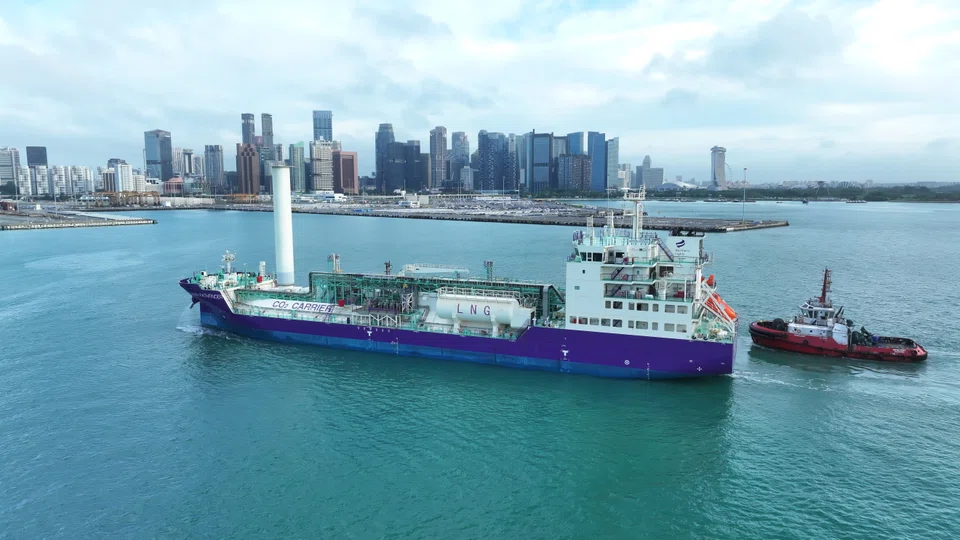
THE ability to transport carbon dioxide (CO2) by ship is crucial for carbon capture and storage (CCS) projects to take off in the Asia-Pacific, said a regional executive of oil giant Shell.
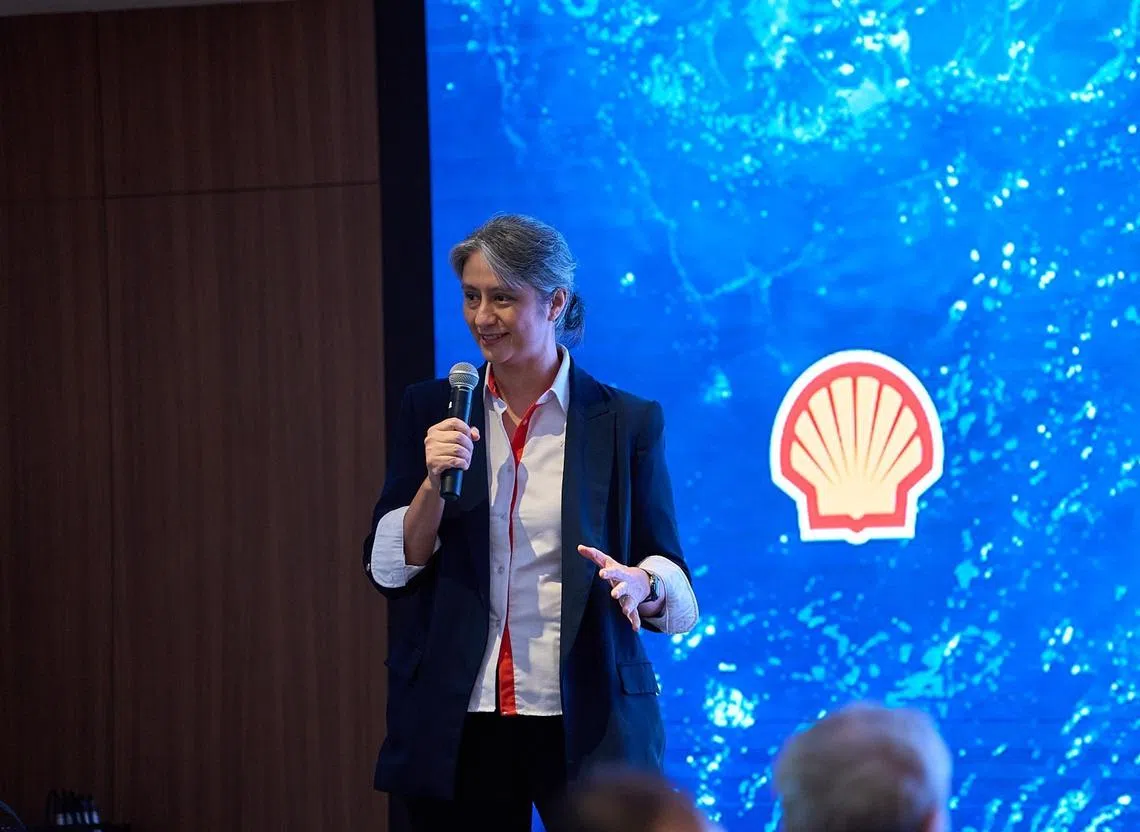
“You can see the geographic design of the Asia-Pacific – it is largely archipelago. So shipping becomes absolutely imperative and important for us to realise CCS and reduce carbon emissions in the region,” said Zharin Zhafrael Mohd, Shell’s general manager for CCS in the region, on Friday (Jan 17).
She was speaking at a media briefing on the Northern Pathfinder, a new liquid CO2 carrier that made a stopover in Singapore on Friday en route from Dalian, China, to Norway.
Shell was the lead developer of the vessel, which will transport CO2 from capture sites in Europe to an onshore terminal in Norway. The CO2 will be permanently stored in a reservoir 2,600 metres under the seabed.
This is part of the Northern Lights project, a joint venture between Shell and fellow energy companies Equinor and TotalEnergies.
Beyond Europe, Shell has stepped up its exploration of CCS projects in the Asia-Pacific, including in Singapore, Malaysia, China and Australia.
CCS is a nascent technology where carbon emissions are captured and permanently injected into the seabed, or other locations, in a bid to fight climate change. The captured CO2 can be transported via pipelines, but shipping is emerging as a preferred solution for cross-border CCS.
The Northern Pathfinder is one of the first vessels globally for large-scale CCS, with a total tank capacity of 7,500 cubic metres.
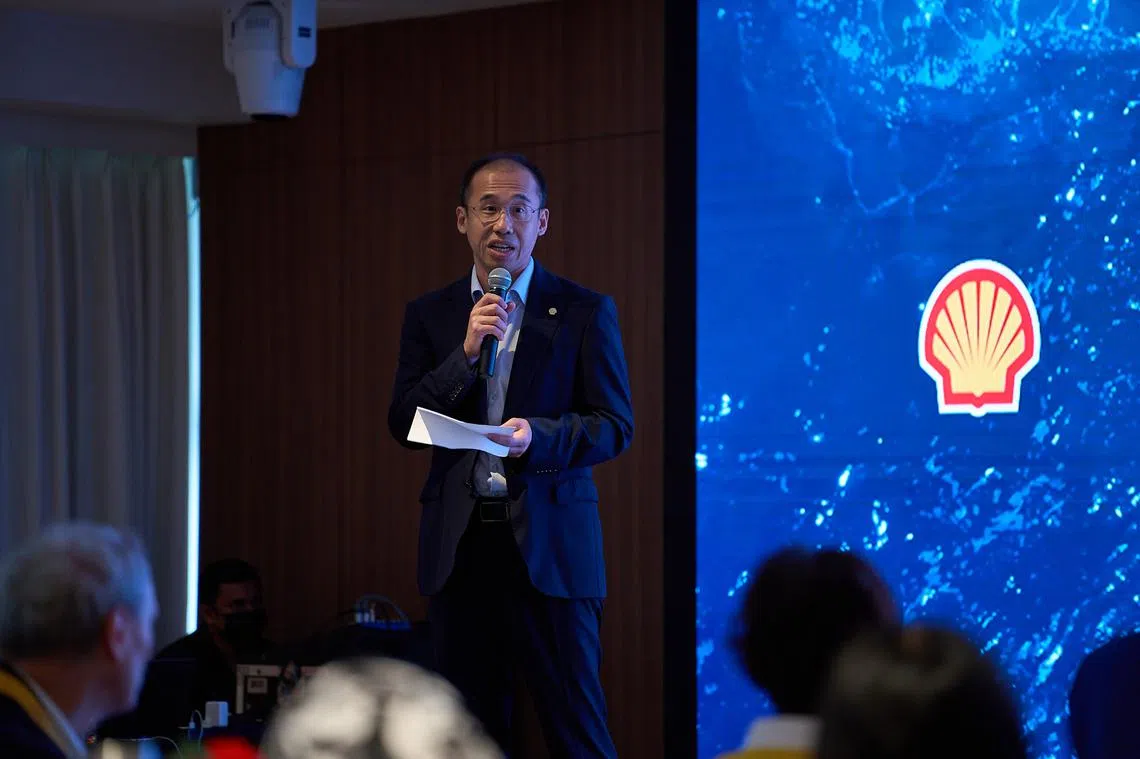
Transporting CO2 at an industrial scale for CCS and moving it between many different countries is a “very new” development, said Lee Teng Huar, Shell’s general manager for maritime operations in the Asia-Pacific and the Middle East.
He highlighted that shipping CO2 has significant benefits over transporting it via a pipeline. “Shipping enables flexible and scalable transport of liquid CO2 across national boundaries, compared to pipelines, where you’re fixed between two parties, point to point,” he said.
Furthermore, the number of ships can easily be increased “to take on more volumes and more cargo, versus a pipeline where, once it’s built... capacity could be limited”, he added.
Shipping is an “important dimension” of CCS, said Shell Singapore chairperson Aw Kah Peng. “It does allow us to think of CCS, particularly in the case of Asia, in a regional way – of how to connect where the carbon emissions are (and) where the storage will need to be.”
The Northern Pathfinder is the second in a fleet of four CO2 transport vessels, making it part of the largest dedicated CO2 shipping fleet globally.
Regional potential
The vessel’s Singapore stopover comes as Shell deepens its exploration of CCS in the Asia-Pacific.
The company has been working with two key groups: markets where carbon emissions can be captured – such as Singapore, Japan, Taiwan and South Korea – and those where CO2 can be deposited, said Zhafrael. The second category includes China, Malaysia, Brunei and Australia.
“We’ve been busy establishing a lot of connections and really understanding our customers, the markets (and) regulatory frameworks, and conducting quite extensive policy advocacy,” she said.
For the storage locations, “making sure there’s permanence in keeping the CO2 in the ground is absolutely crucial”, she added.
In Singapore, Shell and ExxonMobil have formed a consortium – called S-Hub – that partnered the Singapore government to study the feasibility of cross-border CCS.
Zhafrael said that the initiative has “fantastic ambition”. It is focused on developing a CCS project to capture and permanently store at least 2.5 million tonnes of CO2 a year, with the aim of starting the project by 2030.
The Asia-Pacific is still a nascent market compared to Europe, which has an established carbon price and carbon market, Zhafrael noted.
“And that’s why we felt that it was important to bring and berth the Northern Lights vessel here, in order to give folks here a feel and a sense of how real it is,” she said.
TRENDING NOW
China recruited exec at Singapore data centre firm to spy on Nvidia CEO Jensen Huang: US intelligence

Higher rates, weaker spending: Is the Philippines entering stagflation?

Could Japan trigger the next global financial crisis?
Protect people, not prices: How Asean+3 can build resilience to energy shocks

