

Simplified disclosure programme launched to support SMEs in sustainability reporting
Just five metrics need to be reported under the new Green 100 initiative
 Add BT as a preferred source
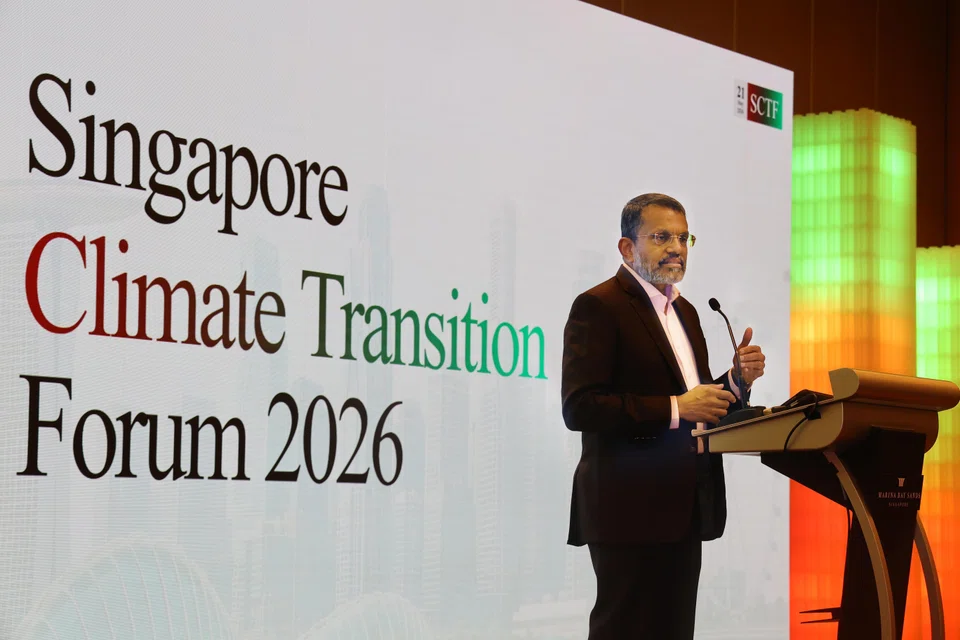
[SINGAPORE] Small and medium-sized enterprises (SMEs) facing difficulties in sustainability reporting have the option to start disclosing just five metrics with the launch of a simplified disclosure programme.
The five metrics – water, electricity, gas, machinery fuel and vehicle fuel consumption – form the foundation of a new initiative called Green 100 to encourage SMEs to start sustainability reporting.
Launched on Thursday (May 21) on the sidelines of Temasek’s flagship sustainability conference Ecosperity, the initiative aims to leverage 100 large enterprises to each mobilise at least 100 SMEs in their supply chains to disclose data on these five metrics.
Disclosures will be made through a digital platform managed by Gprnt, a sustainability reporting and data platform company.
In a joint statement, the National Climate Change Secretariat (NCCS) and the Singapore Business Federation (SBF) said that 22 large enterprises and 33 SMEs have come on board the scheme thus far.
SMEs will be able to participate in Green 100 for free. They can thereafter receive a badge granting them access to a registry that lists them as sustainability-ready suppliers and provides them with green procurement and sustainable financing opportunities.
“Lowering barriers and raising incentives”
Speaking at the launch of the initiative, Ravi Menon, Singapore’s ambassador for climate action, said that Green 100 is aimed at making SMEs’ climate action commercially meaningful.
“Too often, sustainability is seen as a cost centre... Green 100, in short, is about lowering barriers and raising incentives,” he said.
“By simplifying disclosures and lowering costs, it helps SMEs get past the first hurdle. By tying the Green 100 badge to procurement incentives and financing opportunities, it makes sustainability not just viable, but valuable for business.”



Green 100 is the first initiative launched by the Council for a Competitive Climate Transition, a platform set up by NCCS and SBF last month to coordinate the drive to help companies improve their climate resilience and competitiveness.
The five foundational metrics that SMEs have to disclose are based on a new standard for companies to assess how sustainable their businesses are and to measure their progress over time.
Launched by Enterprise Singapore through the Singapore Standards Council, along with the Agency for Science, Technology and Research’s Singapore Institute of Manufacturing Technology (SIMTech) and Singapore Manufacturing Federation, companies can use the new standard, known as Technical Reference (TR) 149, to identify areas for improvement across five dimensions.
The five metrics come under the operations dimension. The other four dimensions are people readiness, structure, supply network and product life cycle.
Speaking at the launch event on Thursday, SBF chief executive officer Kok Ping Soon said that having TR 149 as a common standard gives businesses a more consistent and practical way to start their sustainability journey.
While some large enterprises and SMEs have already started on this journey, he noted that individual companies go about it differently, applying different formats and setting different expectations and requests.
“For SMEs supplying to multiple customers, that creates duplication. And for the wider ecosystem, it limits scale, which is really what we want. And for everyone, it creates unnecessary friction,” he said.
“Instead of navigating an alphabet soup of standards and customer requirements, SMEs can now follow one practical nationally recognised pathway. Instead of every large company asking for something different, we now have a national basis for consistency.”
Decoding Asia newsletter: your guide to navigating Asia in a new global order. Sign up here to get Decoding Asia newsletter. Delivered to your inbox. Free.
Copyright SPH Media. All rights reserved.
TRENDING NOW

Singapore private housing is ‘decoupling’ from HDB market as buyer pools diverge: NUS survey

Simba’s 5G spectrum hurdle may accelerate Singapore’s telco market reset

Yen hits 40-year low in historic slide that’s rattled Japan

Malaysian tycoon Vincent Tan’s sell-downs point to pruning rather than an exit plan

