Singapore carbon exchange CIX sticks with Cambodian project amid human rights review

Wong Pei Ting
SINGAPORE-BASED carbon exchange Climate Impact X (CIX) is keeping credits from a suspended Cambodian project in its flagship contract, as a standards body reviews the project over human rights allegations.
In taking a wait-and-see approach, the exchange is being careful to avoid knee-jerk reactions and let the verifier’s review run its course, CIX head of product Tom Enger told The Business Times.
He said reviews have their merits in granting “20-20 hindsight”, uncovering new information and reassessing baselines, but also that “it is not cool when a project is attacked or rashly assumed to be ‘guilty until proven innocent’”.
“The analogy would be a person, or company, accused in a national newspaper of an injustice, without first having a right to reply,” he added.
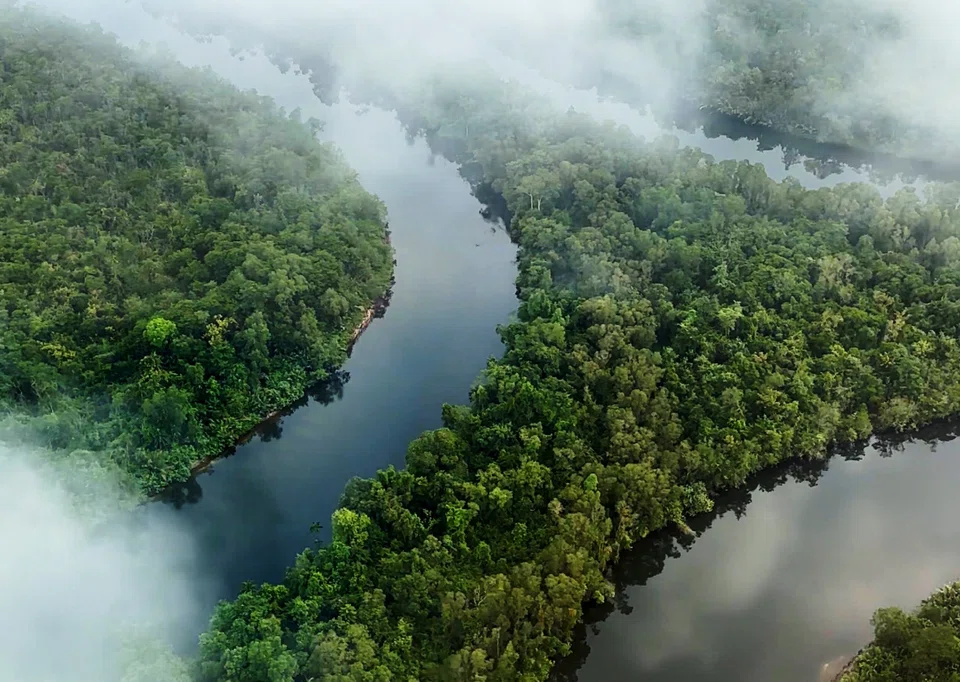
CIX’s Nature X standardised carbon contract delivers carbon credits drawn from a pool of 11 forest-based carbon reduction projects around the world. Among that pool is the Southern Cardamom project in Cambodia’s Koh Kong province, which covers an area more than six times the size of Singapore.
On Jun 19, carbon credit certification body Verra suspended the issuance of new credits from the project, pending a review. That review was sparked by Human Rights Watch, which lodged a complaint that Verra said warranted further investigation. The suspension does not cover existing Southern Cardamom credits, which remain in the Nature X basket.
Climate Impact X rival AirCarbon Exchange (ACX) has distanced itself from the project, announcing on Jun 23 that it no longer accepts Southern Cardamom credits for the standardised contracts on its spot trading platform. This means that buyers can be certain that they will not find Southern Cardamom credits in new contracts issued by ACX.
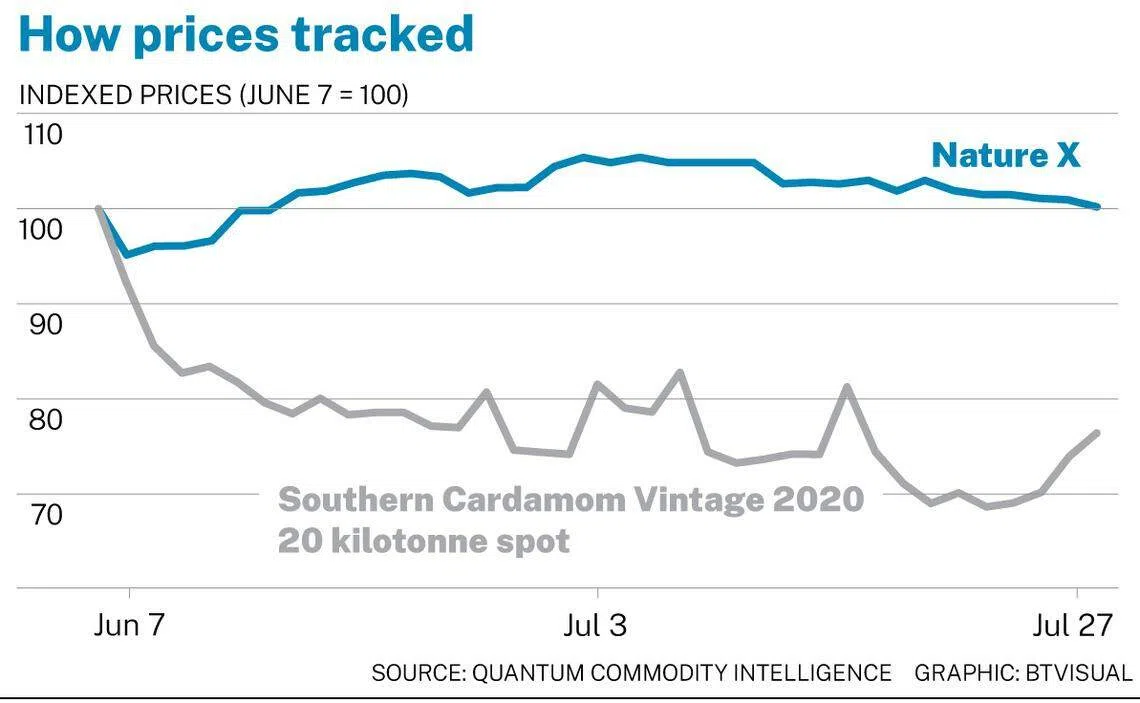
The price of Southern Cardamom credits that were issued in 2020 have lost about a third of their value since June, based on data by price reporting outfit Quantum Commodity Intelligence. Quantum’s data showed the credits assessed at US$8.76 each on Jun 1. By Jul 24, they had fallen to US$6.01, a 31 per cent drop.
This is a faster decline than other projects. Envira Amazonia, a tropical forest conservation project in Brazil, moved from US$8.45 to US$6.90 in the same period, down 18 per cent. Indonesia’s Katingan peatland restoration and conservation project moved from US$8.51 to US$7.59, down 11 per cent.
The price of Nature X has been more resilient. The contract was assessed by CIX at US$5.37 on Jul 27, slightly above the US$5.36 level assessed on Jun 7, its first trading day.
Enger said buyers “are not complaining” that Southern Cardamom credits have not been removed from the Nature X delivery basket. Buyers can resell the credits into a contract or as a single project, he noted.
He said that CIX’s approach adheres to a “best-practice contract governance process” that is aligned with the International Organisation of Securities Commissions. This includes surveying market feedback on tradeability. The survey, Enger said, showed “no appreciable loss of demand for (Southern Cardamom) or discounting to warrant a contract delivery suspension”.
Hum Wei Mei, ACX head of Asia-Pacific and global head of carbon and environmental products, said ACX favours a “conservative approach” for its standardised contracts.
“ACX’s current contract specifications tend to be broad-type, programme or methodology-based specifications. As such, carbon credits from the project are no longer eligible under ACX’s standardised contracts until further notice,” she said.
Southern Cardamom project developer Wildlife Alliance has called the allegations against it “inaccurate and misleading”.
“Wildlife Alliance meaningfully and unambiguously advances human rights and sustainable development in a tremendously challenging environment,” chief executive Suwanna Gauntlett said, adding that her company was engaging with Human Rights Watch.
She added: “It would be completely irresponsible for (Human Rights Watch) to publish inaccurate and misleading findings before allowing Wildlife Alliance to correct the numerous inaccuracies in the information they rely on. Doing so would cause irreparable damage and harm to the communities, forest and wildlife of the Southern Cardamoms.”
In response to queries, Verra said that it does not comment on ongoing reviews to avoid unduly influencing their outcomes. It will issue a review report to the validation and verification body that conducted the project’s first validation, SCS Global Services, which must provide written responses to the findings raised.
Rich Gilmore, the chief executive of carbon market investment manager Carbon Growth Partners, said Verra’s review should bolster confidence in the carbon market, rather than hurt its credibility.
“This is a sign of a well-governed market in action and is another example of its transparency and efficacy,” he said.
Gilmore, however, said any review that Verra is undertaking should be done in as timely and transparently a manner as possible. At this point, Verra has not disclosed what the concerns are other than “stakeholder comments” and how long the suspension is likely to last, he noted.
Inigo Wyburd, policy expert at advocacy group Carbon Market Watch, told BT there had always been uncertainty in estimating the potential benefit of a carbon project, and this affects even projects with a positive reputation.
In response to the suspension, Wyburd said buyers should stop purchasing any credits from Southern Cardamom and refrain from using these offsets for marketing and promotional purposes until the review and investigation processes are finalised.
“Using offsets from suspended projects for marketing purposes can be misleading to consumers and stakeholders,” he said.
Buyers should strengthen their due diligence processes when considering future investments in (such) projects to ensure that robust safeguards are in place and guarantee that harm to communities and the environment is prevented, he added.