
Singapore could star in the race towards nuclear fusion energy
Materials science, advanced manufacturing among the fields where the Republic could make contributions

Sharanya Pillai
SINGAPORE has the potential to be a research hub in Asia for the nascent but fast-growing field of nuclear fusion – a form of nuclear power that mimics how the sun generates energy – say industry players.
While nuclear fusion is not yet commercially viable, research in this field has boomed as countries race to develop new sources of renewable energy. Experts told The Business Times that Singapore can contribute to nuclear fusion development in areas such as materials science and advanced manufacturing.
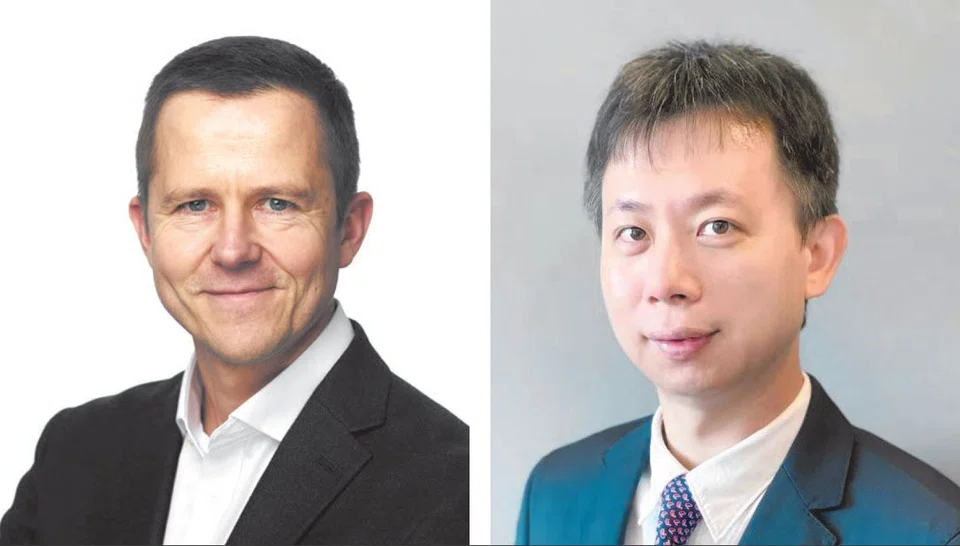
“We see that Singapore is a perfect match for fusion,” said Warrick Matthews, chief executive of UK-based Tokamak Energy, one of a growing number of startups aiming to commercialise nuclear fusion as soon as the 2030s.
Tokamak Energy is exploring potential partnerships in Singapore, Matthews told BT while on a recent visit here. He noted that Singapore’s expertise in the aerospace and shipping industries is transferable to the nuclear fusion industry, and that the country could contribute to research in areas such as the magnet systems and control architecture needed for reactors.
“We’re probably looking at not the big, heavy industry applications, but really how we develop the technology, the smarts that we need for the future. I’m sure that if Singapore were to build its own devices in-country, there will be opportunities to develop a supply chain,” he noted.
Pumping up
Nuclear fusion involves fusing two variants of hydrogen at extreme heat to release immense amounts of energy, replicating how the sun produces energy. This is distinct from present-day nuclear energy that is produced from the splitting of uranium, also known as nuclear fission.
“There’s research momentum into nuclear fusion,” said Dr Victor Nian, co-founder and chief executive of the Centre for Strategic Energy and Resources (CSER), a Singapore-based think tank.
“Several international collaborators are looking at Singapore, asking us whether they can collaborate, because they see South-east Asia being interesting… For Singapore, this is precisely where we have the opportunity,” he noted.
Interest in fusion power has been picking up across Asia. Thailand last year unveiled its first nuclear fusion reactor – called a tokamak – in collaboration with a Chinese research institute, while Japan launched the world’s biggest experimental fusion reactor.
Singapore has similarly started research efforts. Nanyang Technological University (NTU) last year announced a new research centre for nuclear fusion, the Singapore Alliance with France for Fusion Energy, jointly set up with France’s Alternative Energies and Atomic Energy Commission.
State investor Temasek has also backed two of the industry’s biggest startups, leading a US$130 million funding round in Canada’s General Fusion, and a US$84 million round in US-based Commonwealth Fusion Systems.
High potential
Singapore is well-positioned for fusion research because of its high-level engineering, said nuclear fusion expert Professor Xavier Garbet of NTU. He cites materials science as a key segment where Singapore could make contributions.
For instance, developing the right material for tokamaks is a challenge, noted Prof Garbet. The donut-shaped devices have to withstand temperatures as high as 150 million degrees Celsius – 10 times hotter than the core of the sun.
“It’s like when a space shuttle enters the atmosphere – it would face enormous heat fluxes. It’s similar with tokamaks… If there is a breakthrough in material sciences, then Singapore could produce some elements of a reactor,” he added.
Another promising area is the development of artificial intelligence models that can make fast predictions and optimise the running of fusion reactors. This is a potential field for new innovations in Singapore, where there is “long-standing expertise” in deep-learning algorithms, said Prof Garbet.
Beyond developing research expertise, Singapore could also attract fusion startups to set up here, said CSER’s Dr Nian. But he noted that getting investors interested is still a challenge. “Some investors are very interested in it; most of them aren’t. They believe that this is just a dream.”
Whether startups and government researchers deliver on nuclear fusion still remains to be seen. Indeed, fusion may even “arrive a bit late” for countries’ transitions towards clean energy, said NTU’s Prof Garbet. But it is important to be prepared.
“If one day there is fusion, Singapore has to be ready. If you buy a reactor, you need people to run and control it, and to advise on decision-making,” he said.
Singapore’s Energy Market Authority (EMA) and the Agency for Science, Technology and Research declined to comment for this article. In a statement on its website, EMA had previously noted that while nuclear fusion has seen breakthroughs, it is still nascent.
“Singapore will continue to monitor the developments for nuclear fusion and strengthen our capabilities to understand nuclear science and technology,” it said in the statement.
A 2022 report commissioned by EMA found that nuclear energy could supply about 10 per cent of Singapore’s needs by 2050. As BT previously reported, the country is tracking advanced nuclear fission technologies, such as small modular reactors, but has no plans yet to pilot them.
TRENDING NOW
Genting Singapore trails MBS, but helps anchor Malaysian parent group’s finances
Siti Hasmah Mohamad Ali, wife of former Malaysian PM Mahathir Mohamad, dies aged 100
He built the Vingroup empire. Now South-east Asia’s richest man is handing some key roles to his sons
Why US midterm elections could power the next stock market rally



