Singapore ESG indices slightly outpace STI in 2023, buoyed by renewables
Climate reporting and carbon tax will be key issues for ESG equity investors to watch in 2024

Sharanya Pillai
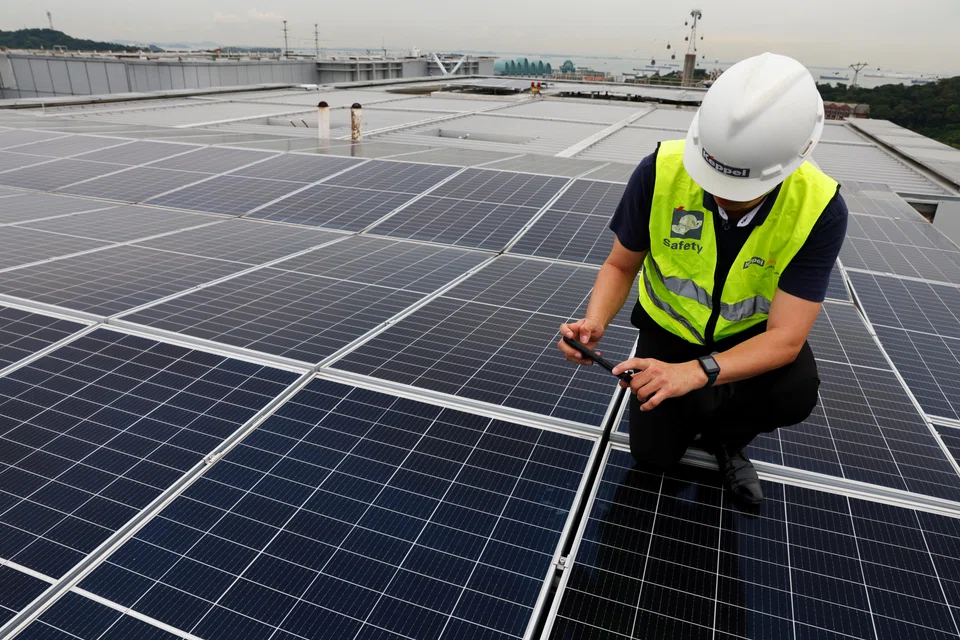
SINGAPORE stock indices focused on environmental, social and governance (ESG) strategies slightly outpaced the benchmark Straits Times Index (STI) in 2023, potentially benefitting from the bullishness over renewable energy.
The iEdge-OCBC Singapore Low Carbon Select 50 Capped Index had 0.9 per cent in total returns this year as at Dec 7, while the iEdge SG ESG Leaders Index returned 0.1 per cent. Both indices slightly outperformed the STI’s drop of 0.6 per cent in the same period.
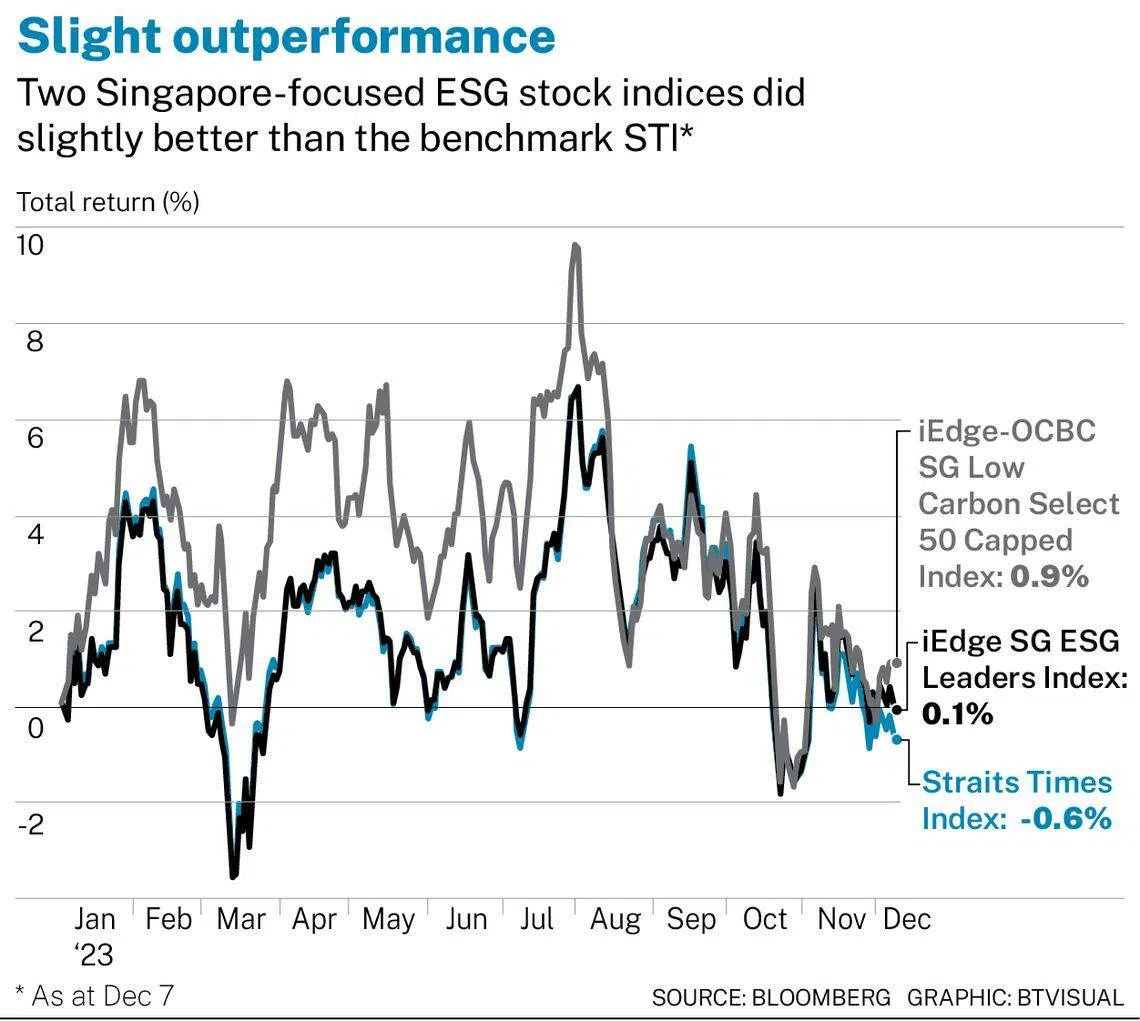
Renewables are a common theme in the underlying constituent stocks of the two indices, noted a spokesperson for the Singapore Exchange (SGX). Notable stocks include Keppel Corp, which is up 52.7 per cent year-to-date as at Dec 7, as well as Sembcorp Industries and Yangzijiang Shipbuilding, which rose 49 per cent and 12.5 per cent, respectively, in the same period.
These companies have stepped up their renewable footprints and targets significantly this year. For instance, Keppel’s renewable energy portfolio grew to 3 gigawatts in H1, making up over 60 per cent of its total energy portfolio.
Meanwhile, Sembcorp aims to grow the net profit contribution from its sustainable solutions portfolio to 70 per cent by 2025. Yangzijiang has made inroads in sustainable shipping, with 56 per cent of its order book in cleaner energy vessels.
Other constituents of the indices are also pivoting towards renewable energy, the SGX spokesperson noted. For instance, taxi operator ComfortDelGro and automobile player Jardine Cycle & Carriage are both focused on the transition to electric vehicles (EVs).
The iEdge-OCBC Singapore Low Carbon Select 50 Capped Index tracks 50 globally listed companies domiciled or incorporated in Singapore, based on carbon intensity performance using data from Sustainalytics, an ESG ratings provider. This index is investable via the Lion-OCBC Securities Singapore Low Carbon exchange-traded fund.
The iEdge SG ESG Leaders Index has 67 constituents and a weighting tilted according to the companies’ ESG ratings, which are provided by Sustainalytics.
2024 outlook
Renewables are expected to remain a key theme for ESG equity investors in 2024. Sustainable aviation fuels could especially hold significant potential during this transition phase, said Victor Wong, head of the sustainability office at UOB Asset Management (UOBAM).
“In the near term, we would expect renewable fuels to play an important role in energy transition. They are compatible with existing infrastructure, can be more easily stored, and are technically ready-for-use for certain industries,” he said.
Clean energy is also a big theme for investors looking at opportunities across Asia, said Ignace Nguyen, a client portfolio manager at asset manager Mirova.
“On the back of ambitious net-zero targets from Asian governments, we see compelling investment opportunities in clean technologies across sectors from renewable energy power producers, solar and wind original equipment manufacturers to energy efficiency and battery storage manufacturers,” he said.
Other segments with potential include hydrogen power, EVs and sustainable food production. South-east Asia in particular is well-positioned to become a strategic manufacturing hub in the EV transition, said Nguyen. On the agrifood front, he expects Asian companies to provide sustainability solutions that enhance food productivity while lowering costs.
Investors will also be monitoring ESG-related regulations, and if that leads to new investment opportunities and risks.
Bertram Lai, group head of research at CGS-CIMB Securities, noted that Singapore has issued a raft of ESG guidelines, such as SGX’s sustainability reporting standards, the central bank’s sustainable finance taxonomy and code of conduct for ESG rating and data providers.
“The net effect of these regulations will be to provide more ESG related disclosures to investors, and to standardise and clarify what is allowed: both of which should lead to an acceleration in ESG-related product launches,” said Lai.
“For investors that have been wanting to invest sustainably but have had trouble with identifying local instruments that meet their criteria, this should improve in coming years,” he added.
Companies’ climate transition plans will continue to be a key area of focus for ESG-oriented investors, said the SGX spokesperson. Investors will want to understand how companies intend to address climate-related risks such as regulatory changes.
“Credibility of these transition plans will be a major focal point as investors place more emphasis on the governance of these plans, the adoption of decarbonisation technologies and the use of carbon credits,” said the SGX spokesperson
Wong of UOBAM will be watching the impact of Singapore’s carbon tax, which is set to increase from S$5 per tonne of emissions currently to S$25 per tonne next year.
“We anticipate this escalation impacting companies with carbon intensive operations as they may incur greater capital expenditures in the long term,” he said.
He expects “growing momentum” in developing Asia for carbon pricing instruments, with more countries set to look into carbon taxes.
To be sure, ESG investing is still nascent and faces plenty of allegations of greenwashing. Opinions will still vary widely on what is the best approach, and the debate will continue into 2024.
Counterintuitively, Lai of CGS-CIMB thinks that simply buying highly-rated ESG stocks can be a “losing strategy”. These stocks are already recognised for their quality and likely trading at fair valuations.
“Instead, we recommend investors look for ESG laggards – those that are poorly rated but have clearly communicated strategies and plans to improve their ESG performance: whether form a disclosure, carbon-transition, labour or community or governance perspective,” he said.
“Over time, if the company executes on its plan, the ESG ratings for the stock will improve and as our research shows, investors can expect outperformance of their investments.”