

Singapore to set up single gas buyer for power generation sector in 2024
Move is aimed at stabilising and securing key fuel for country’s electricity
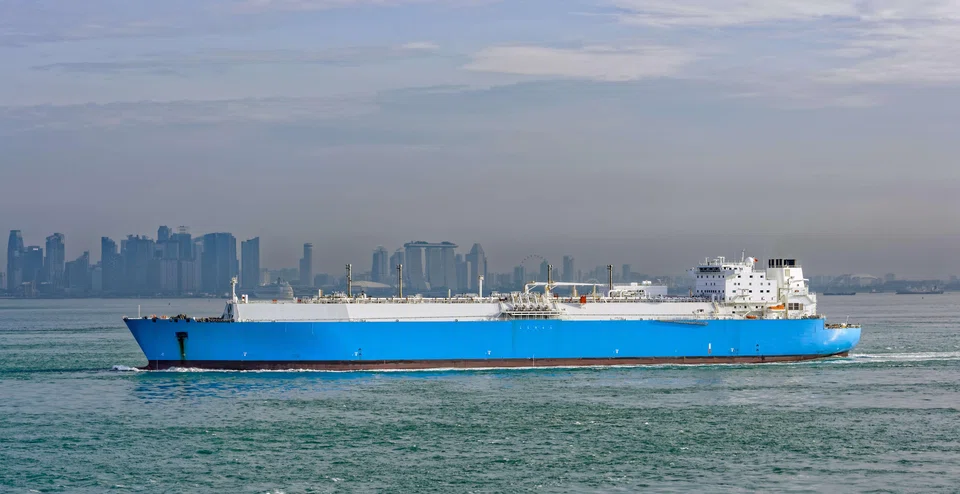
SINGAPORE will set up an entity in 2024 as a single buyer of natural gas for the power-generation sector in order to create a more stable and secure energy system, Minister for Trade and Industry Gan Kim Yong said on Monday (Oct 23).
This “more deliberate and coordinated” centralised approach is a long-term solution after the staggering spikes in Singapore’s spot electricity prices in recent years exposed weaknesses in the country’s market-driven procurement processes.
Under the framework, a single entity will aggregate gas demand from Singapore’s power-generation companies (gencos). That entity then imports the gas required, and sells that gas to the gencos.
In a statement, the Energy Market Authority (EMA) laid out three benefits of the new framework. First, as the sole procurer, the entity will have a “stronger negotiating lever”, and be in a better position to negotiate for more favourable contracting terms, and optimise the system’s needs.
Second, with greater economies of scale, the entity can buy gas from diversified source countries to reduce concentration risk. Third, the entity will be able to enter into longer-term gas contracts, which can create more stable prices and supply.
Speaking at the International Energy Week conference, Gan said that the government expects more volatile oil and gas markets ahead.
However, Singapore’s experience in recent years has showed that the current gas procurement model “does not provide assurance that the system, as a whole, will have enough gas to meet our needs during a crisis, when market conditions are uncertain”, he pointed out.
“As global gas market conditions are expected to be more volatile with the energy transition, we need to rethink our approach to gas procurement.”
He said the new framework will provide a “stronger foundation” for Singapore to push ahead with its energy transition, which would involve getting the power sector to net-zero emissions by 2050. Power generation currently contributes about 40 per cent of the Republic’s emissions.
The centralised procurement approach is not unique to Singapore. Countries that have adopted similar regimes include South Korea, which centralises the procurement and supply of liquefied natural gas (LNG) through the Korea Gas Corporation, a public state-owned enterprise.
Singapore’s current gas procurement framework is market driven. Under it, gencos individually decide on the volume and tenure of gas contracts based on their own commercial considerations, and four EMA-licensed LNG suppliers import the gas based on the indicated demand.
The four importers are ExxonMobil LNG Asia-Pacific, Pavilion Energy Singapore, Sembcorp Fuels (Singapore) and Shell Eastern Trading. Their licences cover gas sales agreements with one-year or longer durations.
The centralised framework will apply only to power generation. This means industrial gas consumers will retain the option to source their gas from other suppliers.
Industry consultation
EMA said it intends to set up the sole procurer for power generation in 2024, although the exact date that centralised buying will begin has not been announced. The authority will consult the industry on details of the new framework.
The Business Times (BT) understands that a consultation paper will be made available in the coming months, and that the framework’s gas-pricing mechanism is one of the items to be worked out.
EMA said that the framework will apply to all future gas demand from the power sector, including gas contract renewals. This would give gencos the assurance that their existing gas-supply contracts with their respective gas suppliers can continue undisrupted.
Gencos that BT spoke to were unsurprised by the move, since EMA had previously indicated it was exploring ways to aggregate gas procurement and obtain longer-term, more secure gas contracts.
Calvin Quek, the head of trading and portfolio management at Senoko Energy, which runs Senoko Power Station, termed it a “fundamental shift” that could benefit both gencos and electricity consumers. “With this change, we hope to obtain better contractual terms and pricing,” he said.
“We look forward to collaborating and working with the regulators during the consultation and preliminary period to achieve system security,” he added.
Tuas Power’s chief operating officer Michael Wong said granting gencos the flexibility to reflect their expected demand within shorter time frames and pick gas types would be key to the successful rollout of the centralised procurement framework. He said he will raise this during the industry consultation.
“It is subject to the consultation paper, but my guess is they will still give some flexibility to the gencos, meaning they won’t be telling you ‘Tuas Power, you must buy this kind of gas for how long, and at what price’,” he said.
Today, the industry gets this flexibility by negotiating with different gas importers on a term or spot basis. These could be tied to long-term offtake agreements, agreed on a next-month or next-week delivery basis, or volumes from spot cargo. At this point, Wong said it is unclear how the variation in procurement methods is going to be handled under the centralised framework.
Noting that Tuas Power’s demand can change by the month, and procurement is dealt with as and when higher demand is projected, he said: “Each of the gencos has its own requirements – very specific requirements – and works with different timelines.” If the framework covers the spot requirements, he understands that it “has to be very flexible” in dealing with the dynamic aspects of each genco’s demand for gas, while aggregating each parties’ requirements a year or a quarter ahead.
A Keppel spokesperson said it would work closely with EMA on the details of the new framework during the consultation phase.
While gencos would be pining for cheaper LNG prices under the new framework, Chong Zhi Xin, the director of gas, power and climate solutions at S&P Global Commodity Insights, suggested that they may not get their wish.
“For a gas aggregator, one of their core tenets would be to maintain energy security rather than to maximise profits. This could lead to higher costs, depending on the regulations imposed by EMA,” he said. “The new company will have to balance the trade-off between energy security and profitability.”
Gencos’ risk aversion
EMA said the aggregator would be responsible for buying the additional gas volumes needed, should overall electricity demand exceed that indicated by the gencos.
This is intended to prevent a repeat of the 2021/2022 global energy price spike, when gencos reduced the volume of their gas contracts amid high gas prices, which in turn caused large swings in wholesale electricity prices here.
EMA highlighted that gencos have been reluctant to enter into long-term gas contracts, which typically offer a greater certainty of delivery and price stability. This is because gencos do not want to be exposed to gas-market volatility and uncertainties in the long term.
In addition, global developments and pushes for the energy sector to shift away from fossil-based systems are likely to lead to more volatile oil and gas markets, which “may further reduce the risk appetites of generation companies”, it stated.
The new approach is needed, “given that the global gas market conditions, and Singapore’s relatively small demand”, EMA stressed. Having secure and reliable supplies of natural gas is “existential for Singapore”, as 95 per cent of the island’s electricity is now generated using natural gas, it added.
An EMA spokesperson separately told BT that natural gas will remain central in ensuring Singapore’s energy security “beyond the next decade”, despite the energy transition, as it is reliable and price-competitive as an energy source.
“By 2035, even with increased renewable energy and electricity imports, it is estimated that Singapore will still rely on natural gas for more than half its power-generation needs, as time will be required to scale up low-carbon energy sources.”
TRENDING NOW
Things to know about DBS’ incoming chairman Anthony Lim
DBS eyes prime brokerage business as Q3 profit falls 5% on weaker trading income

Royal Group and Sunset Hospitality abandon plans to open Casa Mett hotel off Orchard Road
George Yeo adds 100,000 Wilmar shares at S$2.97 apiece, taking stake to over 1 million shares

