

Singapore unveils carbon credit criteria; new double-counting safeguards could exact a price
Credits compliant with requirement to prevent double claims might trade at premium, market players say

Wong Pei Ting
SINGAPORE released the eligibility criteria of its International Carbon Credit (ICC) framework on Wednesday (Oct 4), and market players said companies looking to offset their taxable emissions here must be prepared to pay a premium over voluntary credits.
That is because qualifying credits under the framework will be subject to new mechanisms that prevent an offset from being claimed twice between two countries. However, administrative overheads and compensation for the side giving up its claim will add to the cost of the credits, market players said.
The ICC framework will allow companies subject to Singapore’s carbon tax to offset up to 5 per cent of their taxable emissions beginning 2024, when Singapore’s carbon tax rate increases to S$25 per tonne of emissions from S$5 per tonne currently.
Credits allowed under the framework must adhere to seven principles, which took reference from international standards that include the aviation industry’s Carbon Offsetting and Reduction Scheme for International Aviation (Corsia), said the Ministry of Sustainability and the Environment (MSE) and the National Environment Agency (NEA). To qualify, the credits must satisfy all seven criteria.
The reductions or removals of emissions must occur between Jan 1, 2021, and Dec 31, 2030, to comply with the Paris Agreement’s Article 6, which chiefly lays out the requirement for preventing double counting.
MSE and NEA said they will unveil additional details by the end of the year. Those include a list of eligible host countries, carbon crediting programmes and methodologies to facilitate the development and authorisation of ICC projects; the process for project developers to apply for authorisation from Singapore and the host country; and a project registry for carbon tax-liable companies to identify eligible ICC projects.
The safeguard against double counting will come in the form of negotiated country-to-country deals, a first for the market here. Under these deals, the country selling a carbon credit makes a “corresponding adjustment” to its inventory to give up its claim to the offset in favour of the buying entity. This ensures that both buyer and seller cannot simultaneously claim offsets on the same amount of reduced or removed emissions, a problem known as double counting.
Implementation agreements
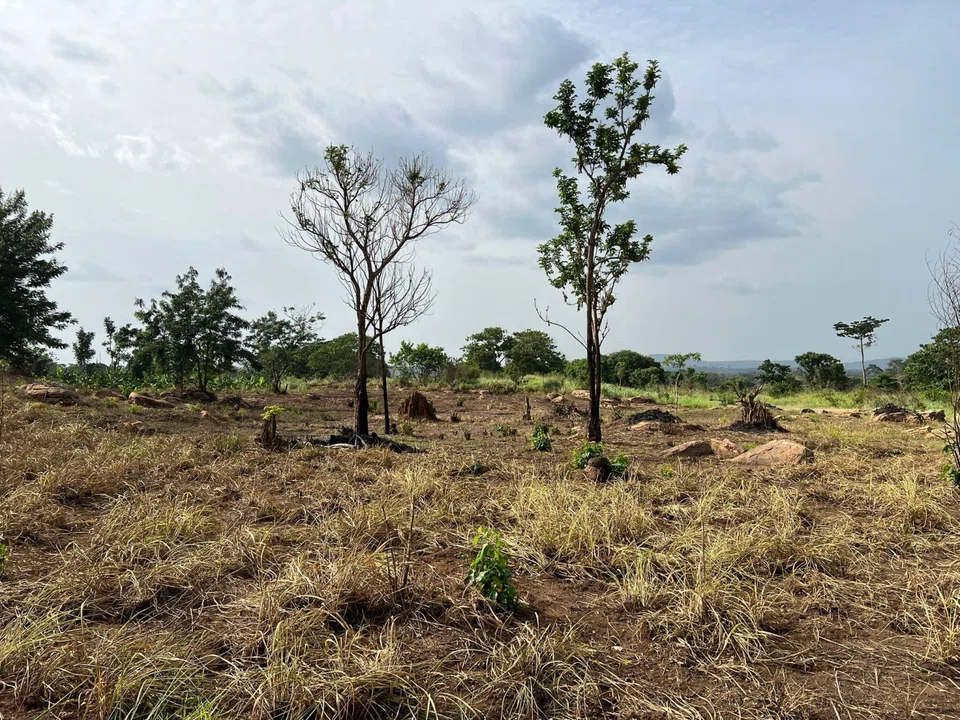
At Wednesday’s National Energy Efficiency Conference, Minister for Sustainability and the Environment Grace Fu said Singapore has “substantively concluded” negotiations with Vietnam and Ghana on implementation agreements. Similar agreements are being ironed out with Bhutan, Mongolia, Papua New Guinea, and Peru.
For the credits to make sense, they will need to cost less than the S$25 per tonne tax rate. Since no Article 6-compliant credits are available in the market yet, it’s anybody’s guess what the ICC-eligible credits will be worth once they come online.
But it’s widely expected that credits with corresponding adjustments will cost more than credits without. That is due to administrative overheads of compliance, as well as a marginal premium demanded by a country for “giving up” its claim to the offsets.
Climate Impact X’s (CIX) head of product Tom Enger said Ghana has announced its intent to charge US$3 to US$5 per tonne of emissions in corresponding adjustment fees.
Frederick Teo, chief executive of Temasek-owned decarbonisation investment platform GenZero, said the marginal cost could vary from country to country. For instance, a country blessed with strong winds and a lot of sun might not demand as much because it could easily expand its renewables’ capacity – a case of “even if I sell you some, I have so much more left in the bank”, he added.
Those considerations will matter for the roughly 50 Singapore facilities with emissions that exceed the taxable threshold of 25,000 tonnes of greenhouse gas emissions annually.
The total emissions of these facilities, which are in the manufacturing, power, waste, and water sectors, make up 80 per cent of the country’s emissions.
If all of these facilities choose to offset the maximum 5 per cent of emissions using the Article 6-compliant credits, Singapore’s new ICC framework could generate demand for around two million credits, each representing one tonne of emissions.
Teo said supplying two million credits can “appear a bit intimidating” given that there are no such credits currently, but the volume makes up just 1 per cent of the annual trading volume on voluntary carbon markets.
He noted there may be a shortage of credits at the start before corresponding-adjustment deals are struck, but some of GenZero’s projects in the pipeline are “expected to contribute meaningfully towards” the needed supply.
With a S$25 per tonne tax rate, companies might stick to cheaper credits related to household devices like fuel-efficient cookstoves, and to forest conservation, the market players said.
Some of these Corsia-compliant projects trade below US$10 a tonne currently. One such credit with corresponding adjustments could thus top US$15, which translates to S$20.60, or about 17.6 per cent lower than the carbon tax rate.
Nature-restoration projects might be slightly out of reach, given that “normal” forestry-type projects are priced in the low-teens per tonne. However, they could become compelling from 2026 onwards, when the carbon tax is further raised to S$45 a tonne, the market players said.
Enger expects companies to buy nature-based avoidance, removal or cookstove projects with strong attributes that contribute to the United Nations’ Sustainable Development Goals.
He said CIX is actively working to access credit supply from projects that may be deemed eligible for use as part of the tax regime.
When the tax rate increases to S$45 a tonne from 2026, the well-sought-after but rare “blue carbon” mangrove projects that are currently priced at US$28 to US$35 a tonne may be relevant high-quality choices, assuming prices have not gone up too much by then, he said.
However, even if there is no tax savings to be gotten, Enger noted a tax-eligible company should consider paying a rate that is equal, if not more, than the carbon tax due to the co-benefits to communities or biodiversity inherent in many credit types.
“High polluters should help scale supply of quality credits, while compensating for the environmental damage they have caused. Companies should set an internal carbon price of more than US$50, noting that the social cost of carbon is US$100-150 per tonne,” he added.
Likely options
Steve Tan, the vice-president of strategic content at price reporting agency Opis, said prices of 2021-issued forest conservation credits, also known as Redd+, averaged US$12.20 per tonne as at Oct 3. Even with a likely premium, such a rate will not exceed S$25 a tonne.
In any case, prices vary according to volume, he noted, pointing out that trades for volumes between 50,000 tonnes and 349,000 tonnes were assessed at a low of US$9.10 and a high of US$15.60 a tonne.
Afforestation and reforestation credits of the same vintage averaged US$15.60 a tonne, with trades for the volumes mentioned above assessed at a low of US$12.40 and a high of US$19.05 a tonne, he said. These could barely scrape through.
And indeed, “blue carbon” credits, derived from the sequestration of carbon in ocean and coastal ecosystems, averaged at a considerably higher price at US$29.60 a tonne for 2021-issued credits.
But since Singapore’s carbon tax is set to rise to between S$50 and S$80 by 2030, more project types could prove to be likely options in time to come, Tan said.
While the ICC framework covers taxable emissions from Jan 1, 2024, carbon-tax-liable companies will have until Jun 30, 2025 to shop around for the credits. That is the deadline for the companies to submit a notice of ICC use, NEA and MSE said.
BT asked potential ICC buyers how receptive they are to paying more than the prevailing tax rates.
Senoko Energy, one of the largest power generation company in Singapore, said while carbon tax savings is a consideration, it is not the “top priority”.
And when the eligible credits become higher than the existing carbon tax rates, the company will evaluate if the cost is “reflective of the carbon offset project requirements”, said Calvin Quek, its head of trading and portfolio management.
Nevertheless, he added: “At the prevailing carbon tax rates being projected, we believe the ICC framework will be able to achieve the objective of supporting carbon offset projects to reduce global emissions before greener options for power generation are available.”
A Keppel spokesperson only said it is “encouraged by policies addressing climate action”.
The clarity provided by the ICC framework “will be helpful to emitters in sourcing and assessing the types of high-quality carbon credits to satisfy net-zero goals”, he added.
TRENDING NOW

Once staunchly pro-China, Malaysian Chinese businesses are now distancing themselves from Beijing
Stocks to watch: HPL, Aims Apac Reit, Zico, Advanced Systems Automation, ComfortDelGro

‘How many will survive?’: Bubble fears arise as China’s humanoid robotics face reality check
Smaller board lots can’t fix a market run by three banks

