

South-east Asia’s green economy risks missing out on US$80b from ‘execution gap’: report
Over 35% of announced green capital expenditure has yet to be deployed, a major bottleneck in financing the energy transition
Jermaine Fok
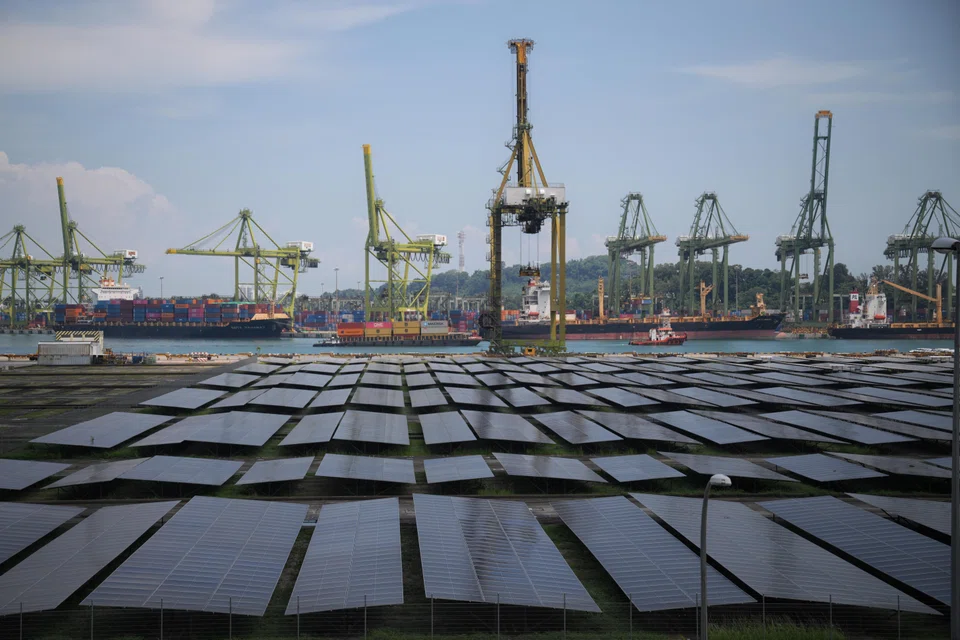
[SINGAPORE] South-east Asia could unlock an additional US$80 billion in green economy value by 2030 if it closes the gap between announced and deployed green capital expenditure, a report by Bain & Company and Standard Chartered (StanChart) showed.
The report, released on Monday (May 18), found that more than 35 per cent of announced green capital expenditure in the region has yet to be deployed, highlighting a major bottleneck in financing the energy transition.
South-east Asia’s green economy is currently valued at US$290 billion and is projected to grow to US$430 billion by 2030.
Where the gap lies
The gap spans the region’s power and electric vehicle (EV) value chains, with only about US$315 billion of roughly US$540 billion in announced green capex currently on a credible path to deployment.
The report described this as a “structural signal that the green economy has a conversion problem, not a capital shortage”.
Dale Hardcastle, partner at Bain & Company, said: “Capital is flowing where commercial demand, energy security and policy that delivers infrastructure come together, and stalling where any of the three is missing – even where targets remain ambitious.”
Capital development in power and EVs
The report found that of about US$40 billion in annual green capex deployed in the region between 2021 and 2025, roughly 80 per cent went into power and grid and the EV value chain.
This was driven by segments where demand is already commercially viable, such as mobility and green industrial zones.
EV adoption is also running between 1.5 and two times ahead of earlier forecasts, with four countries in the region now ranking among the top 15 global EV markets by new car sales.

However, about 70 per cent of four-wheel EV value flows outside the region, while the region still captures less than 2 per cent of global EV and battery production.
At the same time, cancellation rates remain elevated, with about 50 to 60 per cent of renewable energy projects in Vietnam, Thailand and Indonesia cancelled between 2021 and 2025.
This was due to system constraints, including unclear power-purchase agreements, permitting delays and grid connection rules.
Nickel and battery investment cancellation rates have reached 40 to 50 per cent.
These cancellations underscore a systemic conversion problem in segments where commercial demand, infrastructure readiness and policy clarity have yet to converge, the report noted.
Grid infrastructure and demand outlook
On the infrastructure front, grid maturity remains a key constraint on green capex deployment, even as investments in transmission and distribution lag demand growth.
Spending on grid and storage infrastructure fell 3 per cent between 2015 and 2025, despite energy demand rising about 5 per cent annually.
Meanwhile, new demand from data centres, EVs and green industrial clusters is expected to drive a turnaround.
With South-east Asia expected to add more than 100 terawatt-hours of electricity demand from these sources over the next four years, this represents over US$200 billion in committed capex.
To this end, Chow Wan Thonh, head of coverage for Singapore and Asean at StanChart, said that the bank has committed US$300 billion in sustainable finance globally by 2030.
This is aimed at “supporting clients through the transition via capital mobilisation, structuring bankable solutions and enabling cross-border opportunities that drive delivery”.
Decoding Asia newsletter: your guide to navigating Asia in a new global order. Sign up here to get Decoding Asia newsletter. Delivered to your inbox. Free.
Share with us your feedback on BT's products and services
TRENDING NOW

Simba admits exceeding spectrum limits amid failed M1 deal; parent company Tuas’ full-year profit surges 277%

He built the Vingroup empire. Now South-east Asia’s richest man is handing some key roles to his sons

Ex-execs of CW Group, Allied Tech charged with offences linked to lawyer’s S$76 million misappropriation
Singapore to prioritise high-value AI infrastructure as Asean markets play to their strengths: Tan Kiat How

