‘50 shades of green’ needed for Asia’s energy transition: IPCC chair
Market must tolerate ‘browner’ bank portfolios, ‘yellower’ decarbonisation solutions
ONE message ringing loud and clear at the recently concluded gathering of finance ministers and central bank governors in Incheon, South Korea is that the Asia-Pacific needs to stomach some transitional friction on the road to green.
This means growing a level of tolerance towards banks “browning” their portfolios, and green industries keen to formulate slightly “yellower” solutions, in order to get to green eventually.
These are seen as necessary with it being clear now that developing Asia cannot simply replace coal with renewable energy, as it relies on steady and cheap access to power, currently coal generated for the most part, for economic growth.
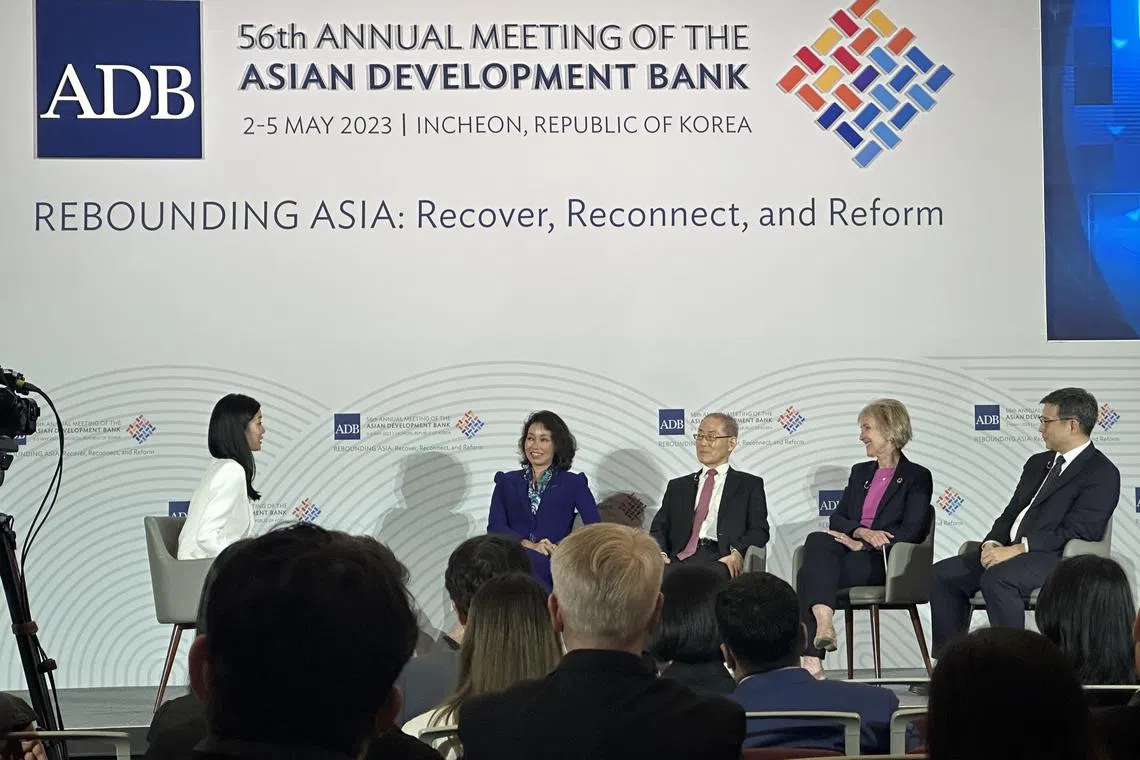
The United Nations’ Intergovernmental Panel on Climate Change’s (IPCC) chair, Lee Hoesung, described it as “50 shades of green” in a debate at the close of last week’s 56th Asian Development Bank (ADB) Annual Meeting.
Lee was reacting to fellow panellist Sonja Gibbs – head of sustainable finance at the Institute of International Finance, who said the public needs to appreciate transition finance for what it is.
“You have civil society being very concerned about ADB financing this or that. Well, yes. But it is not about cutting off financing for everything brown. You will never transition that way. Transition is needed for those sectors as well,” she said.
Gibbs also said of financial institutions: “If you are truly committed to green, you need to get all your clients there as well… You may be initially doing some financing that is not quite as green, and your financed emissions may actually go up before they go down.”
Agreeing, ADB chief economist Albert Park said: “You’re right. Sometimes, (players) need to finance dirtier types of energy or products.
“I think multinational banks and other interested parties, including the private sector, need to understand these key decision points to try to influence those decisions.”
They echoed what Indian conglomerate Adani Group’s chief financial officer Robbie Singh said earlier in the week, about a lack of courage among European banks in funding the transition of energy systems at coal-fired power plants, towards ones that rely on lower fossil fuel usage.
At another panel discussion, Prudential’s global environmental, social and governance director Kerry Adams-Strump said its European stakeholders are not as understanding of the “flexibility” emerging markets need when it comes to transition finance.
“We’re trying to (tell them) that it’s not easy just to go straight into green investments. We have to be able to invest in transition finances moving from brown to green, and that has to be allowed for insurers like ourselves within our regulations,” she said. She believes the world needs the regional equivalent of sectoral pathways for decarbonisation.
Part of the problem is that the transition risk in transition-related projects is ever so real for investors, that they now shun them.
Illustrating this in Incheon, Temasek-backed structured finance provider Clifford Capital’s chief executive officer Audra Low said: “In the past, when you invest in things that are related to fossil fuels, you can be reasonably assured that you are going to get your money back, even if the payment periods are extremely long.
“These days, you don’t know how much longer fossil fuels are going to be around. The last thing investors would want is to be left with a stranded asset on their balance sheet.”
Low added that while it is recognised that there is still a role for fossil fuels in the short term as the use of green energy is being scaled up, it has become a “very large topic” as to how much more of a runway such projects have.
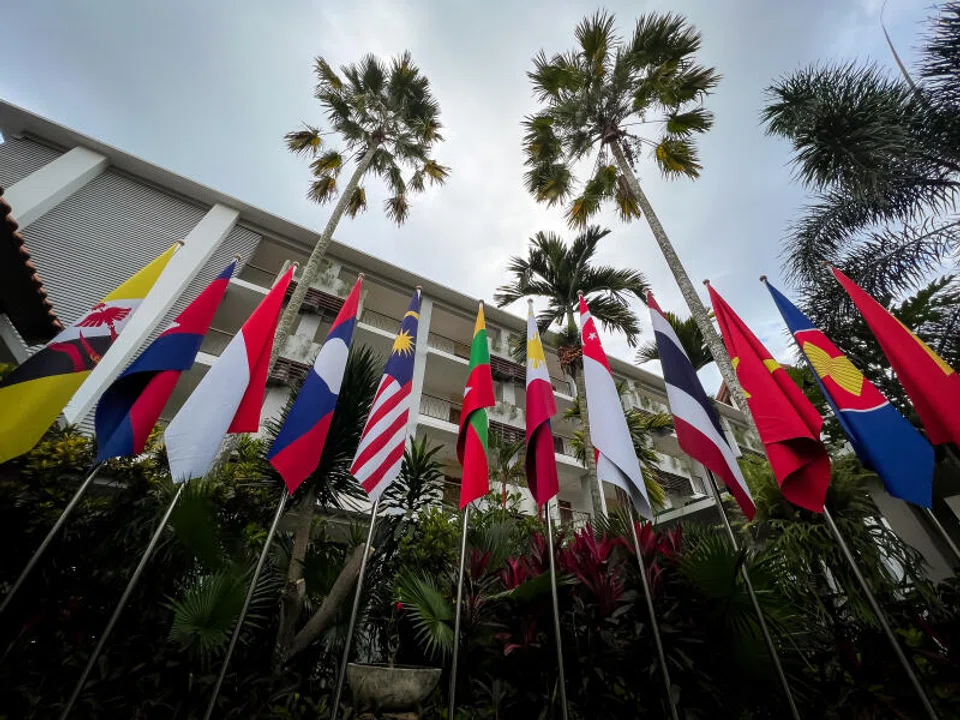
The recent release of the second draft of the Asean taxonomy has sought to address that, by providing a framework to define transition finance, including in coal phaseout, given the context of the region’s economic priorities.
But Sustainable Fitch’s global head of climate research Aurelia Britsch told The Business Times it remains unclear where specific transition technologies could fit in credible decarbonisation pathways.
Britsch believes transition finance still needs a universally agreed upon definition, citing momentum seen in green finance with the European Union’s sustainable taxonomy asserting itself as the benchmark in measuring an investment’s greenness.
Asked what needs to happen for governments to set the tone and lift the level of uncertainty, Lee said carbon pricing is a “fundamentally necessary mechanism”, despite its political dimensions.
“The pitiful thing is that the level of carbon price is not sufficient to give the direction for investment possible to give meaningful signal for resource allocation appropriate to drive the journey to net zero,” he added.
This is not the time to “pick and choose” policies in favour of certain votes, Lee stressed. “We need all policies, all technologies to get to this net zero.”