Asean carbon market might face setbacks with Trump back in power
The region’s momentum for decarbonisation will probably continue, but Singapore’s hope of being a carbon services hub might take a short-term hit

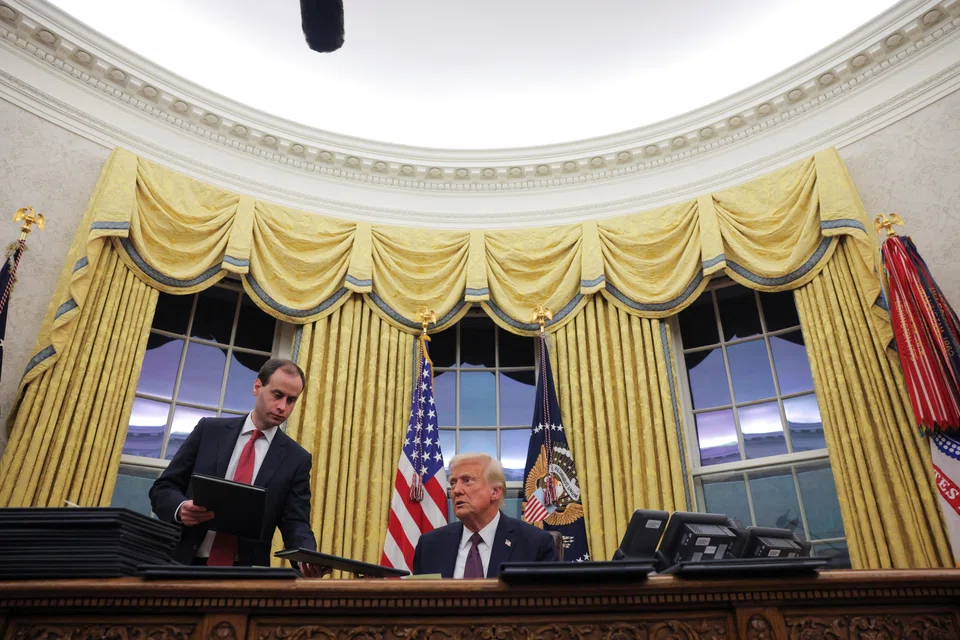
DONALD Trump has been pretty busy since his inauguration as President of the United States for the second time.
Within hours of taking over the helm of the world’s largest economy – and largest historic emitter of greenhouse gas – the well-known climate sceptic has issued a flurry of orders to roll back climate policies enacted by the previous administration under Joe Biden.
Clearly, Trump is intent on keeping to promises he made during his election campaign. Besides ordering federal agencies to halt spending under the climate legislation known as the Inflation Reduction Act (IRA), he has instructed the US to pull out from the global emissions-reduction treaty known as the Paris Agreement.
And it doesn’t stop there.
He has also laid out a sweeping plan to open vast areas of public land and waters, including in Alaska, for the purposes of maximising oil and gas production, eliminated programmes aimed at protecting poor communities from pollution, revoked electric vehicles adoption targets, suspended offshore wind lease sales and lifted a freeze on export permits for liquefied natural gas.
Carbon markets not targeted – so far
Notably, Trump has not yet signalled any intentions to target the carbon markets. But his return to power has probably further heightened uncertainties in this fledging market. Already, carbon markets have been struggling to shake off credibility and reputational concerns, after being rocked with several greenwashing scandals over the last few years.
In case anyone has forgotten, Trump did try to weaken the emissions-trading market in California during his first term. He sued the state in 2019 for entering into a cap-and-trade agreement – where companies are issued a capped quantity of emissions allowances and may buy or sell them depending on how much they emit – with the Canadian province of Quebec, but ultimate lost the legal challenge.
This does raise the issue of whether investors in Singapore and the wider South-east Asian region should be more cautious about pumping in more money into a nascent sector that has shown little signs of maturing – and could possibly be heading into greater volatility.
Just last week, it was announced that decarbonisation investment platform GenZero led the Series C investment round for carbon ratings agency BeZero Carbon.
Backed by Singapore’s state investor Temasek, GenZero, along with other investors, raised a total of US$32 million, which would be used to expand its ratings coverage to include compliance carbon markets, said BeZero Carbon’s chief executive officer Tommy Ricketts.
Frederick Teo, chief executive officer of GenZero, said that carbon ratings play a pivotal role in ensuring integrity and transparency in carbon markets by providing independent, standardised assessments of quality.
A core issue plaguing carbon markets is the lack of universal standards in defining what high-quality carbon credits are. Much of the attempts by carbon market participants – including standard setters and regulators – have been to address this problem.
The adoption of global trading rules at the United Nations COP29 climate summit in Baku, Azerbaijan, has renewed hopes of an eventual convergence on a universal standard that carbon projects must comply with to be seen as credible.
While this is a positive development, it would more than likely take some time before such a standard is established, implemented and acted upon by project developers, exchanges and corporate buyers.
Until then, the impact of Trump’s policies could place the market in flux. While the overall decarbonisation momentum in South-east Asia should largely stay on course in spite of the reversal of some of Biden’s climate policies, the region’s fragmented carbon market and lack of regulation makes it more susceptible to the vagaries of the global market.
Carbon credits: Demand side, supply side
On the demand side, given that corporate buyers from the US are a bigger driver of demand for voluntary carbon credits than those in Asia, a lowering of climate commitments under Trump might mean that fewer US corporations would be willing to voluntarily offset their emissions. This would in turn reduce demand for credits in a market already experiencing low transactions due to existing integrity concerns.
While uncertainties around the global carbon trading rules covered under Article 6 of the Paris Agreement remain, there is a chance that carbon project developers in the US – known to supply high-quality credits – might be impacted in their ability to participate in international carbon markets. This could reduce the supply of high-quality credits in the market.
That said, the consensus seems to be that the carbon market has immense growth potential over the long-term, with or without Trump.
Airlines needing to buy credits to comply with an international carbon-offsetting scheme for the aviation sector, known as Corsia, would still drive some of that demand.
But Singapore’s aspirations to be a carbon services hub, as well South-east Asia’s potential for carbon trading, might face some setback in the meantime, as heightened uncertainties plague the sector.