

Asean gathers pace to grow a regional carbon market even as UN talks run into speed bumps

[DUBAI] The draft text for Article 6.4 of the Paris Agreement was released on Wednesday (Dec 6), as the first week of climate talks concluded in Dubai, the United Arab Emirates.
With several outstanding issues that countries have not been able to agree on reflected in the draft text, there is a chance that a final decision on Article 6.4 – which governs rules on an international carbon trading system – will not be adopted at the end of the United Nations Climate Change Conference (COP28).
The momentum in the voluntary carbon markets, however, is gaining speed. Several political leaders have made public statements at COP28 supporting the trading of carbon credits in voluntary markets, despite recent high-profile scandals over whether these credits were generated from a real reduction or avoidance of carbon emissions.
The Integrity Council for the Voluntary Carbon Market and the Voluntary Carbon Markets Integrity Initiative – two guidance-setting bodies on carbon trading – are also working with the Greenhouse Gas Protocol and the Science-Based Targets initiative to develop an “end-to-end” integrity framework.
Over at the Singapore pavilion, panel sessions on carbon credits were often packed, suggesting that players still see the beleaguered market as a viable channel to mobilise private-sector capital towards climate projects.
Bursa Malaysia inked a memorandum of understanding at COP28 with Gold Standard – a carbon standard setter – to expand its offerings on the Bursa Carbon Exchange, which was launched a year ago.
Efforts are under way among carbon market players in the Association of Southeast Asian Nations (Asean) to grow the market, which is still in its infancy.
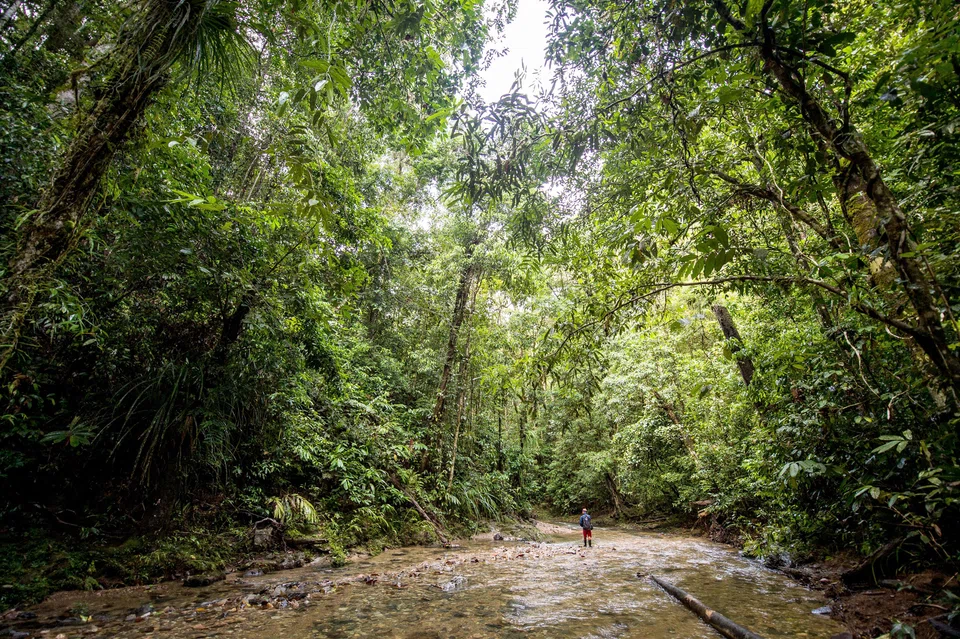
One initiative in the works is the establishment of a common framework and standards on carbon trading in the region, said Dharsono Hartono, who is part of a carbon market alliance in the region and CEO of Rimba Makmur Utama. The company manages the Katingan Mentaya Project, one of the largest carbon projects in Indonesia.
“The most important thing with this particular region – Asean – is that it’s a dynamic supply-and-demand market. So there might be initiatives that are similar in Africa or in Latin America. Those regions are producers of carbon credit. Whereas in Asean, you have Singapore that is a buyer,” said Hartono, who was speaking to The Business Times on the sidelines of COP28.
“When we agree to use this common framework, then we can have an automatic buyer and seller.”
Eventually, the hope is that buyers from other developed Asian markets, such as Japan and South Korea, may also turn to Asean to buy its carbon credits.
With international developments often moving at a glacial pace – especially with key decisions around Article 6 potentially being deferred by another year – carbon market players here told BT that national and regional developments on carbon offset methodologies and standards have to start moving first to accelerate the growth of more carbon projects.
Dr Chen Wei-nee, head of carbon markets at Bursa Malaysia, noted: “A whole lot of carbon projects have just surged in recent years, and international standard setters are very bottlenecked.”
By gradually scaling up the voluntary markets, the aim is to eventually work towards setting up a compliance market in the region, added Hartono. There are currently no compliance regimes in South-east Asia, although Singapore’s policy to allow companies to offset 5 per cent of their taxable emissions by purchasing voluntary carbon credits that meet criteria set out by the government could be considered a mechanism linking up both markets.
Mikkel Larsen, chief executive officer of Climate Impact X, said that standardising what is considered high-integrity carbon credits that countries are willing to buy and sell is among the low-hanging fruit to grow the market.
The other two easier steps to take are connecting the market exchanges in each country for more collaboration, and aligning on how tradable contracts should be designed, he added.
By bringing together bigger pools of buyers and sellers of carbon credits in one connected marketplace – rather than having them try to buy or sell credits in their individual markets – could improve the low trading volumes in Asean exchanges.
Larsen said these steps are realistic to scale up Asean’s carbon market, as other methods may take too long to come to fruition. “Sure, we should have a consistently high carbon price. Fat chance of that happening any time soon, right?”
Of course, he recognised that there are also challenges in implementing his suggestions, especially over political concerns that national assets in the form of nature are being given away.
Dr Chen also alluded to this. She said many countries are coming up with their own carbon exchanges because they are creating opportunities for their own carbon markets to grow.
“Eventually, a time may come when there could be a consolidation of the market. But for now, our national priority is that we must have an ecosystem that is resilient,” she added.
Whatever the final decision on Article 6 may be, it is clear that voluntary carbon market players in Asean are moving things ahead on their own.
While there are legitimate concerns over some carbon projects, collaborating with other players in the region would help build better standards, monitoring systems and integrity.
“If we can have these shared resources, shared lessons learnt among one another, we can actually leapfrog and not have to repeat the same mistakes that (have been made) by someone else before,” said Dr Chen.
TRENDING NOW

Britain’s mansion tax shows the difficulty of targeting wealth

Once staunchly pro-China, Malaysian Chinese businesses are now distancing themselves from Beijing

The only common thing in S-E Asia is that we all eat rice: Cisco’s Asean president

Singapore data centre operator DayOne opts for US IPO at likely US$20 billion valuation

