COP29 climate financing target likely to fall short of developing countries’ needs: report
Developed markets, now faced with higher debt levels, have limited fiscal space for climate financing obligations, says the report

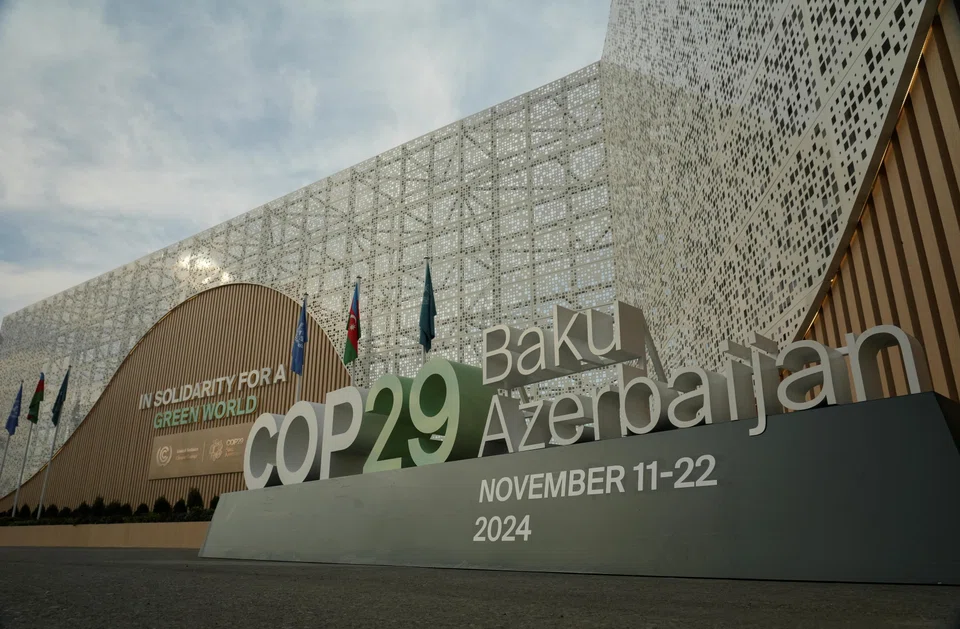
THE climate finance quantum that countries are now tussling over at the annual United Nations (UN) climate change conference is likely to fall short of the amount needed to support developing countries in their climate action, according to a report by BMI, the political research arm of Fitch Solutions.
While BMI expects countries to land on a figure in the range of hundreds of billions of dollars, it is still far from the US$1 trillion that the UN estimates developing countries need every year till 2030.
The report released on Tuesday (Nov 19) said: “Meeting new financial needs will require not only pledges from international financial institutions and individual countries, but also private capital.”
BMI also anticipates that the lack of financing will disproportionately affect emerging markets, which are more vulnerable to climate disasters, thereby raising political risk.
“These countries already face significant debt-servicing costs, leaving limited fiscal space to invest in climate adaptation and mitigation, and in the transition to a low-carbon economy,” the report added.
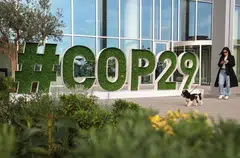
The top item on the agenda for the COP29 climate summit at Baku, Azerbaijan, is to nail down a new climate finance quantum that developed countries are obligated to provide for developing countries.
Known as the New Collective Quantified Goal on Climate Finance (NCQG), it will supersede the previous target of at least US$100 billion a year, which expires in 2025.
Negotiations around the new climate finance goal has always been fraught, with countries often disagreeing on who should foot the bill, and whether the money should be in the form of grants or loans.
The same tensions are being played out again as the climate talks enter their final stretch. Discussions on NCQG have reached an impasse due to the wide gap in various potential targets – from US$200 billion to as high as US$1.3 trillion.
SEE ALSO
Long-term stalemate
Expectations are for the latest draft text on climate finance to be published late Wednesday evening or early Thursday morning, Azerbaijan time.
Ongoing geopolitical tensions in Ukraine and the Middle East, the return of former president Donald Trump in the recent United States’ elections and a policy shift towards fiscal tightening in developed countries are some of the factors cited by BMI that would limit the amount of public finance these governments are willing to commit.
The Russia-Ukraine war is likely heading towards a long-term stalemate. Ukraine’s military aid from the US is at risk, as Trump is highly likely to curb new aid packages under a policy to compel Ukraine to accept a peace settlement.
This would likely put pressure on the European Union, as the US has been the largest provider of military support to Ukraine, said the report.
Regional tensions in the Middle East are high, with ongoing conflicts in Gaza and Lebanon between Israel, Hamas and Hezbollah keeping regional tensions high. BMI also anticipates that Iran may retaliate against Israel.
As for the implications of a US presidency under Trump, a known climate sceptic, the report noted that there will be significant headwinds to global climate policy.
“Although the outgoing US Biden administration is expected to pressure China and other developing countries to contribute to the climate fund, its influence is likely to be diminished, and Trump himself will be unlikely to advocate climate financing,” read the report.
China is unlikely to provide funding on the basis of its status as a developing country in international negotiations.
The world’s second-largest economy, along with Brazil, South Africa and India, has also confronted the EU on trade policies such as the carbon border adjustment mechanism, which imposes a tariff based on the carbon content of products imported into the market.
“This indicates that trade-related disagreements are likely to further hamper climate-related negotiations,” the report read.
Developed markets are also facing limited fiscal space for climate financing obligations as they are grappling with higher debt levels than before the Covid-19 pandemic – a burden BMI expects will continue into the medium-term.
The report further noted that the elections in various EU countries ended with green parties losing seats and right-wing parties gaining ground.
“As a result, passing green-related policies will become more difficult, and climate issues will not be a policy priority ... We expect a policy shift towards fiscal tightening and a focus on economic competitiveness rather than climate concerns, which will pose headwinds to global climate policy,” it said.
Decoding Asia newsletter: your guide to navigating Asia in a new global order. Sign up here to get Decoding Asia newsletter. Delivered to your inbox. Free.
Copyright SPH Media. All rights reserved.