Debate erupts over Japan-backed transition finance guidelines for S-E Asia
A SINGAPORE-based social enterprise is criticising two sets of South-east Asian transition finance guidelines as adopting Japan’s “aggressive” stance on fossil fuel-based technologies that are unsuitable for this region.
The issue highlights a fundamental uncertainty for the fossil fuel-dependent region as it tries to transition to a more sustainable footing: What should be allowed to access energy transition financing?
The report by Asia Research and Engagement (ARE), released on Thursday (Mar 2), took aim at guidelines issued by Jakarta-based Economic Research Institute for Asean and East Asia (ERIA) and by the Asia Transition Finance Study Group (ATFSG) in September 2022. ERIA’s guideline was titled “Technology List and Perspectives for Transition Finance in Asia”, while ATFSG’s was called the “Asia Transition Finance Guidelines”.
ERIA, a think tank, was formed following a consultation between the Association of Southeast Asian Nations (Asean) economic ministers and Japan’s Ministry of Economy, Trade and Industry in 2006. ATFSG, led by banks, was established in 2021 under the Japan-led Asia Energy Transition Initiative as a private sector initiative.
ARE said the guidelines appear to validate and promote carbon capture, utilisation and storage (CCUS) and ammonia co-firing in a list of suitable transition technologies; these are coal and gas power plant “retrofits” that are included in Japan’s energy strategy.
The social enterprise for investor-backed sustainability engagement argued that the commercial viability and effectiveness of ammonia co-firing and CCUS are questionable. Funding for those areas can disrupt capital that should be invested instead in renewables in South-east Asia, ARE said.
ERIA senior energy economist Han Phoumin, who edited the ERIA guidelines, rebutted that ARE’s preferred approach would be too quick a push into renewables. That would lead to skyrocketing energy prices and stranded assets, with the public paying the costs.
ARE stressed that if Asian banks end up financing these technologies, they may face “outsized negative outcomes” associated with fossil fuel lock-in if the technologies turn out to be unviable.
“The consequences of financing technologies that prolong the burning of fossil fuels… need to be evaluated against renewable technologies,” Kurt Metzger, ARE’s director of energy transition, said.
ERIA: Costs matter
ERIA’s Han said that the institute’s technology list “does not at all downplay the role of renewables”.
Rather, it offers a way to bridge the current fossil fuel-based power generation methods to clean technologies and renewables, bearing in mind that South-east Asia must deal with its existing fossil fuel assets, he said.
Cost minimisation was a consideration, Han added.
Solar and wind are feasible options, for example, but their intermittent power supply require huge investments in power back-ups. Power grids also need upgrading to work with renewable energy.
“The question is, who can pay the cost of the system replacement without using the current fossil based assets such as coal and gas?” he asked.
Han said the two technologies will buy time in the move towards clean fuels and renewables.
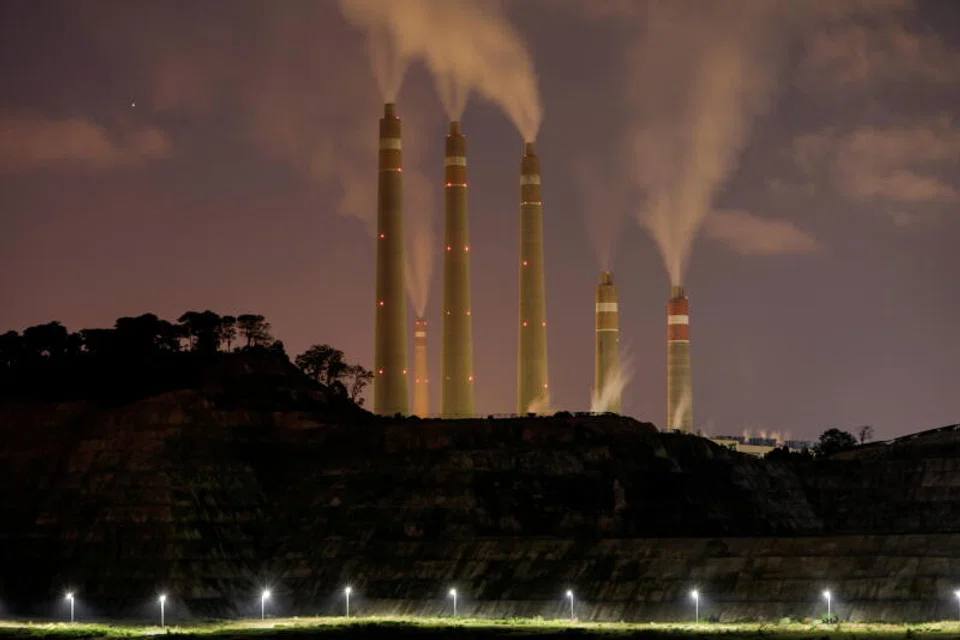
The debate could have important implications for a country like Indonesia, which relies on coal for most of its electricity. Andri Prasetiyo, a programme manager at Indonesian renewable energy non-profit Trend Asia, described an urgency to direct capital to the right technologies if Indonesia is to achieve its renewable energy target of around 23 per cent by 2025.
“Now we only have 12 per cent. We need 11 per cent only in two years, even though we only increase 1 per cent in each year,” he said.