ESG lens will keep Temasek on the front foot, says sustainability MD

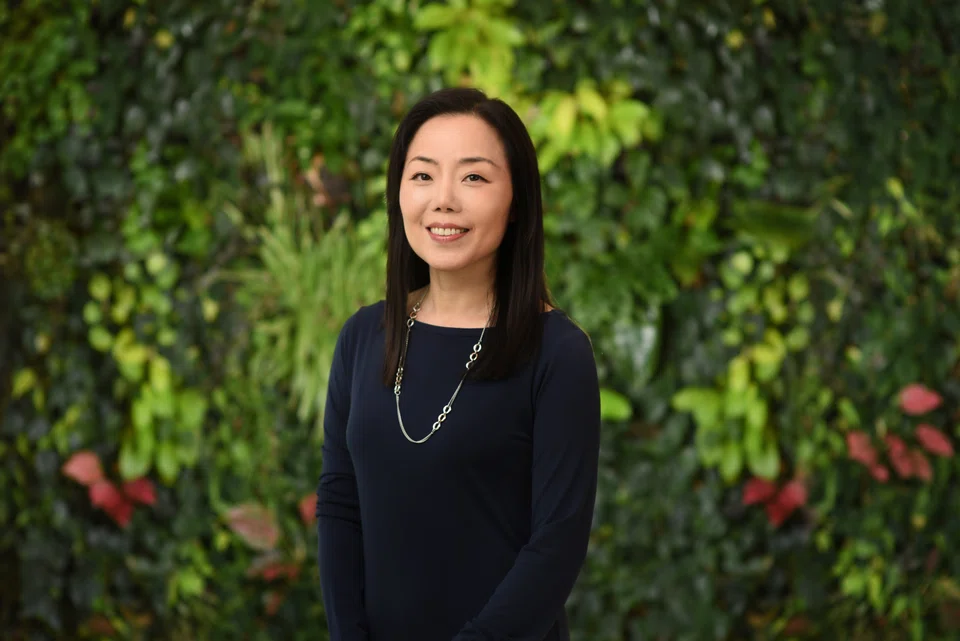
PARK Kyung-ah is all for pressing an advantage. Over an hour-long interview with The Business Times, the head of environmental, social and governance (ESG) investment management at Temasek used the term “front-footed” five times.
Park, whose other title is managing director for sustainability, won’t be distracted by a recent wave of discontent over ESG investing.
“This is now a must-do. It’s not a nice-to-do. It’s about resiliency; it’s about how you capture the tailwinds of a megatrend that’s underway,” she said.
Park’s philosophy – and Temasek’s – remains the dominant one in the investment environment. At the largest institutional investors, ESG concerns remain guiding posts.
Norway’s sovereign wealth fund last month said it had sold its holdings in Singapore-listed conglomerates Jardine Matheson Holdings and Jardine Cycle & Carriage (JCNC), as well as Indonesia-listed JCNC Astra International, on the risk that these companies contributed to “severe environmental damage”.
Such investment decisions, however, are falling out of favour in some quarters; and there is greater disagreement about how to implement ESG investment decisions.
JP Morgan Asset Management and State Street Global Advisors have both pulled out of a climate-focused investor coalition that was set up to collectively apply pressure on companies.
Separately, four major banks, including Standard Chartered and HSBC, said they will no longer aim to have their emissions reductions goals verified by the Science-Based Targets initiative, a United Nations-led entity that is guided by the Paris Agreement.
Park sees these disagreements as blips along the decarbonisation pathway, which she added is no longer just about managing climate risk.
She believes that sustainable business models is gradually becoming the bedrock for the next phase of economic growth.
Companies on the back foot would face higher costs at the minimum; in the worst case, they would be left with stranded assets.
ESG investment, to her, is not just about reducing the impact on the environment; it is about future-proofing Temasek’s portfolio companies.
The Singapore state-owned investor has developed a climate transition readiness framework, setting out what a good transition plan looks like.
Climate risks and opportunities must be embedded into a company’s core strategy. Measurement of environmental impact uses metrics that will show when targets are hit.
Temasek actively engages the boards and management of its Singapore portfolio companies to make sure they are on the right track. The companies form part of the “resilient component” of Temasek’s portfolio – an allocation of 60 to 70 per cent into stocks that can “withstand exogenous shocks”.
The other 30 to 40 per cent of Temasek’s portfolio forms the “dynamic component”, and comprises high-growth companies with the potential to bring in higher returns.
Holdings in the dynamic component may be sold for various reasons, whereas companies in the resilient component are to be held for the long term.
This means Temasek’s ability to achieve its net-zero goal depends a lot on the decarbonisation pathways of its Singapore portfolio companies.
By 2030, Temasek aims to reduce emissions to half of its 2010 level; this means total portfolio emissions of 11 million tonnes. At its last annual review, Temasek’s emissions came to 27 million tonnes.
Among the biggest contributors to that number is flag carrier Singapore Airlines (SIA).
Market watchers believe divesting SIA to hit that target is unlikely to be an option for Temasek. Indeed, the state investor has maintained that its preference is to work with its portfolio companies in their transition journey to achieve real-world decarbonisation.
This stands in contrast to the approach taken by Norway’s sovereign wealth fund, which exited 86 companies in 2023 over ESG concerns.
Park said, however, that Temasek’s stance does not mean it rubber-stamps business-as-usual practices at its portfolio companies.
Carbon emissions may not decline in a linear trajectory, she said, but Temasek expects carbon intensity to at least fall.
Even if there are blips in a certain year, there should be progress over the longer term.
When there are blips, she said, Temasek will ask: “Why is that? Is that a legitimate thing? Or is that they’re putting their heads in the sand and not doing the hard work?
“We have to be clear-cut in terms of our expectations.”
She added that Temasek would not just nod along. “At the same time, we also need to know where we can support them. In fact, we actually have a value creation playbook that we try to go through with our portfolio companies – to understand what are some of the value-creation drivers.”
The environmental impact of any effort also has to be accompanied by financial returns.
“We’re not saying we’re okay taking a negative hit next year purely because we want to (transition),” Park said. “It’s not like we put in capital purely just to help them decarbonise. It has to go hand in hand; the return profile for the long term needs to make sense.”
At SIA, Temasek was instrumental in a decarbonisation pilot involving the Civil Aviation Authority of Singapore and the Temasek-backed decarbonisation-focused investment platform GenZero.
As part of the project, 1,000 tonnes of neat sustainable aviation fuel was imported and blended in Singapore for use on SIA’s flights.
The Singapore portfolio companies are only part of the ESG equation, of course.
In 2016, Temasek identified four long-term structural trends – digitisation, sustainable living, future of consumption and longer lifespans – and the net portfolio value in these low-carbon emitting opportunities has gone up from 13 per cent in 2016 to 31 per cent in 2023.
Park added that Temasek has been integrating ESG considerations into its investments by considering the impact of deforestation, waste, water and pollution, among other metrics.
“We’re very much about ensuring that we have long-term sustainable returns,” she said.
“Our view is that when you actually set these things up, and patiently get them up and running, they should, over time, be able to bring back the long-term sustainable returns and also have a broader ecosystem spillover.”