SINGAPORE BUDGET 2023

Green players eyeing government boosts for blended finance, carbon tax and SME support

Michelle Quah
Published Tue, Jan 31, 2023 · 05:50 AM
    • Greening the entire economy is said to be key to Singapore's transition to a sustainable economic model - and blended finance will play a crucial role.
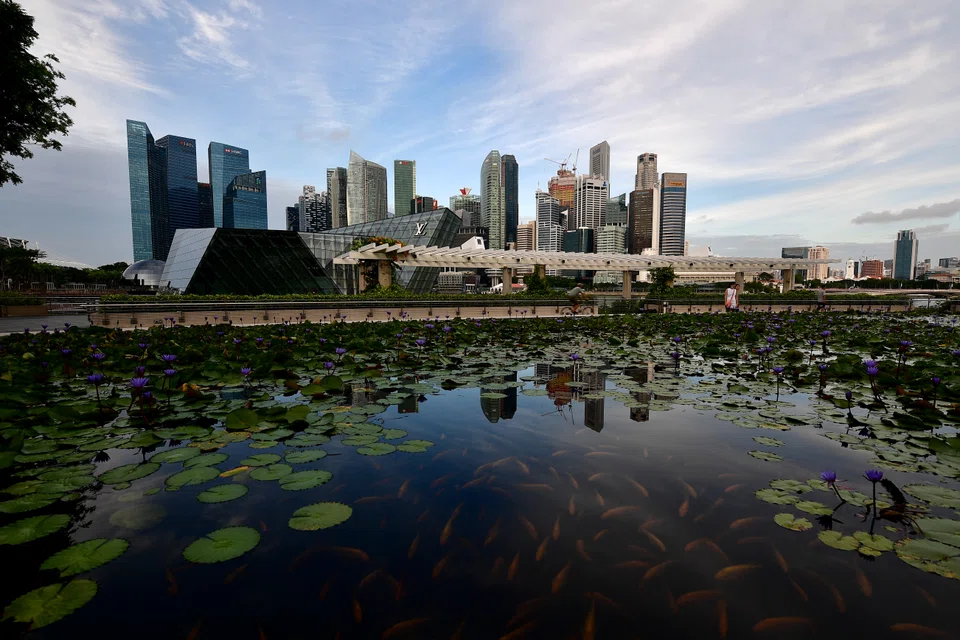
    • Greening the entire economy is said to be key to Singapore's transition to a sustainable economic model - and blended finance will play a crucial role. PHOTO: BT FILE

    DECARBONISING the economy and bringing about rapid infrastructural change to support it are said to be key in Singapore’s efforts to transition to a sustainable economic model. This year’s Budget announcement will be closely watched to see if it contains the necessary drivers to bring this about.

    Among the moves deemed necessary: more initiatives to boost blended financing, more aggressive carbon taxation, and a change in mindset among businesses, said thought leaders and executives who manage sustainability concerns for their businesses.

    “Bringing about an effective transition to a sustainable, low-carbon world requires greening the entire economy, and not merely growing the green economy,” said Mike Ng, head of the sustainability office, global wholesale banking, at OCBC.


    “To do so, blended finance is crucial. It combines public and private capital to mobilise financing for projects that are marginally bankable and usually large-scale, to deliver maximum climate change impact.”

    October saw some key initiatives announced in this regard, including an injection of seed capital by the Monetary Authority of Singapore (MAS) into a S$5 million Asia Climate Solutions Design Grant to fund innovations in blended finance.

    MAS managing director Ravi Menon said then that a fresh approach was needed. “Globally, annual flows of blended finance have averaged less than US$10 billion since 2015. We need a more systematic and coordinated approach to mainstream blended finance.”

    Xylia Sim, energy and infrastructure counsel at law firm Linklaters, told The Business Times: “We have seen globally, but especially in Asia, increased focus on policies and measures that could incentivise and support high-carbon sectors to decarbonise and transition towards net zero. Blended finance and transition finance will play a key role in this, and Singapore’s status as a financial hub means that Singapore has the ability to play a leading role in this space.”

    OCBC’s Ng hopes this year’s Budget will encourage the co-sharing of risks of marginally bankable transition projects.

    “Take, for instance, the solar industry 10 to 15 years ago, when it was still a nascent technology. Blended finance supported its development over the years, and it has been so successful that prices have come down 90 per cent in the last decade. If we can channel such efforts towards emerging technologies such as green ammonia, green hydrogen and carbon capture, as well as other transition projects, it will really help to accelerate global net-zero efforts.”

    He also hopes to see an enhancement of MAS’ Sustainable Bond Grant Scheme to encourage more issuers to embark on the green transition in Singapore, and a broadening of the qualifying criteria for the Enterprise Financing Scheme Green – to allow companies from more sectors to tap it and make it more accessible to small and medium-sized enterprises (SMEs).

    Extending greater aid to SMEs – especially if it helps them adopt innovative technology and energy-efficient solutions – is also high on the wishlist of Kim Yoon Young, cluster president, Singapore, Malaysia and Brunei, at Schneider Electric.

    “Green technologies play a critical role in helping companies to reduce emissions, while boosting efficiencies and the long-term viability of sustainable business operations,” he said.

    Vi Nguyen, principal sustainability strategist, sustainable finance, at Forum for the Future, shares the view that Singapore’s green bond market needs to be further strengthened.

    “The SG Green Plan to issue S$35 billion in bonds by 2030 needs to be front-loaded in order to push Singapore down its decarbonisation pathway faster. Green expenditure areas such as renewable energy and biodiversity conservation need to be at the forefront of investment spending, given the former is key to providing energy alternatives and the latter is key to carbon sequestration and capture,” she said.

    Nguyen also believes Singapore needs to adopt a more aggressive approach to carbon taxation. An insufficiently high carbon tax is likely to be ineffective, especially in promoting the use of high-quality, international carbon credits to offset taxable emissions.

    “Carbon markets can be an effective lever that supports climate action, but investment needs to ensure that nature and people are the ultimate beneficiaries,” she added.

    Jerry Goh, investment manager of Asian equities at abrdn, says Singapore could explore carbon taxation more formally, and rethink how it can utilise proceeds and subsidies to drive action in the economy.

    He also sees the need for rapid infrastructural changes that cater to a low-carbon economy. These might include electric vehicle charging stations and renewable power for public housing. Workflow processes among state-appointed contractors performing infrastructural maintenance, upgrades or build-outs also need to be changed to reduce wastage or inefficiencies, such as when roads are re-tarred and are later dug up again for underground cable maintenance.

    Beh Siew Kim, chief financial & sustainability officer, lodging, at CapitaLand Investment ; and managing director, Vietnam, Cambodia, Myanmar, Japan and Korea, The Ascott Limited, is hoping for more financing and tax incentives to encourage the conversion of brown buildings to green ones, accompanied by clear guidelines and regulations.

    “We are also conscious that not everyone is on a level playing field on this decarbonisation journey due to limitations. Financing and tax incentives can therefore be introduced to bridge this gap, especially for businesses that are committed to sustainability, but face delays caused by stakeholders in their supply chain,” she said.

    Another important ingredient for a successful transition involves adopting the right skills and mindset.

    Schneider’s Kim hopes the Budget will contain support for companies to equip their workforce with the relevant skills and knowledge. “Organisations would be better placed to not only formulate decarbonisation strategies, but at the same time have the resources to strategically invest in infrastructure needed to make the green transition a reality.”

    Beh added: “A green economy in Singapore cannot be achieved without the development of green talent, particularly within the hospitality industry, where this is still at a nascent stage.”

    Stefanie Yuen Thio, joint managing partner at TSMP Law Corporation, says a mindset shift within corporate Singapore is also needed. “A lot of companies, and the ESG (environmental, social and corporate governance) consultants who are hired to help them fulfil their investors’ requirements, focus on compliance with reporting and disclosure rules, when they should be paying attention to being better ESG players ... Rather than a Budget handout, I would like more attention to be focused on how corporates can be better ESG citizens.”