

Greener pastures: Getting Asia closer to net-zero
 Add BT as a preferred source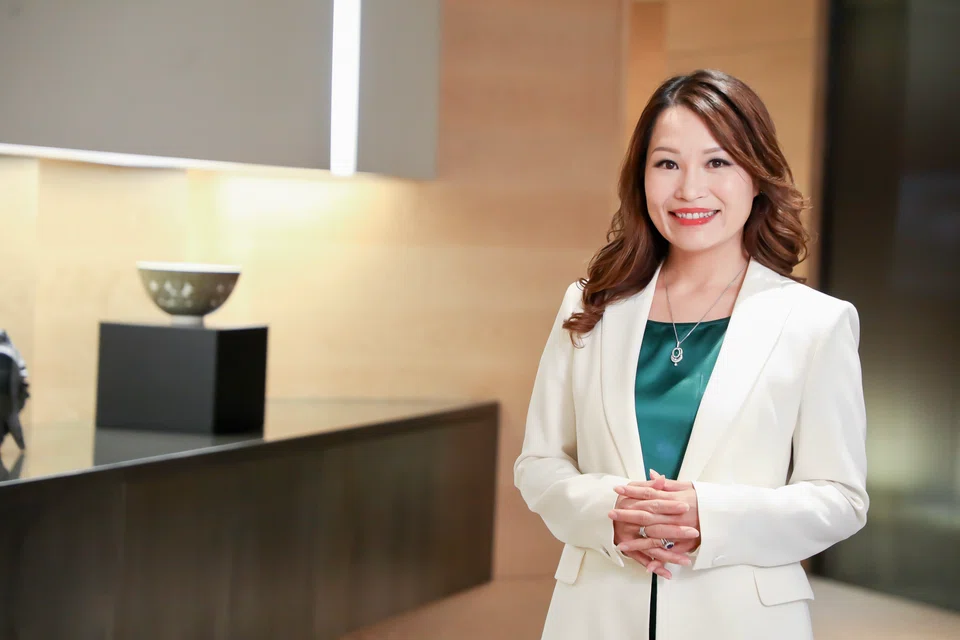
DeeperDive is a beta AI feature. Refer to full articles for the facts.
ONE narrative is dominating the world of sustainable finance, and that is nations and firms need more money to reach their net-zero goals. A 2022 McKinsey study calculated that the world must spend US$275 trillion on physical assets – about US$9 trillion annually on average – to reach net-zero by 2050.
This fact is why 2022’s decline in the global sustainable finance market, which is central to the net-zero ambition, made headlines. According to BloombergNEF data, it dropped from about US$1.76 trillion in 2021 to US$1.5 trillion, owing to a difficult macroeconomic environment.
However, there were bright spots amid this gloom. One is that issuances in Asia bucked the trend, up nearly 10 per cent in 2022 to US$391 billion, with almost two-thirds comprising green bonds and sustainability-linked loans (SLLs).
Reasons to be cheerful
While 2022’s global numbers reflect a decline, several factors give cause for optimism. First, according to Climate Action Tracker, around 140 countries had either announced or are considering net-zero targets as of November 2022. These economies cover close to 90 per cent of global emissions.
Second, that is in parallel with national regulatory and policy shifts that provide a carrot and stick. By 2025, for instance, all listed firms in Hong Kong are expected to have to comply with the reporting provisions of the Task Force on Climate-related Financial Disclosures. And in Singapore, mandatory sustainability reporting is required of all public companies, while retail ESG funds will need to provide details on their investment strategy.
Navigate Asia in
a new global order
Get the insights delivered to your inbox.
Third is the opportunity that comes with getting to net-zero. For investors, these second and third factors will prove increasingly important in terms of risk and returns. Are the firms I’m investing in compliant, and can they profit from net-zero opportunities?
When it comes to Asia specifically, it’s salient that the region is home to some of the world’s largest emitters, so that’s where the opportunities are and where capital needs to go. The pace of growth is also notable. Asia started its sustainable finance journey later than the West, but it is catching up.
Beyond financing

None of this detracts from the challenges, and firms in Asia must do more to hit their 2050 goals. But that requires overcoming some significant issues, with the financing gap the first and most important item to tackle.
Another is that much of the standard-setting has been done in the West, particularly the European Union (EU), yet that doesn’t necessarily match Asia’s needs.
Within Asia, multiple countries have net-zero targets later than 2050. China is aiming for carbon neutrality by 2060, and India by 2070. This divergence holds for taxonomy too. The EU’s rules don’t translate directly to Asia when broken down by, for example, industry or thresholds.
A third challenge is that the world lacks a high-quality and well-functioning voluntary carbon market, one that could also work across countries to channel the necessary capital.
Solving these problems won’t be easy and can’t be done by simply copying the West’s approach. Success requires assessing the state of the region and its markets, and applying appropriate solutions.
Yet, it’s right to note that changes are underway. Climate Impact X, a joint venture launched in Singapore in 2021 with Standard Chartered as a founding partner, is one example, as is the Hong Kong Exchanges and Clearing Limited’s Core Climate, which was launched in 2022. Both are global platforms for the voluntary trading of high-quality carbon credits to advance the road to net-zero.
Shorter path to net-zero
Climate action, though, requires that companies set targets. But as Standard Chartered’s recent global survey found, most have not. Less than 30 per cent of the 300 large corporates (turnover above US$2 billion) and mid-sized firms (turnover below US$500 million) surveyed globally have targets to improve their supply chain sustainability, even though 54 per cent would accept lower financial returns to be more sustainable.
When asked what was holding them back, 70 per cent of Asia respondents said obtaining financing for ESG and sustainability-related expenses and investments was a major challenge, while nearly 60 per cent cited difficulties in accessing data and reporting on suppliers’ ESG practices.
Those aren’t the only complications, but they serve to illustrate the bigger point: Most firms don’t know how to start on their path to net-zero. That’s why finding the right partner is crucial.
Take, for example, energy shipping firm MISC Berhad. Standard Chartered led MISC’s first US$527 million SLL that will be used to finance six Very Large Ethane Carriers to reduce its carbon footprint, and which incorporates key performance indicators (KPIs) that go beyond the International Maritime Organisation’s emissions target. Meeting those KPIs will see MISC benefit from a lower interest rate.
There are some useful lessons here for firms seeking SLL funding:
• Set relevant, material KPIs with ambitious targets that are relevant for their industry (energy efficiency or water efficiency, for instance). This requires a sustainability strategy.
• Track and measure that target data.
• Publicly disclose the data, and ensure it is externally validated.
Doing this is essential to overcome the first hurdle (obtaining sustainable finance) and will compel them to tackle the second – accessing data.
Here, the right partner can prove crucial. Standard Chartered’s ESG advisory teams, for example, can be tapped on as great resources for smaller clients that lack a sustainability strategy or knowledge about ESG reporting, measuring and disclosure. To date, such firms have benefitted from our expertise in climate-risk assessment, transition pathways and other sustainable- and transition-finance solutions.
By taking advantage of these measures, firms in Asia – regardless of the stage they are at in their just-transition journey – can overcome the challenges that are holding them back from attaining net-zero and effectively contribute to global climate action.
The author is Head of Sustainable Finance for Asia at Standard Chartered.
Decoding Asia newsletter: your guide to navigating Asia in a new global order. Sign up here to get Decoding Asia newsletter. Delivered to your inbox. Free.
Copyright SPH Media. All rights reserved.
TRENDING NOW

Shelving S$5 billion office redevelopment plan proved ‘wise’ as geopolitical risks mount: OCBC chairman

Eurokars Group introduces rental car franchises Enterprise Rent-A-Car, National Car Rental, and Alamo to Singapore

20 photos that show how dramatically Singapore has changed in two decades
Singapore’s key exports up 15.3% in March from electronics surge, exceeding forecasts

