

Not just to please investors, transition plans should be part of a company’s overall strategy: climate bonds panel

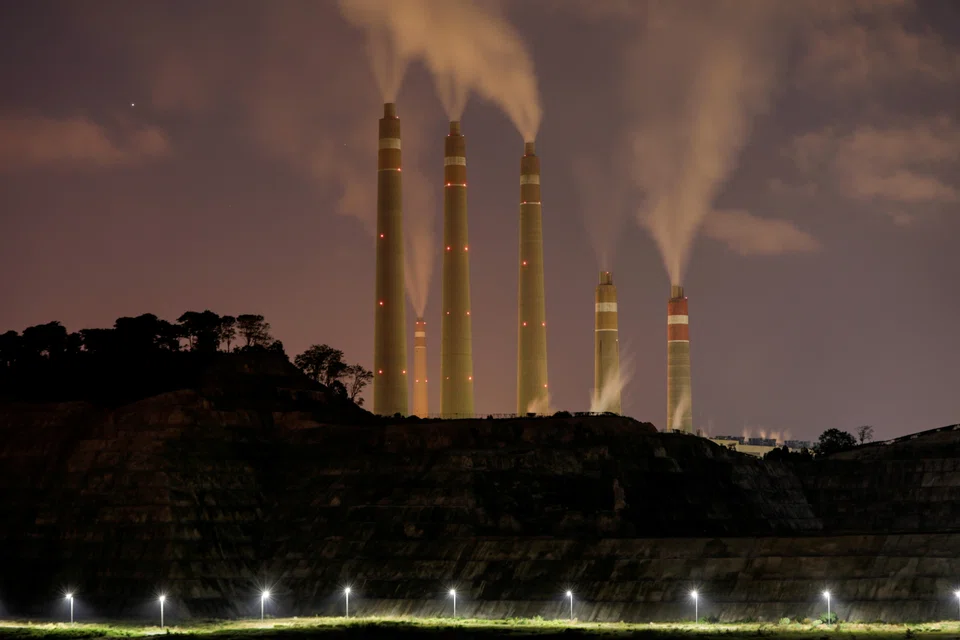
COMPANIES that emit high levels of carbon in the course of their operations should not produce standalone transition plans, but should instead integrate these plans into their overall strategy and business, said the chief executive of Sustainable Finance Institute Asia on Thursday (Oct 6).
Eugene Wong, speaking at a discussion panel at a conference organised by non-profit organisation Climate Bonds Initiative, said such transition plans are needed if these companies are to make a structural transformation. “It’s not a question of having these plans just to please a banker, an investor, a customer.”
He was referring to companies in “hard-to-abate” sectors such as steel, shipping and chemicals – the typically carbon-intensive sectors which, as a result, are finding it harder to obtain financing in these times because investors and lenders are themselves under pressure to meet their own environmental, social and governance (ESG) obligations.
Having a plan to transit to lower carbon emissions is increasingly becoming a condition for these companies to get loans or investments.
However, complicating the problem even more, is that many of these companies are small- and medium-sized enterprises (SMEs), which do not have transition plans, especially in the emerging markets within Asean, Wong added.
Gillian Tan, assistant managing director of development and international group at the Monetary Authority of Singapore, acknowledged that transition plans are still a developing area, and that there is confusion even among financial institutions themselves.
That being said, Tan, who was a speaker at a separate panel discussion, said that financial institutions can work with their clients on their transition plans by raising awareness on the steps each sector can take to decarbonise, and by drawing up strategies to achieve it.
She suggested that, beyond banks, a greater variety of financial institutions step up to invest in new – and riskier – technologies that help companies in these sectors become greener.
However, Ritu Arora, chief executive officer of Allianz Investment Management in the Asia-Pacific, said financial institutions are, at best, a catalyst for charting out financing pathways for these hard-to-abate sectors; she believes that the government, financial regulators and industry bodies still play a key role.
One of the main problems inhibiting investors from channelling capital into sustainable investments, in general, is that taxonomies – agreed-upon definitions of what economic activities are green or transitioning towards being so – are not aligned across regions or jurisdictions.
Within Asean, efforts are being made to align these definitions, and as a member of Asean’s taxonomy board, Wong said that it has become clear from discussions with Asean SMEs in these high-emitting sectors that the way transition is defined in the regional taxonomy has to balance ambition and reality.
“These two forces have a healthy tension. If we don’t push ambition far enough, then the reality is always going to be a straggler. And if you don’t push reality enough, then you have an ambition that cannot be achieved,” he said.
Beyond taxonomy and technological challenges, Calvin Quek, senior environmental specialist at the Asian Infrastructure Investment Bank, said that the role of innovation could be explored more in helping hard-to-abate sectors make the transition.
He pointed out that the Australian government is giving out small grants to entrepreneurs and university professors to nudge them into working on solutions for these sectors.
The difficulties in transforming these sectors are not just technological. Social constraints also come into play, as these sectors typically employ a sizable workforce, said Quek, who was also a panellist.
TRENDING NOW

Things to know about DBS’ incoming chairman Anthony Lim
DBS eyes prime brokerage business as Q3 profit falls 5% on weaker trading income

Royal Group and Sunset Hospitality abandon plans to open Casa Mett hotel off Orchard Road

George Yeo adds 100,000 Wilmar shares at S$2.97 apiece, taking stake to over 1 million shares

