
Remove artificial barriers to allow transition finance to flourish: Adani CFO
 Add BT as a preferred source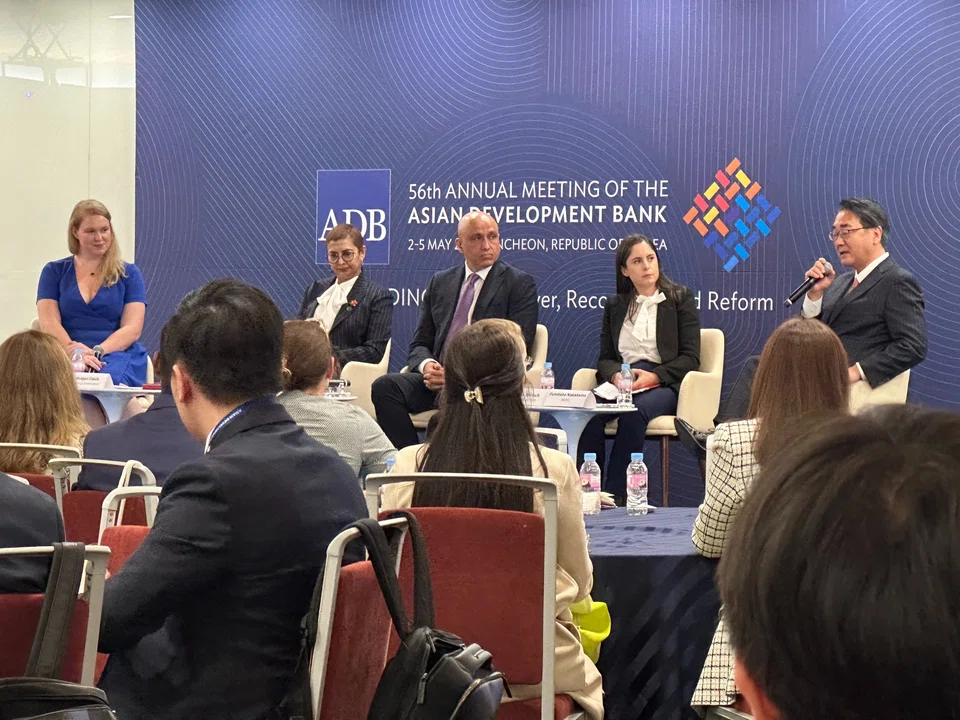
FRUSTRATION is building with the kosher treatment of energy transition projects that do not wean off coal completely. At least, that is how Adani Group’s Robbie Singh is feeling.
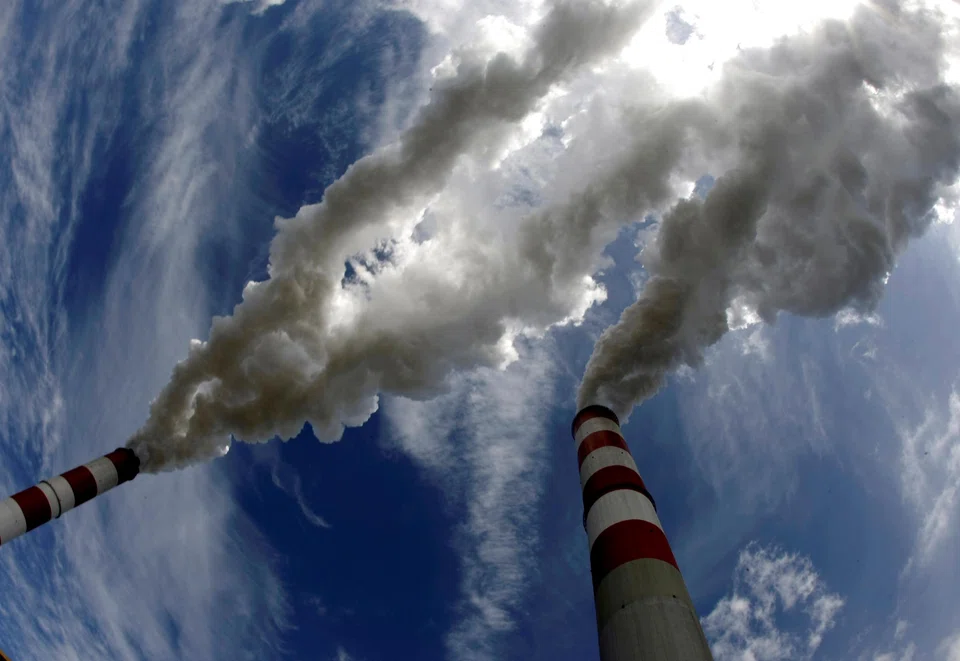
The chief financial officer of the Indian diversified conglomerate on Tuesday (May 2) complained about a lack of courage among European banks to fund the transition of energy systems at coal-fired power plants, towards ones that rely on lower fossil fuel usage.
Speaking at a seminar held at the 56th Asian Development Bank (ADB) Annual Meeting in Incheon, South Korea, he said such projects, including ones that can halve coal-fired power plants’ coal usage from 81 per cent to 40 per cent, are ready to take off.
But “not a single” European bank the group had approached has the courage to fund such a transition “simply because it has an element of coal in it”, he said.
“If we fundamentally believe that (climate change) is a massively important issue, then a mechanism to transition to lower fossil fuel usage in energy systems should be the first step we can take, because it would resolve the issue of bankability in and of itself,” Singh said.
Otherwise, the rhetoric around climate change ends off being “a lot of talk but very little action compared to what we need”, he added.
Navigate Asia in
a new global order
Get the insights delivered to your inbox.
‘All finance is transition finance’
Singh was commenting off a point made by fellow panellist Kavita Sinha, director of private sector facility at Green Climate Fund (GCF), who built a case around why transition finance or products should not be viewed as a “niche product”.
GCF is a fund established within the framework of the United Nations Framework Convention on Climate Change, as an operating entity to assist developing countries in climate adaptation and mitigation practices.
SEE ALSO


Sinha said climate risks are not adequately reflected in the risk and bankability appraisals of conventional businesses today, so a lot of capital reallocation that would otherwise have happened are not flowing to where “good opportunities” are.
“There are new sunrise opportunities which are not being invested in because of this lag,” she said, adding: “That’s why I would call upon the financial sector (including intermediaries like rating agencies) to take a real hard look at this.”
Her view is “all finance is transition finance” and should be given the same measure.
Also in the panel was Fumitaka Nakahama, Mitsubishi UFJ Financial Group’s (MUFG) managing corporate executive and group head of global corporate and investment banking.
Nakahama said the lack of transition mechanisms is precisely why the bank had stepped in.
“Japanese are usually known for being very quiet, but this time we have been very vocal,” he said, as he referenced the bank’s involvement in two sets of South-east Asian transition finance guidelines.
No one-size-fits-all
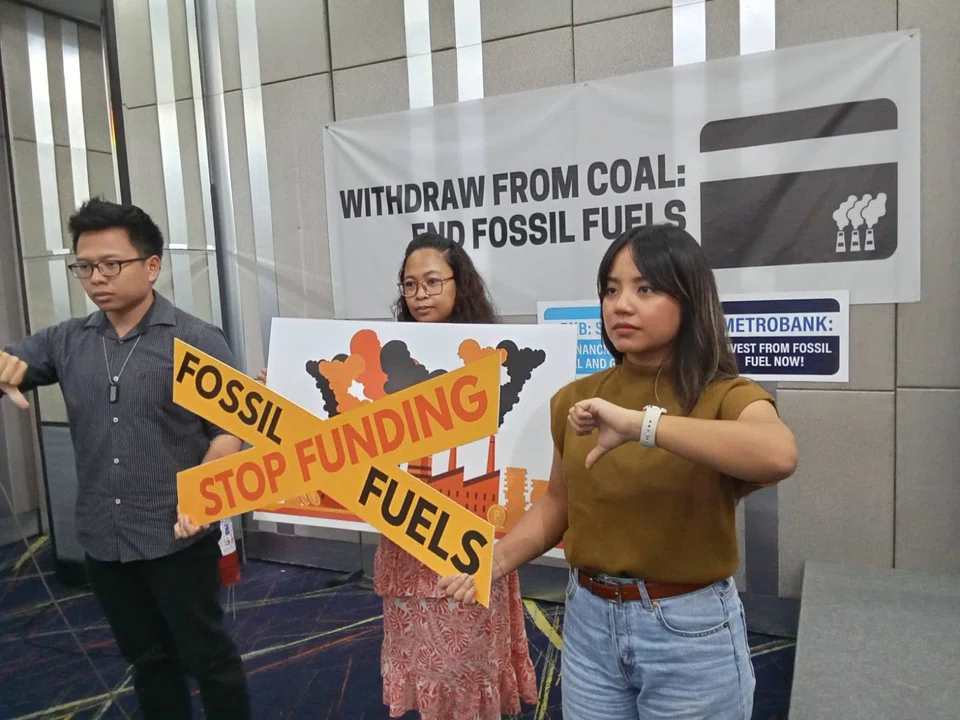
The panel later took questions from two members of civil society organisations.
Pakistan’s Fiza Qureshi, a manager of programme implementation at Indus Consortium, asked why MUFG had not announced plans to steer clear of liquefied natural gas (LNG) financing, to free up capital for solar and wind.
In response, Nakahama said it was “ideal” to move wholesale to renewables, but there is “no one-size-fits-all solution” for everybody. “Some countries still need oil and gas and coal, so depending on the needs of the countries and the realities of the countries, we need to carefully think about the imports of the gas and LNG,” he stressed.
“When we talk about transition, we also have to think about just and orderly transition, and we should think about those who would be impacted because of the introduction of solar and renewable energy,” he went on to say.
Singh chimed in, using the example of how shifting a cotton-producing Indian town’s reliance from coal boilers to piped gas had sparked conversations that might never occur, if his company had argued with them to adopt wind and solar.
Plant owners started attracting customers from Europe, and the results helped businesses there realise what the “game” with sustainability was, he said.
“We could have argued with (a cotton plant owner) ‘go to solar, go to wind’... but if you now show a transition path, then it is possible that people buy into it,” Singh added.
He said a mechanism to raise incomes would have to be established.
Privilege might be available in Europe, but it is not available in India, he said.
Singh said companies could be kept accountable through ratings, even as they take the transition route. “The disruption risk you face (if you have) coal assets is sufficiently large that you have a massive stranded assets risk... It won’t be a zero-sum game.”
Petra Kjell Wright, a campaigns manager at Recourse, which monitors the actions of multilateral development banks such as ADB, followed up by asking how public finance can help with the switch away from fossil fuels.
Singh said that public finance can afford to steer clear of fossil fuels when the country reaches a certain level of gross domestic product per capita, but India is not there.
To demonstrate the point, he said: “We are not talking about a fossil fuel car becoming an electric vehicle. We are talking about a woman who has to go (and) sell fresh vegetables on foot (for) 25 kilometres a day. So if she has a pushbike, her life changes.”
In conclusion, Singh cautioned against putting “artificial barriers” in the way of the energy transition.
Decoding Asia newsletter: your guide to navigating Asia in a new global order. Sign up here to get Decoding Asia newsletter. Delivered to your inbox. Free.
Copyright SPH Media. All rights reserved.

