Sustainable financing in South-east Asia must consider SMEs, just transition
The region has committed to decarbonisation, with eight out of 10 Asean member states pledging at COP26 to achieve net-zero targets by 2050
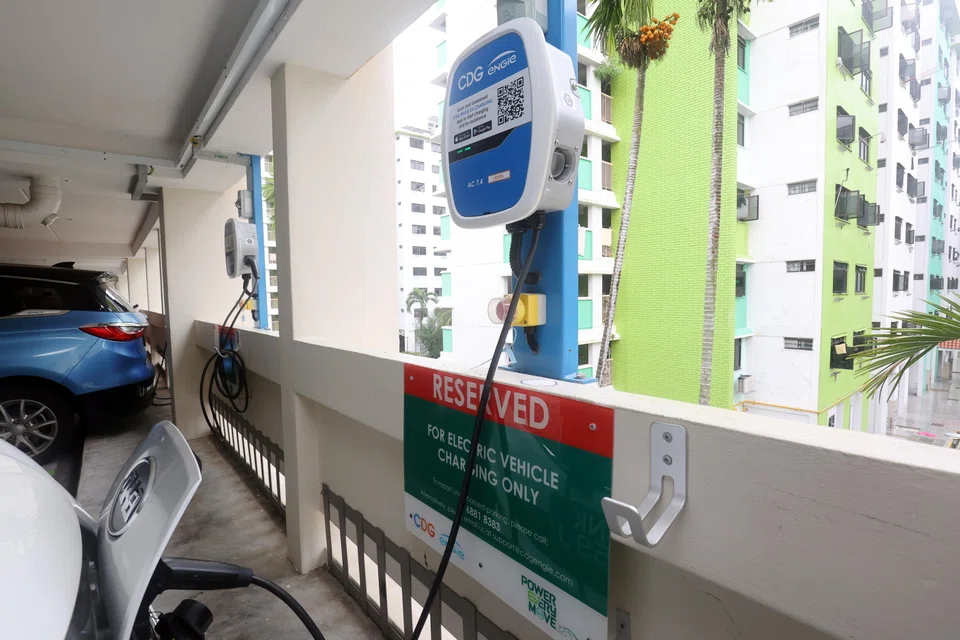
SUSTAINABLE financing has been crucial in reshaping the financial landscape and helping the real economy transition to a low-carbon and climate-resilient one.
In South-east Asia, sustainable financing has been gaining traction. Yet, there are substantial gaps that need to be addressed to meet ambitious net-zero targets set for this region.
The evolution of sustainable financing
The concept of sustainable financing can be traced back to the emergence of responsible investing in the 1970s. These early initiatives sought to align investment decisions with ethical, social and environmental considerations.
In the decades that followed, sustainable financing evolved to encompass a broader range of financial products and services aimed at supporting projects and businesses that promote environmental sustainability, social inclusivity and good governance.
An increasing focus on sustainable development has also led to the introduction of financial products with green, transition, social and sustainability-linked labels.
Broadly, these sustainable finance products fall into two categories.
The first looks at the use of proceeds. Financing is directed towards an eligible list of green, transition or social projects and activities.
The second relates to incentivising sustainability, by linking financial outcomes with the achievement of the borrower’s or issuer’s sustainability performance targets. Proceeds from sustainability-linked financing can be used for general corporate purposes.
Stronger momentum needed
According to Climate Bonds Initiative, a non-profit focused on promoting investment in climate-linked projects, the South-east Asia sustainable finance market in 2022 raised US$36 billion in bonds. This was almost double the amount raised in 2020.
We are seeing a similar trajectory at UOB. Last year, the amount of sustainable financing provided to our clients more than doubled to S$44.5 billion. Take-up for sustainable financing from small and medium-sized enterprises (SMEs) in the region increased 77 per cent to S$6.1 billion.
The growth was largely driven by the built environment and energy transition: supporting the construction of new green buildings, improvements to existing buildings and smart-city infrastructure development.
In the same period, sustainable trade finance trebled with the surge in imports and exports of sustainable products, such as eligible certified palm oil, coffee, tea, cocoa, sugar, hazelnuts, animal feed, seafood, textiles, apparel and footwear, forestry products, biomass or biofuel, recycled chemicals and building materials.
South-east Asia has committed to decarbonisation, with eight out of 10 Asean member states pledging at COP26 to achieve net-zero targets by 2050.
Though the progress is notable, the amount of sustainable financing in South-east Asia still falls way short of the levels required to drive this region’s transition towards its net-zero targets.
The Monetary Authority of Singapore estimates that US$200 billion in green investment is required annually for South-east Asia till 2030 to meet its net-zero commitment. This amount is about six times the current levels of sustainable debt financing in the region.
This gap can be attributed to several factors, including the need for stronger policy frameworks, consistency in taxonomies, greater awareness and education on corporate sustainability, and solutions tailored to the diverse needs of businesses across South-east Asia.
SMEs, in particular, encounter many challenges when seeking access to sustainable financing.
The UOB Business Outlook Study 2024 found that 87 per cent of SMEs in the region recognise the importance of sustainability, but only four in 10 have adopted sustainability practices.
Top barriers cited are “increased cost to customers”, “negative impact on profits”, “lack of renewable energy infrastructure” and “insufficient knowledge to identify and execute the right initiatives”.
Financial institutions can play a role in helping SMEs overcome these hurdles by simplifying sustainable financing for them.
Building momentum with transition finance
There is an increasing need for businesses in energy-intensive or hard-to-abate sectors to start transitioning. Doing so can be challenging if there are currently no technologically or financially feasible alternatives available.
To attract investment for their transition initiatives, businesses need to have in place an aligned and implementable climate transition plan. This plan should include governance, capital allocation, risk assessment and mitigation covering environment and delivery risks, monitoring, disclosures and independent verification.
A climate transition plan must also show ambition that aligns with the Paris Agreement goals or adopts science-based targets set at regional or national levels.
Examples of pathways that have been published for regional and national decarbonisation for key sectors include the Network for Greening the Financial System’s Regional Model of Investments and Development, and the New Earth model by the Institute of Energy Economics, Japan.
Businesses must assess quantitative thresholds based on national taxonomies for projects depending on their location.
An implementable climate transition plan needs to be underpinned by consistent disclosures and monitoring that is aligned with existing climate-related disclosure standards, such as the International Financial Reporting Standards S2 Climate-related Disclosures.
Scaling up through innovation and collaboration
The next evolution in sustainable finance will be in the area of transition finance, which directs capital to transitioning companies across debt, equity and other forms of financing instruments.
This is crucial for a just and equitable transition in South-east Asia, where much of the energy infrastructure is still reliant on fossil fuels.
To facilitate a seamless transition for companies operating in this sector, it is imperative for them to collaborate with ecosystem partners and financial institutions possessing a robust Asean network, deep understanding of the local market, environmental, social and governance expertise.
While there is a need to provide guidance to encourage progress, this guidance will have to be applicable and relevant so that instruments, capital and investments can be utilised to meaningfully contribute to the transition.
Through innovative solutions, collaborative efforts, and a concerted commitment to sustainability, South-east Asia can unlock the full potential of sustainable financing, and lead the way for a more resilient and sustainable economy for future generations.
The writer is managing director and group head of the global financial institutions group and sector solutions group at UOB