Transitions, offsets at greenwashing’s next frontier in Asia: investor group

Janice Lim
Published Mon, May 1, 2023 · 05:50 AM
    • Financial institutions in Asia may soon find themselves being accused of greenwashing in a variety of new forms. This includes instances where they have provided transition finance to high-carbon emitting companies that do not have credible transition pathways, included greenwashed companies in their green portfolios, marketed a company or product as green even though it relied on carbon credits to offset its emissions, or are being policed by their competitors.
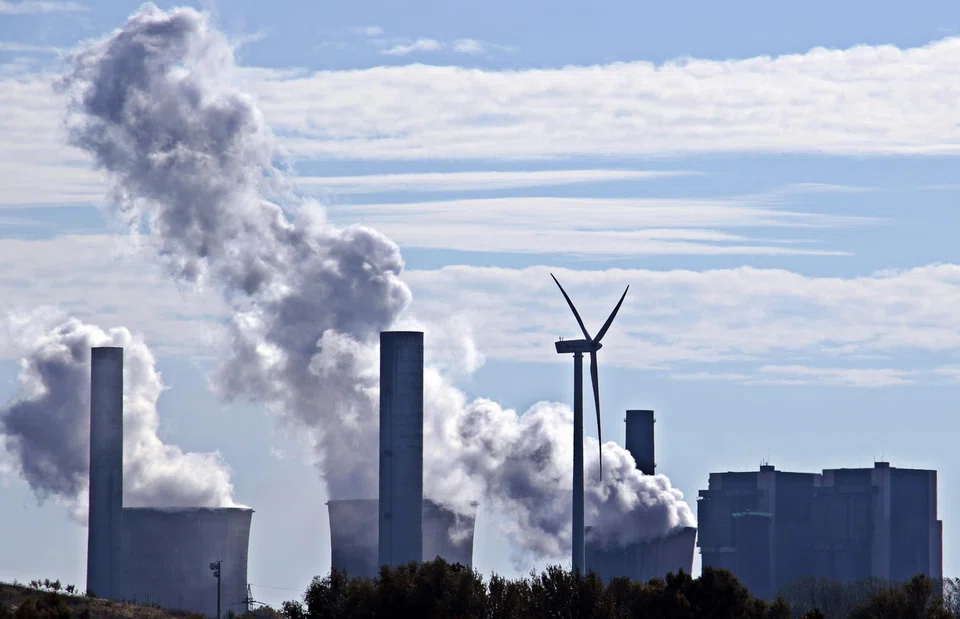
    • Financial institutions in Asia may soon find themselves being accused of greenwashing in a variety of new forms. This includes instances where they have provided transition finance to high-carbon emitting companies that do not have credible transition pathways, included greenwashed companies in their green portfolios, marketed a company or product as green even though it relied on carbon credits to offset its emissions, or are being policed by their competitors. PHOTO: PIXABAY

    THE NEXT frontier of greenwashing could include unsubstantiated claims of transition financing or an over-reliance on offsets, says a report by the Asia Investor Group on Climate Change (AIGCC) and environmental law non-profit ClientEarth.

    The report, an in-depth look at greenwashing in Asia’s finance industry, said that regulators will need to contend with emerging –and creative – forms of misleading environmental claims.

    “Transition-washing” is particularly complex, given the rising importance of transition finance by financial institutions and regulators in this region. Transition finance refers to providing interim capital for high-carbon activities until they can be replaced with greener alternatives.


    An example of transition washing would be where financing is obtained “to purchase a low-emissions technology, but the company’s emissions reduction plan is not implemented on a trajectory that is sufficiently rapid” to be aligned with Paris Agreement goals.

    “Greenwashing via offsets” is also an emerging risk. General climate principles require that carbon offsets be used to achieve climate goals only where there are no other viable alternatives. However, companies could tout products as green that are largely reliant on offsets. Already, claims have been brought against dairy company Arla in Sweden and airline KLM in the Netherlands along these lines.

    The report also said that there is now broad agreement that greenwashing does not need to be intentional. “Greenwashing by association” could occur where intermediaries or asset managers include companies in their green portfolios based on the companies’ greenwashing, and market those portfolios as green. Likewise, companies who join net zero alliances but do not keep to their commitments could be accused of greenwashing.

    Finally, greenwashing claims could be brought by competitors, and not just regulators. This has already happened in the Italian courts, the report said.

    The guide laid out several pointers on how financiers can guard against both current and future types of greenwashing claims.

    These include:

    • Scrutinising the accuracy and credibility of any green statement, even those made in the past, and ensuring they can be substantiated
    • Familiarising with recommendations made in the United Nations net zero report, as well as understanding the commitments one had made when joining net-zero alliances
    • Being transparent about investment methodologies and how green principles are integrated in investment strategies
    • Ensuring any environmental, social and governance (ESG) labels on financial products are aligned with international guidelines
    • Engaging in adequate due diligence of investee companies
    • Monitoring regulatory developments in all jurisdictions

    While regulators in Asia are at a more nascent phase in taking enforcement action against greenwashing, the guide noted that there are signs that they may soon ramp up their activities. 

    For example, the South Korean Ministry of Environment has reportedly launched a greenwashing investigation into domestic oil and steel companies, while Hong Kong’s Securities and Futures Commission said that there is consensus that regulators should ensure green finance initiatives are properly regulated to maintain market integrity and investor protection.

    “As noted by the Asian Development Bank, climate change litigation is not a distant risk but a current reality in Asia,” noted the guide.

    And while greenwashing investigations currently active in Asia do not for the most part include court actions thus far, it may be that the approach in Asia has tended towards notifying alleged greenwashing actions to regulators, rather than directly initiating court claims.

    “Either way, pressure on companies accused of greenwashing in Asia is expected to intensify, both from civil society and regulators,” read the guide.

    As seen in greenwashing claims outside of Asia, such claims against companies typically arise out of existing laws and regulations in each jurisdiction, not due to specific climate laws.

    Some examples of existing laws include consumer protection law, advertising codes, market disclosure regulation, misrepresentation law, and competition law among others.

    The guide noted that greenwashing distorts the financial markets, undermines the allocation of capital to the green transition, and also directly impacts companies involved, either through reputational damage, orders to remove advertising or labelling of products or fines and penalties.

    The greenwashing of financial products, specifically, could lead to other consequences beyond involved companies, such as the repricing of the greenwashed product or company or even the financial product’s asset class, capital exodus, reduced capital availability and low investor confidence.

    Speaking during a panel discussion at the launch of the guide on Wednesday (April 26), Elaine Ng, who is working on international affairs and sustainable finance at Hong Kong’s Securities and Futures Commission, said that the main challenge they face in taking action against greenwashing is the lack of clear definitions on what constitutes “green” or “ESG” (environmental, social and governance).

    However, greenwashing is no different from other types of misrepresentation within the fund management industry, said Ng. Asset managers are expected to define their ESG investing strategies and represent their ESG products in the same way as their non-green investments.

    She also noted that regulators cannot define everything given how fast the market moves. What they can do is to stick to certain principles of how financial intermediaries should conduct themselves.

    David Smith, senior investment director at asset manager abrdn, echoed Ng’s point and said that there can be greenwashing instances out of a regulatory framework.

    The onus is on investors to not take what companies say at face value and interrogate them, though he acknowledged that they are not able to do so for each data point disclosed by companies.