

Trump is China’s chance to be world’s climate leader
A power vacuum, with the US expected to turn conservative regarding the climate crisis, may give other major negotiating blocs an opportunity to come to the fore

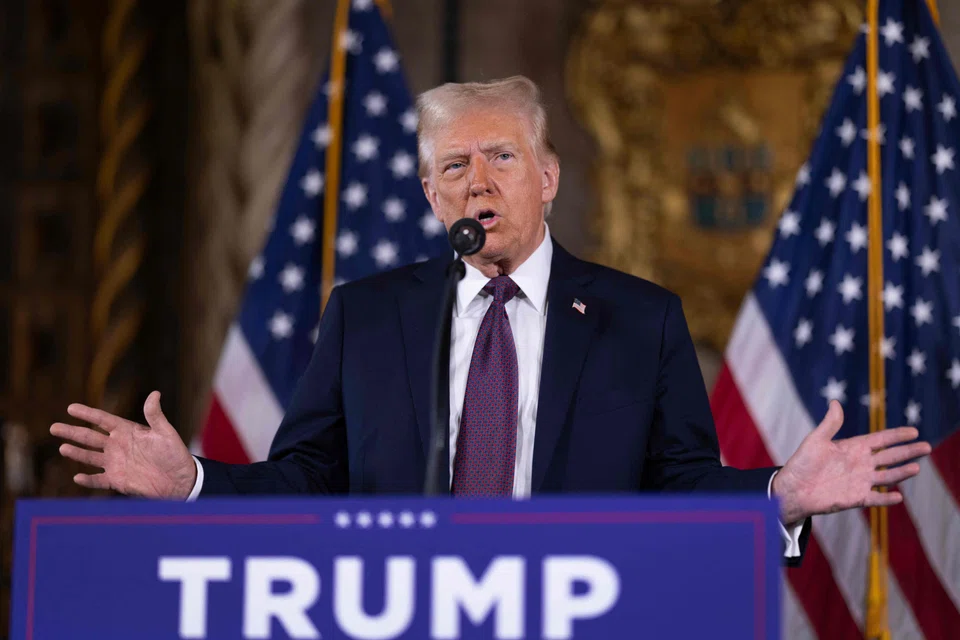
IN LESS than two weeks, Donald Trump will, once again, be inaugurated as the president of the United States.
Scenarios of a climate apocalypse have hogged headlines ever since the former US president was re-elected in November last year.
Well known for calling climate change a hoax, Trump had pledged during his presidential campaign to withdraw the US from the Paris Agreement, expand oil and gas production, as well as cut funds allocated to the climate legislation known as the Inflation Reduction Act (IRA).
Climate activists and sustainability professionals are dreading his upcoming presidency, and have bemoaned that the next four years will usher in an era of climate denialism and set back global climate action.
And it seems like the Trump effect has begun even before he officially takes over the White House, with a slew of US banks recently opting to leave a key industry group on climate finance.
JPMorgan Chase just became the last of Wall Street’s biggest banks to abandon the Net-Zero Banking Alliance, following recent exits by others such as Citi, Bank of America, Goldman Sachs and Wells Fargo.
These departures come against a backdrop of intensified attacks by Trump’s Republican Party, which has threatened antitrust action against financial institutions involved in climate groupings.
Decarbonisation momentum will likely continue
While it’s still too early to say how a Trump presidency will pan out, these effects may largely be limited domestically to the US, though some ripples may be felt in South-east Asia.
For one, pundits do not expect a wholesale reversal of the IRA, given that the legislation – which provides tax incentives for clean-energy and electric vehicle (EV) technologies – has benefited Republican states the most, according to several reports.
Companies in South-east Asia that are part of the battery-supply and auto-manufacturing chains and have received a boost from these US-domiciled incentives may continue to reap these rewards.
Second, various financial institutions and corporates in this region have publicly committed to their own net-zero targets, and would presumably continue working towards meeting these targets.
Several countries in South-east Asia have also set their own national climate targets and are expected to enact policies that would support reaching these objectives.
The economics of the clean energy sector has also become considerably more attractive than in 2016 when Trump was first elected.
Costs of solar have come down significantly – thanks to China’s large-scale production of solar panels over the last few years.
All things considered, the decarbonisation momentum is set to continue irrespective of any shenanigans by Trump.
This is not to say that things will be business as usual. With the US being one of the major donor countries to climate finance, projects such as the Just Energy Transition Partnerships (JETPs) with Indonesia and Vietnam would likely be affected.
The JETPs are climate deals that Indonesia and Vietnam have each inked with a grouping made up of developed countries with the aim of decarbonising their power sector. Worth billions of dollars, these projects were meant to be partially funded through grants and loans from the grouping, which includes the US. Private financial institutions have been roped in to finance the other half.
However, the very real issue of receiving fewer climate finance contributions from US public funds may give South-east Asian governments the impetus to introduce required policy reforms that would attract private-sector investments towards climate-related projects.
This is especially the case if South-east Asia wants to attract investments from large US companies, such as Google or Microsoft, that are still committed to their own decarbonisation goals.
It’s not as if South-east Asian governments were implementing progressive climate policies during President Joe Biden’s administration anyway.
The power vacuum created with Biden’s departure and Trump’s return also means that there is an opportunity for other major negotiating blocs to assume leadership at international climate talks.
China’s increased importance
The US, the European Union and China have traditionally been seen as the three major powers in climate negotiations, such as at the United Nations’ annual climate conference.
However, elections in the European Parliament, as well as polls in some countries such as Germany and France – the two biggest economies in the EU – have seen right-wing parties gaining ground.
This means an international climate landscape in which two out of the three major powers are turning conservative regarding the climate crisis.
Opportunity is therefore ripe for China to take over from the US and emerge as the world leader on climate talks.
Already, Chinese automakers are dominating South-east Asia’s EV sales. The world’s second-largest economy is also currently the largest financier of renewable energy in the region, according to the Lowy Institute.
China’s increased importance in international climate talks could further deepen its role in the region’s decarbonisation.
That being said, the US trade war with China – which is more than likely set to escalate under Trump – could see South-east Asian companies that have components manufactured by Chinese entities become collateral damage as well when sanctions hit.
Uncertainty is definitely the overwhelming sentiment for the climate community in the region – and possibly the world – in 2025. But it most likely would not be the doomsday scenario some have made it out to be.
TRENDING NOW

Nvidia reinstates Jensen Huang as CEO; Trump says move poses no national security risk

Beyond the greenback, Vietnam’s big borrowers turn to Asian-currency bonds

Indonesia’s coal tycoon Low Tuck Kwong replaced as Bayan Resources president-director

Six workers file employment claims against Crystal Jade Food Manufacturing

