UAE should give oil and gas players bigger role at COP28, panellist says

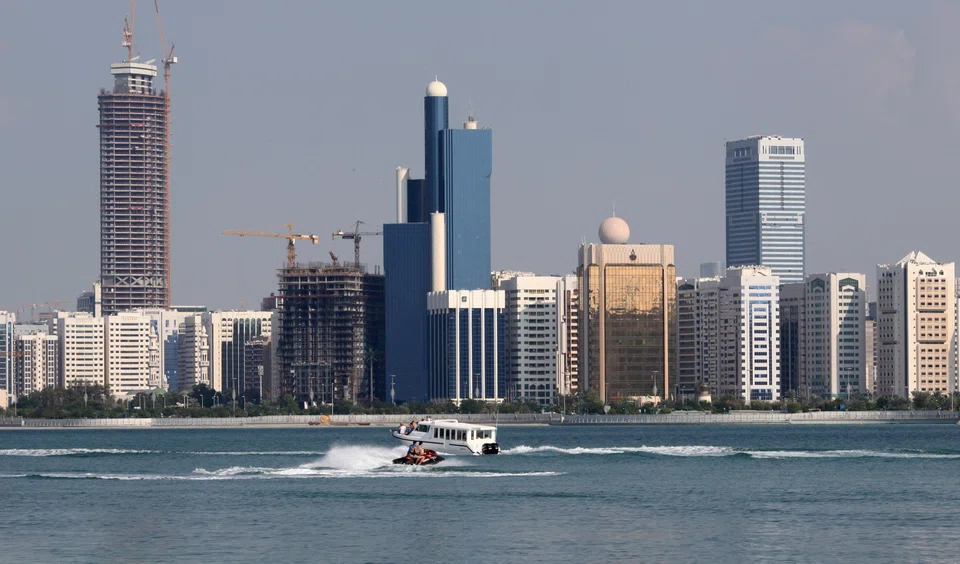
[ABU DHABI] Players in the oil and gas industry can adopt a more central role at next year’s global climate change summit given the sector’s prominence in the United Arab Emirates’s (UAE) economy, said Chuka Umunna, head of ESG for Europe, the Middle East and Africa at JP Morgan.
COP28 – the 28th session of the United Nations Climate Change Conference – will take place in 2023 in the UAE, one of the top producers of oil in the world.
“I think COP28 provides a great opportunity to make sure that (the oil and gas players) are properly at the table and are part of the discussion, instead of being painted as pariahs by one part of the environmental debate,” Umunna said.*
Umunna was speaking at the Abu Dhabi Finance Week (ADFW) on Thursday (Nov 17) as part of a panel titled Collaboration: Financing the Transition to Net Zero.
Umunna said the oil and gas industry has been blamed as the source of climate change problems, but noted that they can also be “a massive part of the solution in this agenda” given that they are among the few companies with the scale and capital required to fund new progress.
Umunna does not expect participants at COP27, which ends this week in Egypt, to reach a resolution on the sustainable finance agenda. But the UAE will likely be in a “particularly strong position” to reach resolutions, as it has been ahead of the agenda relative to other economies, and is also rapidly diversifying its economy away from oil and gas.
Nili Gilbert, chair of the Glasgow Financial Alliance for Net Zero’s (GFANZ) advisory panel, said that the sustainability agenda can benefit from how quickly the UAE supports the transition.
But she noted that the Middle East and North Africa (MENA) region is still in a “business-as-usual scenario” when it comes to climate change action, and is warming four times as fast as North America and Europe.
Gilbert, who is also vice-chairwoman of carbon management solutions provider Carbon Direct, said: “I hope that there will be a continued focus on the serious practical realities of the transition that we have ahead in the energy sector.”
Discussion at a separate panel focused on the need to better serve small and medium-size enterprises (SMEs).
While big corporations have had time and resources to find solutions that can help achieve their sustainability goals, SMEs are far less familiar with the tools available, said Ben Worley, CEO of Spiro Carbon.
The company helps farmers and forest owners bring verified carbon credits to a global exchange and Worley, who is also the co-founder, said: “What we’re seeing is that large corporates are getting a lot of pressure from their buyers, and the grocery stores are in turn getting pressure from their consumers to (be more sustainable), but they have no idea where to start.”
There is therefore a need for simplified solutions to facilitate SMEs into building their sustainability strategies, he added.
This includes creating sustainable capital markets for SMEs to create and participate in carbon offset projects, in ways that are affordable and insulated against competition from major corporations that are “gobbling up what offsets are available”, the CEO said.
Worley also noted the need for dynamic regulation that can adapt technology to allow smaller players to benefit from carbon financial markets.
“The way that the system is set up now is too complicated, too expensive, and too time-consuming. So it’s disincentivising the transition to a green economy for a significant portion of the world’s population,” he said.
Davis Rouse, chief executive of carbon offset solutions provider CarbonClick, noted that indirect non-power emissions — referred to as Scope 3 in industry shorthand — encompass 75 per cent of most companies’ emissions, yet it is only reported in about 10 per cent of companies’ ESG policy and reporting frameworks.
“This means what we’re only reporting on is relatively meaningless when it comes to comparing what things are performing well, and what companies are performing poorly,” he said.
*Amendment note: The story has been amended to correctly state a quote.