

Temasek portfolio companies may divest its ‘dirty’ assets to provide clarity on net-zero plans

Janice Lim
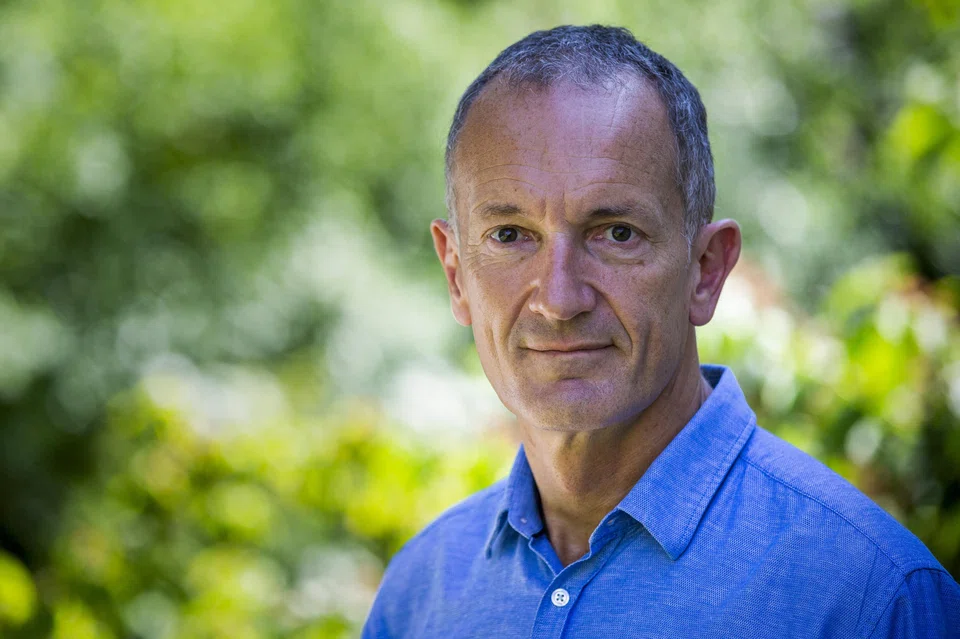
[DUBAI] Singapore’s state investor Temasek has long maintained that it will not divest from its carbon-intensive portfolio companies, instead choosing to work alongside them in their decarbonisation journey.
However, at times, divestment may be necessary if a company needs to send a clear signal on its future net-zero direction, said Steve Howard, vice-chairman of sustainability at Temasek, when asked about Sembcorp Industries’ sale of its coal power business in India.
“So the preferred strategy is to be a long-term partner and work to reduce emissions... Will we occasionally be involved in divesting assets or our portfolio companies? Yes, but it’s not our first choice to do it when we can see a viable way,” said Howard, who was speaking to The Business Times on the sidelines of the United Nations climate change conference in Dubai, United Arab Emirates, on Thursday (Nov 30).
Sembcorp Industries recently reported a drop in its emissions intensity to 0.29 tonne of carbon dioxide equivalent for every mega-watt hour (tCO2e/MWh) at the end of September, achieving its 2025 emissions intensity target of 0.4 tCO2e/MWh way ahead of time.
That was largely due to the sale of Sembcorp Energy India – a move that has received some criticism that its green targets were achieved only by moving its emissions out of sight.
However, in the case of Sembcorp Industries – which is trying to move away from fossil fuel-based energy generation to renewables – it needs to be clear about its strategy, said Howard.
“Sembcorp has pursued a strategy where they are going for being this green power company, that’s their business model. And so, this was necessary for them to create clarity around the strategy of the business. Leaning into the future and being clear about the business you’re going to be is really important,” he added.
Whether portfolio companies or investors choose to divest or not is also contingent on other factors, such as whether these assets sit in a national context.
“Some things can be decarbonised and some things can’t. Because it’s not a simple thing where it’s just in the hands of either the portfolio company or the ultimate investor to do it,” said Howard.
Among the sectors that are hardest to decarbonise is aviation. Temasek earlier stated that Singapore Airlines is key to the state investor achieving its net-zero targets.
Howard said that Singapore Airlines’ plans to replace 5 per cent of its fuel with sustainable aviation fuels by 2030 is a “really meaningful first step”.
To achieve that, there is a need to build sustainable aviation fuel plants at a pace and scale that meets the volume demand and set up supply chains where the feedstock is sourced properly.
Over the long term, while sustainable aviation fuels will still play a meaningful role, green hydrogen will be the alternative clean fuel to power aircraft.
Part of Temasek’s engagement with its portfolio companies is to share with them best practices and information around the latest trends in sustainability.
“We’re a trend-aligned investor. Trend-aligned doesn’t mean you are a fashion follower. It means you really try and understand mega trends,” said Howard.
It had in 2016 identified four long-term structural trends: digitisation, sustainable living, future of consumption and longer lifespans. Out of these, Howard pointed out that sustainability and digitisation are the two overarching trends.
Besides working with its portfolio companies to decarbonise, Temasek is channelling its new investments into low-carbon opportunities. The latest announcement is a US$500 million investment in Leapfrog Investments – an impact investor focused on emerging markets – with support from European Investment Bank.
Howard said intentionally investing in businesses and technologies that deliver not just financial returns, but also social and environmental benefits, are required as investors in the 21st century.
When asked about the perception among investors of higher risks involved in channelling their capital into emerging markets, Howard said investors generally tend to overprice risks when investing in new technologies or markets.
The capital market can also be slow to react to new technologies, causing a five or 10-year lag time before the technology is de-risked and becomes well-established.
“So if you’re an asset allocator, then understanding the risk – that can require more effort. So you’re trying to balance the risk and opportunity and understand it more. And people can be shy on bandwidth. They’ll take the easier path. So you do something that might be less compelling. But it’s just easier to understand, because you’ve done it 10 times before,” he said.
However, he called for investors to “lean in” to impact-aligned opportunities in emerging markets as these have the lowest costs and highest growth.
“You can be in these exciting growth curves, which are transformative in nature. And it absolutely helps with this critical transition to a clean economy.”
TRENDING NOW
ComfortDelGro appoints two new independent directors

Once staunchly pro-China, Malaysian Chinese businesses are now distancing themselves from Beijing

NoonTalk needs continued financial support from CEO Dasmond Koh, auditors warn
DP Architects sets the benchmark for sustainability disclosure and design

