

US withdrawal from climate deals an opportunity for Indonesia and Vietnam to restrategise: analyst
Energy transition momentum to continue, say UOB and OCBC

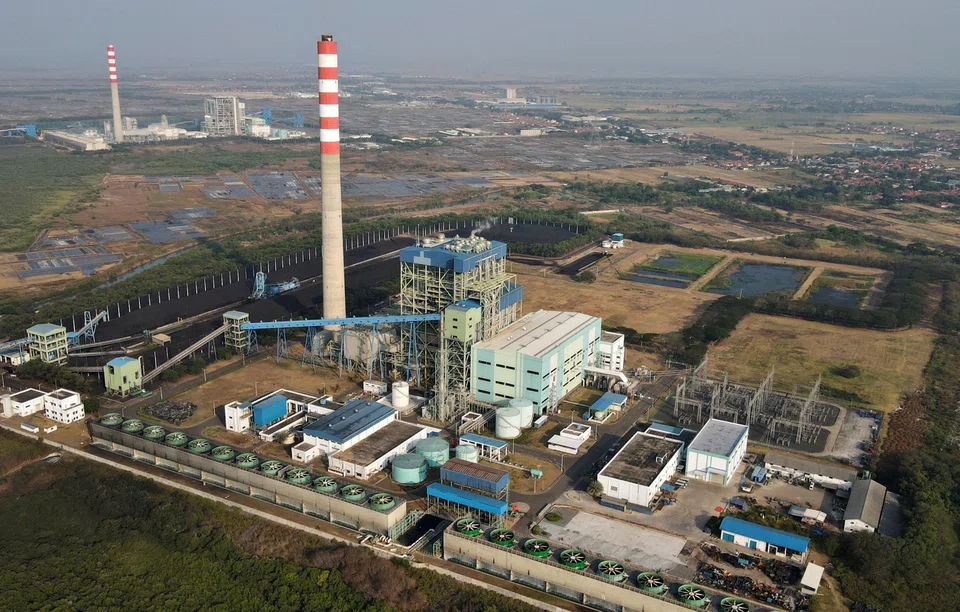
[SINGAPORE] The United States’ withdrawal from the mega climate deals with Indonesia and Vietnam aimed at supporting their coal-dependent economies’ transition to cleaner energy may not be the setback everyone thought it would be.
In fact, it could provide both countries an opportunity to rethink the financing mechanisms and the policy reforms required to accelerate the energy-transition programmes, said Christina Ng, managing director of energy finance think tank Energy Shift Institute.
“Vietnam’s and Indonesia’s experiences should prompt a rethink on whether there is sufficient diversity of financing mechanisms in the market, and whether they need to look beyond Just Energy Transition Partnerships (JETPs) and develop stronger domestic financing solutions and infrastructure to scale investments more predictably,” noted Ng in response to queries from The Business Times.
JETPs remain viable
Coming as a surprise to probably nobody, the US formally withdrew from the JETPs earlier this month, the latest in a series of moves that the country has taken under the administration of President Donald Trump to unwind its prior climate commitments.
The deals that Indonesia and Vietnam signed with the US and several other developed countries – known as the International Partners Group (IPG) – as well as several banks that are members of the Glasgow Financial Alliance for Net Zero (GFanz), promised both countries financial and technical support to aid in their energy transition.
The US$20 billion deal with Indonesia was announced in November 2022, with the US committing about US$2 billion. Vietnam’s US$15.5 billion deal came one month later, with about US$1 billion of funds – mostly in the form of non-concessional loans – coming from the US.
Other countries that the US has signed JETPs with are South Africa and Senegal.
The viability of the JETPs had been hanging in the balance since the US announced in February this year that it was stepping down from its co-leadership role in the Indonesia programme.
However, with Germany and Japan reaffirming their commitment to remain co-leads for Indonesia, as well as the expectation of the remaining governments in the IPG to step in for Vietnam, that uncertainty has more or less subsided.
While Vietnam’s government has not officially made any statement regarding the US withdrawal from the JETP, Indonesia said that it is still committed to achieving its net-zero emissions target by 2060 or earlier.
Airlangga Hartarto, Indonesia’s coordinating minister for economic affairs, said during a press conference on Mar 24 that the country maintains its target of achieving a 31.9 per cent reduction in greenhouse gas emissions by 2030, with the potential to hit a 43 per cent reduction if supported by international financial assistance.
Tiza Mafira, associate director for Indonesia at the Climate Policy Initiative, noted that the US$2 billion commitment from America towards the the country has been secured, and just needs to be accessed and deployed by the relevant authorities.
Financial institutions that had previously signed on to the climate deal – which do not include Singapore’s three banks – are also likely stay put. A GFanz spokesperson said in response to BT’s queries that the alliance remains committed to the JETPs and to supporting financial institutions that recognise the opportunity to invest in the drivers of economic growth in emerging markets and developed economies.
In fact, Ng said that the US withdrawal would be “an opportunity for renegotiations on financing terms and call for reforms that would help shape Vietnam’s transition trajectory”.
That is because, with or without the US presence, problems involving the slow disbursement of funds, unclear financing mechanisms and policy bottlenecks have plagued the implementation of the JETPs in these countries.
In the case of Indonesia, the delay was caused by the Indonesian government and funders trying to understand the financing conditions as well as the limitations of the country in deploying renewable energy, in addition to a lack of bankable projects, said Tiza.
After two years since the JETP was signed, a total of 54 projects have secured international funding commitments totalling US$1.1 billion.
However, only US$233 million distributed to 45 projects were in the form of grants, while the rest were deployed to nine projects in the form of loans or equity.
Nevertheless, the first coal-fired power plant earmarked for early retirement under the JETP remains on track.
A spokesperson from the Asian Development Bank, which is working on retiring the Cirebon-1 coal plant under its energy-transition mechanism programme, told BT that its proposed financing remains viable as it is not dependent on US funding.
“We’re in continued negotiations with the government of Indonesia and other key stakeholders to finalise the deal,” said the spokesperson from the multilateral development bank, which provides institutional support and implementation capacity to the JETP secretariat even though it is not an official party.
A spokesperson for DBS, which is an adviser to Indonesia’s sovereign wealth fund on the Cirebon-1 deal, said that energy-transition projects are assessed on a case-by-case basis to ensure they are economically viable and policy-supported.
While not referring to the phase-out deal in particular, the spokesperson added that the bank employs a robust risk-management framework to evaluate political, operational and financial risks.
“We continue to play an active role in fostering strong ecosystems and collaboration to enable a just transition that balances environmental, social and economic priorities,” added the spokesperson.
As for Vietnam, local reports said in February this year that eight projects selected were facing implemention challenges. The country’s deputy minister for finance said in October last year that it had not received any loans under the JETP programme.
Just two weeks ago, the government said it was retroactively reviewing the feed-in tariff eligibility for renewable energy projects, thereby disrupting a policy that previously guaranteed foreign investors decades-long, above-market rates paid by state-owned utility group EVN.
These delays in financial commitments, as well as regulatory uncertainties, may have had an impact on the country’s energy transition and may continue to hinder private finance confidence, said Ng.
“Policymakers need to accelerate regulatory reforms, including clearer power purchase agreements and transmission investments, to attract private capital,” she added.
Mike Ng, chief sustainability officer at OCBC, noted that, while public funds play an important role in catalysing the energy transition, it is ultimately the bankability and tangible benefits of these projects that would be key to mobilising private-sector financing from financial institutions.
Energy transition momentum to continue
The US withdrawal from the JETPs would likely not affect the wider energy transition in South-east Asia, said two local banks.
OCBC’s Ng said that the momentum for the region’s energy transition will continue, driven by structural factors including rising energy demand and the increasing competitiveness of renewable energy.
Eric Lim, chief sustainability officer at UOB, said that economic opportunities around decarbonisation continue to drive sustainable financing flows in Asia.
Investments in renewable energy, partially driven by the ongoing development of data centres, is expected to keep growing as countries continue to transition their energy mix, he added.
The focus of financial institutions should be on supporting the implementation of renewable energy projects, including battery solutions to address intermittency challenges and other innovative technologies.
This is because the decommissioning of coal power plants would be tough if they are not replaced by another reliable power supply, said OCBC’s Ng.






